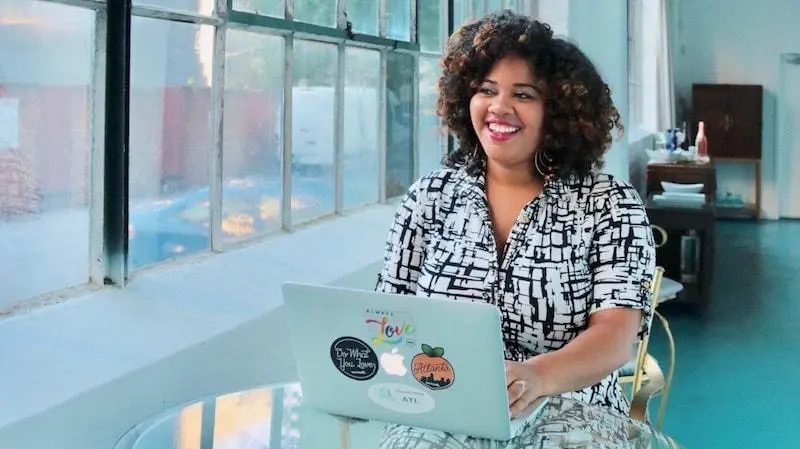
Candace Mitchell Harris, founder and CEO of MYAVANA, is leading a beauty-technology revolution that merges data science with personal wellness. She is transforming how people understand, care for, and celebrate their hair.
What sets Harris apart is her bold journey from computer science graduate to founder of an emerging AI-powered beauty tech company. The company has gained global partnerships and respect in the industry.
From Georgia Tech to Global Innovation
Born and raised in Stone Mountain, Georgia, Harris discovered her passion early, where human experience meets computing. She graduated from the Georgia Institute of Technology with a Bachelor of Science in Computer Science. Afterwards, she sharpened her skills in human-computer interaction. This foundation would shape her entrepreneurial journey.
“It wasn’t just about building technology,” Harris told Atlanta Startups in a retrospective interview. “It was about solving a real problem I, and millions of others, lived every day.”
That problem was the lack of personalized guidance for textured hair. This is an issue worsened by years of neglect and underrepresentation in mainstream haircare technology.
The Birth of Myavana: Science Meets Personal Care
In 2012, Harris founded Myavana, a company based on a significant insight: hair isn’t one-size-fits-all. Using proprietary AI and data science, Myavana analyzes hair features, which include curl pattern, porosity, and scalp health. She used these features to create custom products, regimen, and styling recommendations that fit each person’s unique biological profile.
Industry reports show that Myavana’s HairAI technology uses consumer data to help users navigate the overwhelming choices in haircare. This is especially for those with textured hair. Partnerships with major retailers like Ulta Beauty and Nordstrom have established the company as a key innovator in both tech and beauty markets.
According to BeautyMatter’s Future50 2025 feature, Myavana is expected to generate between $10 million and $20 million in revenue. This reflects strong growth in the personalized care segment of the multi-billion-dollar beauty industry.
Impact and Industry Recognition
Under Harris’s leadership, Myavana has become more than just a tech startup; it is a cultural force within beauty and entrepreneurship.
Influential lists like Forbes 30 Under 30 and Georgia Tech’s Top 40 Under 40 Alumni have recognized Harris. These honors highlight her role as a pioneer at the intersection of technology and consumer lifestyle.
The company’s efforts have been featured in major outlets for democratizing product insights in an industry long focused on limited data and generalizations. Adams from American Salon wrote that Harris helped end “trial and error for hair products” by using scientific hair analysis to connect consumers with meaningful solutions.
A Mission Beyond Products
More than just creating algorithms, Harris frames her work as part of a movement for better representation and economic empowerment for founders of color in the tech and beauty sectors.
In a 2024 industry discussion, she pointed out that the conditions that allowed her company to thrive also highlight ongoing inequalities in funding and visibility for Black founders. “I’d like to see these trends continue where representation isn’t an afterthought, it’s a strategic priority,” Harris said.
Her vision goes beyond product recommendations to include educational and professional development opportunities. Myavana’s plans involve professional training programs, salon certification courses, and expanded digital community outreach. Harris believes these tools can empower the next generation of innovators.
Looking Forward: The Future of Beauty Technology
As traditional beauty companies feel pressure to innovate, Harris’s Myavana provides a clear model for integrating science, technology, and individual personalization. Analysts say that the company’s approach, combining data analytics, machine learning, and consumer engagement, marks the next step for industries often defined by static products rather than dynamic personal insights.
“Innovation that honors individuality isn’t a trend,” Harris told media outlets recently. “It is the future, and those who don’t adjust will be left behind.”
Her work serves as a reminder that when technology meets empathy, the outcome is not just better products; it leads to a more inclusive understanding of beauty itself.