Two months. That’s the gap Disney left between renewing “Wonder Man” for a second season and quietly walking it back — a reversal so fast it barely had time to grow dust on the press release announcing it. I keep circling that number, turning it over like a coin I can’t spend. Two months. Not two years. Not even one full television season’s worth of breathing room. Just enough time for an Emmy nomination to land, for the trade write-ups to cool, and for somebody in a boardroom to decide the math didn’t math anymore.
Yahya Abdul-Mateen II didn’t scream about it. He didn’t need to. Told Vanity Fair, flatly, that the optics were obvious — that if he ran Disney, if he ran Marvel, he wouldn’t want to be standing anywhere near this particular photograph. He’s right, and the photograph is ugly in a very specific way: within the same July, in the same news cycle, Mahershala Ali’s long-gestating “Blade” reboot — a project that had already burned through one director, one release-date push, and years of studio silence — got confirmed dead too. Two Black leads. Two projects. One month apart.
“I think the optics are obvious. If I’m a big business, if I’m Disney, if I’m Marvel, I don’t want to be attached to these optics.” — Yahya Abdul-Mateen II, to Vanity Fair
Five projects, one pattern: Wonder Man, Blade, Ironheart, Monica Rambeau, War Machine
I want to sit with the receipts instead of the reaction, because the reaction is easy and the receipts are where it actually hurts.
Start with “Ironheart.” Riri Williams got six episodes on Disney+ in the summer of 2025, decent reviews, a modest but real cultural footprint — and then nothing. No renewal talk. No second-season whisper. Just silence thick enough to touch, the kind that settles over a project like dust on a shelf nobody dusts anymore. Add “Monica Rambeau,” a character Marvel spent an entire “WandaVision” arc building into a cosmic-tier hero, complete with a mid-credits tease that promised more, only to leave her hanging with no announced project since. Add “War Machine,” a Don Cheadle-fronted Disney+ series that’s been “in development” for so long the phrase has curdled into a synonym for cancelled — three years and counting, if anyone’s still counting. Now add Wonder Man. Now add Blade.
That’s five. Five Black-led Marvel projects, either dead or frozen mid-breath, inside roughly the same eighteen-month window — while white-led franchise entries kept their release dates, their sequels, their toy lines, their trailers dropped during football games. I don’t think five is proof of anything by itself. I think it’s the kind of number that should make somebody at Disney lose sleep, and I have no evidence anyone has.
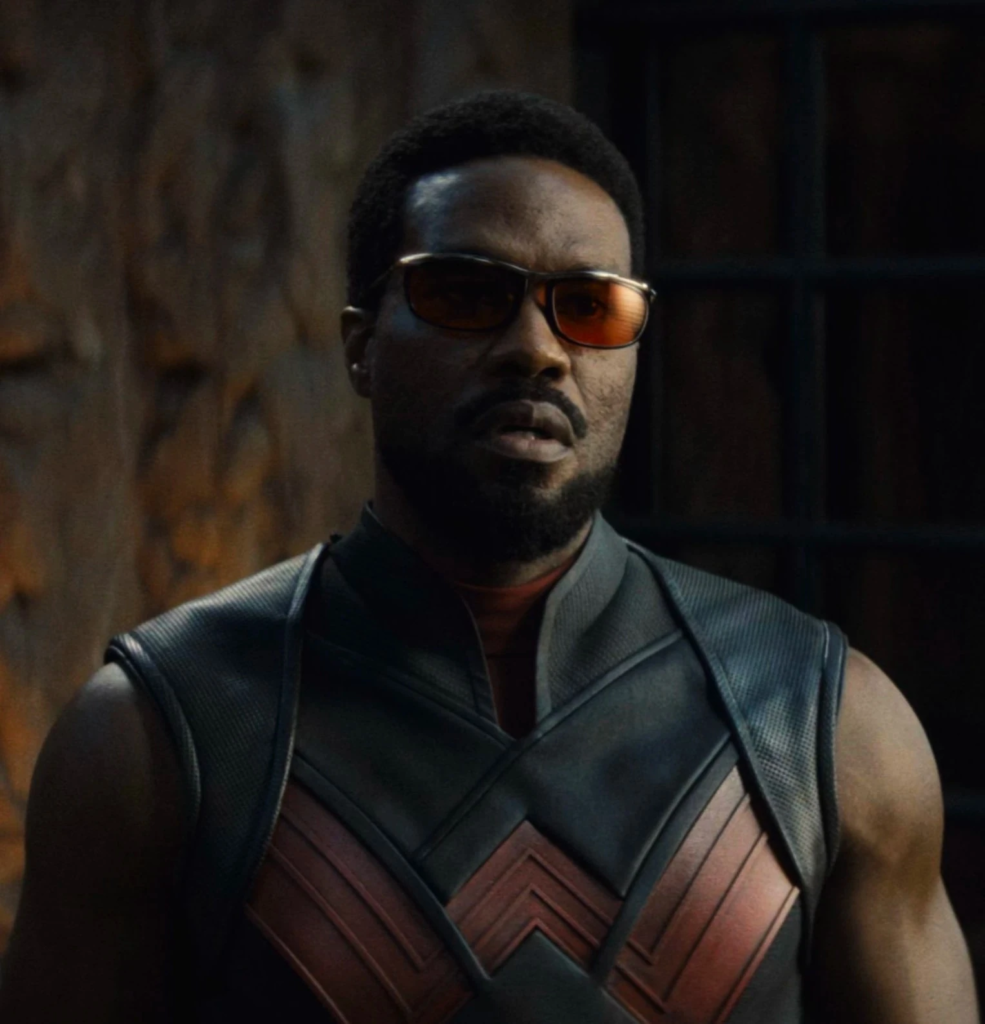
“I wasn’t told what those numbers were”
Abdul-Mateen’s numbers were vaguer than mine, and that’s the part that should needle you harder than any conspiracy theory could. He said executives told him it was viewership. He said — and I’m paraphrasing him carefully here, because his exact words deserve better than a chopped-up quote — that nobody ever actually showed him those numbers. No chart. No dashboard, no spreadsheet with red cells where the show underperformed. Just a verbal shrug dressed up as a business decision, delivered the way you’d deliver bad news about someone else’s dog — gently, vaguely, and with zero intention of showing you the vet report.
“I was told that it had something to do with the viewership numbers. I wasn’t told what those numbers were.” — Yahya Abdul-Mateen II
My hands actually went still reading that line — not shaking, just still, the way you go still when someone tells you a decision was made about you, for reasons you’re not allowed to see. There’s a particular texture to being told “it’s just business” without evidence. It feels like being handed an empty box and told the weight inside is real, trust us, don’t ask to look. Abdul-Mateen’s own words carried that texture too. He didn’t ask for outrage. He asked for “real, hard information,” which is a much colder, much more damning request than anger would have been. Anger burns off in a news cycle or two. A demand for data just sits there, patient, waiting for someone to either produce it or admit there was never anything to produce.
Or maybe it really is just Disney+ cutting costs
Let’s be honest about the other side of the ledger, because a data-heavy piece owes you the whole thing, not half of it dressed up as the whole thing.
Streaming numbers for niche superhero shows really have been brutal across the board in 2025 and 2026 — Disney+ has trimmed multiple properties regardless of who’s leading them, chasing subscriber retention over critical acclaim the way a landlord chases rent over reviews. Some commenters under these very stories made that point bluntly, without much patience for the racial framing at all: an Emmy nod doesn’t guarantee eyeballs, and eyeballs are what streaming services are built to farm, full stop. That’s a real pressure, not an excuse invented after the fact to cover for something uglier. Marvel Television has been a smaller, leaner operation since the corporate belt-tightening that started in 2023, and belts don’t tighten selectively by design. They just happen to tighten around whoever’s standing closest to the buckle when the budget meeting ends.
It’s worth saying plainly: correlation isn’t a verdict, and a writer who pretends otherwise is just as guilty of overreach as an executive who hides behind “the numbers.” Five cancellations clustered around Black leads in eighteen months isn’t proof of a written policy sitting in some drawer at Disney headquarters. Nobody has produced a memo. Nobody has produced an email chain. What exists is a pattern, and I’ve never trusted patterns much — they can be the residue of bias nobody bothered to name, or the residue of budget cuts that happened to land where they landed, coincidence stacked on coincidence until the stack starts looking like architecture whether it was built that way or not.
It doesn’t actually matter which one it is
Here’s where I land, and it isn’t comfortable, and I don’t think it’s supposed to be.
Think about what malice actually requires. Someone deciding. Intent, a hand on a lever, a person willing to say the quiet part even just to themselves. Negligence requires nothing of the kind — it just requires nobody at the top caring enough to check the shape of the pile they were building, season after season, cancellation after cancellation, until five became a coat that fits suspiciously well no matter who tries it on. From the outside malice and negligence look almost identical. Both leave the same wreckage.
Abdul-Mateen said his show “deserves some study.” That word choice matters more than the ones around it. A press release he could’ve shrugged off. An apology, even a bad one, he could’ve accepted and moved on from by dinner. But a study means an audit — numbers on a table, something you could hold up to the light and actually see through, the way you’d hold a photograph up to check if it’s been retouched. He’s not asking Disney to feel bad. He’s asking a trillion-dollar company to do the bare arithmetic of its own decisions somewhere he can see it, and getting the corporate equivalent of a shrug in return, like the math is filed behind a door he was never given a key to.
What Marvel Owes Its Black-Led Franchises Next
Five things stacked in one pile can be an accident. I know that. I’ve dropped enough boxes in enough garages to know gravity doesn’t check anyone’s résumé on the way down.
But at some point the person holding the boxes has to notice the pile is only ever made of the same kind of box, over and over, landing in the same corner of the room. Nobody at Disney has to be a villain for that math to matter. They just have to keep not noticing — and not noticing, done often enough, on purpose or not, starts to look exactly like a decision anyway.