The Eliana Moreno crash ended a career built largely outside the studio and above the streets of Southern California. Moreno and pilot George Marciniw died on September 15, 2026, when NewsChopper4 crashed in Chatsworth while covering a fatal collision involving an SUV and a Los Angeles Metro bus. A third person died on the ground.
The helicopter supplied aerial coverage to NBC4 Los Angeles and Telemundo 52. Moreno’s voice was familiar to viewers watching wildfires, traffic emergencies and police pursuits, even when her face was not. That distinction matters. Aerial reporters, photographers and pilots help create some of television’s most valuable live footage while receiving a fraction of the public recognition given to studio anchors.
Moreno’s death also raises a question the broadcast industry cannot answer from its published workforce reports: how many Black, Latino and other minority journalists occupy these high-exposure field positions, and whether their safety, compensation and career progression match the risks they accept.
Eliana Moreno Built a Career Above Los Angeles
Moreno grew up in Orange County and graduated from Chapman University in 2010 with degrees in broadcast journalism and political science. She joined the Angel City Air helicopter team that September and later provided reporting and photography for several Southern California outlets.
By 2015, Chapman described her as the youngest aerial journalist working in the country’s second-largest media market. Her assignments ranged from brush fires and police pursuits to traffic disruptions and breaking public-safety stories.
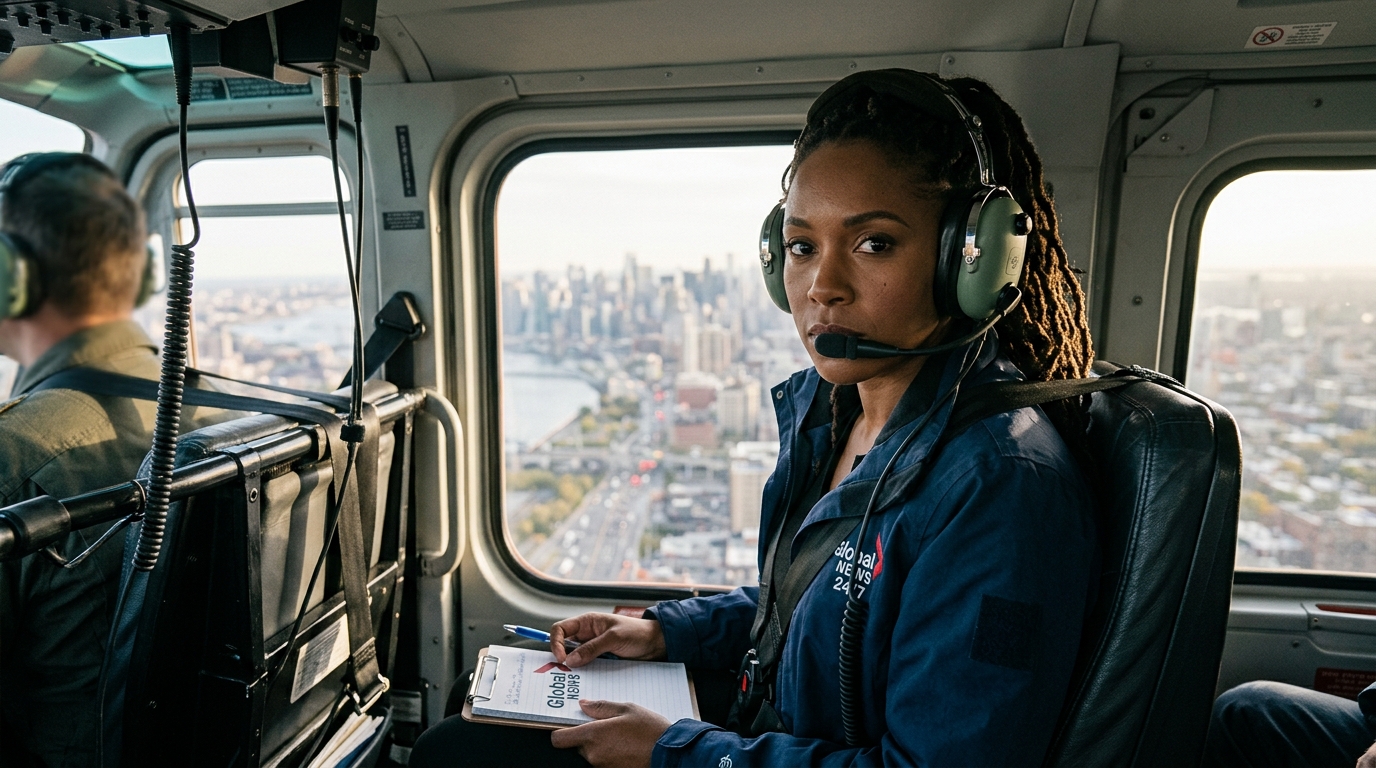
The job demanded more than narration. Moreno monitored developing events, operated a camera, selected shots, interpreted police-radio traffic and delivered information live. She performed several newsroom functions inside an aircraft where space, time and attention were limited.
I’m not just a photographer or reporter or editor, I’m actually doing all three things at the same time. – Eliana Moreno,
Moreno eventually became known online as “Eli in the Heli.” She and Marciniw had flown together since 2023, logging hundreds of hours while covering Southern California for NBC4 and Telemundo 52. Their recent work included the destructive January 2025 wildfires.
The NBC4 account of their partnership describes them as the newsrooms’ “eyes and ears in the sky.” Marciniw had more than three decades of aviation experience and also trained aspiring pilots.
That experience makes restraint essential. The National Transportation Safety Board and Federal Aviation Administration are investigating the Chatsworth crash. Until investigators examine the aircraft, flight records, weather conditions, maintenance history and available recordings, no credible publication should assign a cause.
The Eliana Moreno Crash Fits a Longer Record of Loss
News helicopters operate in a difficult environment. Crews may fly near fires, severe weather, restricted airspace or clusters of other aircraft converging on the same scene. They frequently work at night and remain over developing incidents while communicating with stations on the ground.
An Associated Press review identified at least eight fatal crashes involving American news helicopters since 2000, killing 16 people before the Chatsworth deaths. The incidents include a 2022 crash in Charlotte, North Carolina, that killed WBTV meteorologist Jason Myers and pilot Chip Tayag, and the 2023 crash of Philadelphia station WPVI’s Chopper 6, which killed pilot Monroe Smith and photographer Christopher Dougherty.
The most consequential regulatory case followed a July 2007 collision between two television helicopters covering a police pursuit in Phoenix. Four people died: two pilots and two photojournalists.
The NTSB’s investigation found that both pilots failed to see and avoid the other aircraft. Their reporting and visual-tracking responsibilities contributed to that failure. The board subsequently recommended clearer separation between flying and reporting duties, formal coordination procedures, and stronger training for electronic news-gathering operators.
Those findings remain relevant because aerial journalism combines two systems with different incentives. Aviation safety requires disciplined procedures and a willingness to abandon a mission when conditions deteriorate. Live television rewards immediacy, exclusive images and continuous coverage.
A responsible newsroom has to prevent editorial urgency from becoming cockpit pressure. That obligation remains even when the station contracts an aviation company rather than owning and operating the helicopter directly.
Outsourcing the Aircraft Does Not Outsource the Risk
NewsChopper4 was operated by Angel City Air. Moreno and Marciniw were identified as employees of the aviation operator while supplying coverage to NBC4 and Telemundo 52.
Such arrangements can give stations access to aircraft, pilots, maintenance and specialised operational expertise without placing a helicopter fleet directly on the broadcaster’s balance sheet. They can also divide responsibility across the station, aircraft operator and contractors.
For media executives, the governance question extends beyond whether an operator satisfies federal licensing requirements. A station commissioning live aerial coverage should know who controls the decision to launch, continue or terminate a flight; how fatigue is monitored; whether reporters can challenge unsafe conditions; and how near misses are documented.
Contracts should define maintenance standards, pilot experience, recurrent training, weather limits, emergency procedures and insurance coverage. News directors also need authority to reject footage targets that could increase operational risk.
This is especially important during shrinking newsroom budgets. The latest RTDNA/Newhouse School survey found that local television news employment fell 2.2 percent in 2025, to 26,458 full-time positions. Smaller teams can leave more duties concentrated in fewer people, although no evidence has yet linked newsroom staffing levels to the Chatsworth crash.
The appropriate question is not whether helicopters remain useful. During wildfires, floods, pursuits and blocked highways, an aerial crew can show conditions that ground reporters cannot see. Management must decide whether each deployment justifies its exposure and whether a drone, traffic camera, pooled aircraft or delayed flight could produce adequate reporting at lower risk.
Minority Journalists Remain Visible but Undermeasured
Moreno worked across English- and Spanish-language television, serving NBC4 and Telemundo 52 from the same aircraft. Her career placed a Latina journalist inside an important but specialised part of the Los Angeles information system.
Yet national diversity reports rarely separate anchors from camera operators, helicopter reporters, video editors or field producers. Available figures describe the newsroom in aggregate. They cannot establish whether minority journalists face disproportionate exposure to dangerous assignments.
The broader representation gap remains measurable. RTDNA’s 2025 survey found that people of colour represented 28.1 percent of the television-news workforce. That was the second-highest share recorded by the survey, but still below the racial diversity of the American population.
The leadership numbers have historically been weaker. Pew Research Center reported that Black journalists accounted for 13 percent of local television newsroom employees in 2022 but only 6 percent of news directors. Across American journalism, just 6 percent of reporting journalists identified as Black.
That gap affects which risks receive executive attention. Field crews understand the practical pressures of arriving first, staying live and producing usable pictures under difficult conditions. When those workers remain absent from senior decisions, their experience may not shape budgets, contracts or deployment rules.
Recognition Should Extend Beyond the Moment of Loss
Tributes following a fatal assignment often describe journalists as dedicated, fearless or committed to public service. Those descriptions can honour a life, but they can also turn preventable occupational risk into part of the profession’s mythology.
Moreno spoke enthusiastically about her work. In 2015, she told Chapman that she could see herself doing it for the rest of her life.
I could definitely see myself doing this for the rest of my life. -Eliana Moreno
Her words now carry a weight they did not have when first published. They show that aerial reporting was not a temporary assignment on the way to a studio position. It was a demanding craft she had chosen and developed over 16 years.
The best institutional response would preserve that distinction. Stations should name aerial journalists and photographers while they are alive, credit their reporting and give them access to the same professional development offered to more visible talent. Safety reviews should include field crews, not merely aviation vendors and senior managers.
The industry also needs better records. Workforce surveys should distinguish field photographers, aerial reporters, producers and technical crews by race and gender. Stations should record near misses and abandoned missions in a shared, anonymised safety system. Without those data, executives cannot identify patterns until another fatal accident forces the subject back into public view.
Moreno’s legacy rests in the footage and reporting that helped millions of Southern Californians understand what was happening below. The next obligation belongs to the companies that continue sending journalists into the sky.
Frequently Asked Questions
Who Was Eliana Moreno?
Eliana Moreno was an Orange County-born aerial reporter and photojournalist who supplied coverage to NBC4 Los Angeles and Telemundo 52. A 2010 Chapman University graduate, she began working with the Angel City Air helicopter team that year and covered wildfires, police pursuits, traffic emergencies and other breaking stories across Southern California.
What Happened in the Eliana Moreno Helicopter Crash?
NewsChopper4 crashed in Chatsworth, Los Angeles, shortly before 7 p.m. on September 15, 2026, while covering a nearby fatal bus collision. Moreno, pilot George Marciniw and a person on the ground died. Federal investigators are examining the accident, and no official cause had been determined when this article was written.
How Dangerous Is Aerial Journalism?
Fatal news-helicopter accidents are uncommon but can have severe consequences. An Associated Press review found at least eight fatal U.S. news-helicopter crashes and 16 deaths since 2000 before the Chatsworth accident. Crews may face night operations, congested airspace, rapidly changing assignments and the competing demands of aviation and live reporting.
Are Black and Minority Journalists More Exposed to Dangerous Field Assignments?
No national dataset establishes that minority journalists receive dangerous assignments at a disproportionate rate. Newsroom surveys generally combine anchors, reporters, photographers, producers and other employees. The absence of job-specific demographic and safety data prevents a reliable comparison, which is itself a significant weakness in industry oversight.
What Did Regulators Learn From the 2007 Phoenix News-Helicopter Collision?
The NTSB concluded that the two pilots failed to see and avoid each other while covering a police pursuit. Their simultaneous reporting and visual-tracking duties contributed to the collision. The investigation produced recommendations involving clearer crew responsibilities, coordinated operating procedures and better training for electronic news-gathering flights.
How Can News Organisations Protect Aerial Crews?
Stations should establish independent launch and abort authority, firm weather and fatigue limits, recurrent crew training, documented near-miss reporting and detailed safety requirements for aviation contractors. Editors should also assess whether each assignment requires a helicopter or could be covered through drones, pooled footage, ground cameras or delayed reporting.