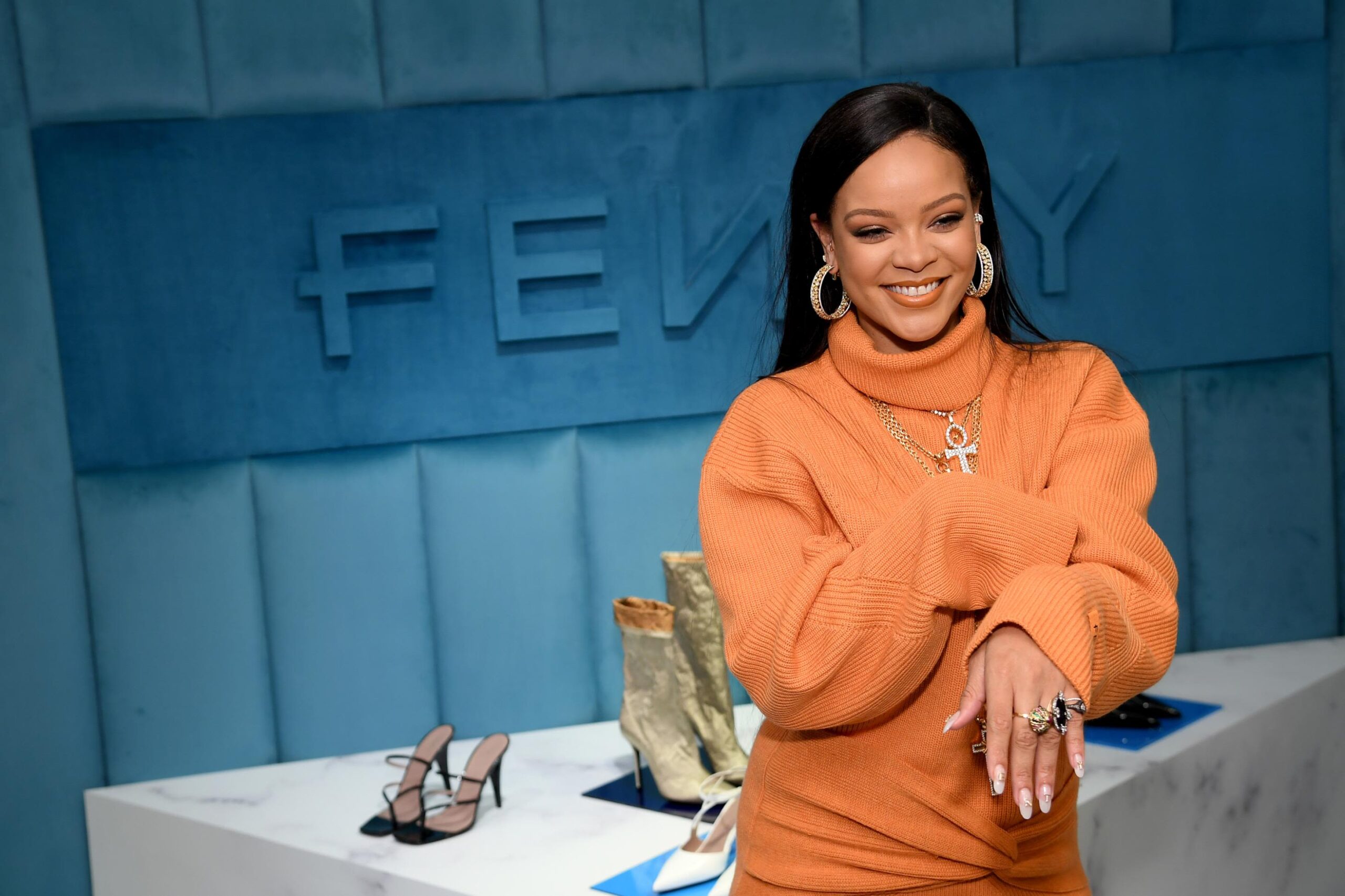
Fenty Beauty paired a wide foundation range with a coordinated international launch. The combination mattered because shoppers could test the promise at the counter.
In September 2017, Rihanna’s new beauty brand gave shoppers 40 versions of one product to choose from. The product was Pro Filt’r Soft Matte Longwear Foundation, the centerpiece of Fenty Beauty’s first collection. The brand announced that it would launch across 1,600 stores in 17 countries, alongside online sales. Those two figures tell different parts of the story. Forty shades described the assortment. The stores and online channels gave people places to see whether the assortment worked for them.
Foundation made the decision unusually easy for a shopper to test. A lipstick can be a matter of taste. A foundation sold as a match has to sit next to the skin on someone’s face, under light that changes, and still look like it belongs there. Rihanna told TIME in 2017 that some customers were finding a shade for the first time and that the experience could be emotional at the counter. That was her account of individual reactions. It also points to a simple test a brand could understand. Could a shopper who was used to leaving empty-handed find something she would wear?
A wide range from the first day
Fenty Beauty launched with Kendo, the beauty developer owned by LVMH. Its release listed the 40 shades within a wider assortment of 91 stock-keeping units. The foundation choices were part of the initial product plan, with distinct shades shoppers could buy within the same formula. The brand’s product description emphasizes tones that had traditionally been hard to match. TIME later pointed out that companies including M.A.C and Make Up For Ever already sold broad ranges. Rihanna’s distinction lay in putting the range at the center of a highly visible launch.
The business choice sits between product development and distribution. Each shade has to be produced, identified and made available through the channels selling it. At a physical counter, a tester can help someone choose between adjacent shades. At an online storefront, images and product descriptions have to do more of that work. Both routes can be useful. Each can also fail someone if the shade she finds is unavailable to buy. The launch figures establish the scale Fenty announced. They leave open which stores had every shade, how stock was replenished and what customers actually found in each market.
This is where Rihanna’s role as a founder matters. Fenty Beauty identifies her as founder, chief executive and an owner. Her involvement gives the launch a different shape from a celebrity appearance attached to a finished product. In her TIME interview, she described wanting customers to feel included, with the foundation range giving that intention a specific form. Kendo supplied a development partnership and the announcement named Sephora among the retail routes. The public record supports the combination of founder direction, development and distribution. It gives no basis for assigning a private ownership percentage or reconstructing how the partners divided every decision.
The counter as a test
A beauty launch can be judged several ways. Advertising makes it visible. A product list shows what the manufacturer makes. At the counter, the customer can judge the result on her own skin. Bringing those three moments together made Fenty’s promise easier to interrogate. A large assortment hidden behind a special order would have posed a different test. So would a campaign featuring a broader range of faces than the stock on offer could serve.
For founders in other categories, that distinction travels. A footwear brand might offer a wide size range, then discover the sizes its customers need most rarely make it to the stores closest to them. A personal-care company might develop a product for a particular need and learn that shoppers can find it online but cannot get it delivered affordably. These are hypothetical examples. They show why the claim belongs to the product and the route to the customer at the same time. Inventory, delivery and access are where the marketing can be checked.
One way to learn from the launch is to ask three separate questions. What choices does the product give people? Where can those people actually try or buy them? How reliably can they get the same choice the next time? The first question can be answered with a product sheet. The second takes retailer and market data. The third takes a longer look at inventory, returns and repeat purchases. The public accounts of the 2017 launch give a substantial answer to the first two at launch scale. The third remains a separate reporting question.
Fenty Beauty’s debut also makes the case for treating customers’ experiences as a source of information about the product. Someone whose foundation has always matched may never think to ask whether a display’s deepest shades lean red, neutral or golden, or whether a store stocks the shades it uses in advertisements. The customer who has spent years mixing two products has good reason to notice. A brand can learn from the specificity of that problem. It can make a more precise assortment and then check whether the choices reach the people they were designed to serve.
Nearly a decade after that launch, the useful question is still one a shopper could answer for herself. Rihanna put a number on the assortment and put it in front of customers across markets. The consequence for someone standing at a counter came down to a smaller and more practical measure. Could she find a foundation she wanted to take home?