Professional networking has changed dramatically over the last two decades.
There was a time when networking meant attending conferences, exchanging business cards, and hoping someone remembered your name months later.
Then came professional networking platforms that digitized resumes, allowed users to connect with recruiters, and made it easier to build online professional identities.
Those platforms transformed the way people searched for jobs and expanded their professional networks.
But the workplace has changed again.
Artificial intelligence is reshaping industries.
Remote work has become mainstream.
Freelancing is now a career choice instead of a side hustle.
Communities have become the new classrooms.
Personal brands influence hiring decisions.
And collaboration happens across continents.
The future of professional networking is no longer about collecting connections.
It’s about creating opportunities.
Networking Has Evolved Beyond Resumes
For years, resumes were the foundation of professional networking.
People summarized years of experience into one or two pages and hoped employers would notice.
Today, employers want much more.
They want to know:
- What have you built?
- What problems can you solve?
- How do you communicate?
- What communities are you part of?
- How do other professionals engage with your work?
- What skills are you actively developing?
A resume can answer only a few of these questions.
Your digital presence answers the rest.
The Rise of the Reputation Economy
The modern workforce is entering what many experts describe as the reputation economy.
Your professional reputation is no longer defined only by your job title.
It’s built through:
- The knowledge you share.
- The communities you contribute to.
- The projects you complete.
- The conversations you participate in.
- The recommendations you receive.
- The consistency of your work.
Every interaction helps shape how others perceive your expertise.
Professional networking has become less about who you know and more about how you demonstrate value over time.
Communities Are Becoming Career Accelerators
One of the biggest changes in professional networking is the growing importance of communities.
Communities bring together people with shared interests, industries, goals, and challenges.
Inside these communities, professionals can:
- Learn from experts.
- Ask questions.
- Receive mentorship.
- Share experiences.
- Find collaborators.
- Discover freelance projects.
- Connect with employers.
- Explore career opportunities.
Many job opportunities are now discovered through conversations, referrals, and trusted communities before they ever appear on traditional job boards.
Communities have become one of the fastest ways to build credibility and meaningful professional relationships.
The New Career Journey
Career development no longer follows a straight line.
Today’s professionals often move between learning, freelancing, full-time employment, entrepreneurship, and consulting throughout their careers.
That means professional networking must support far more than job applications.
Modern professionals want platforms where they can:
- Learn new skills.
- Meet like-minded people.
- Build their personal brand.
- Showcase their work.
- Offer professional services.
- Find freelance opportunities.
- Apply for jobs.
- Collaborate with businesses.
- Continue growing throughout their careers.
Networking has become an ongoing experience instead of a single activity.
Why Traditional Networking Platforms Are No Longer Enough
Many professional platforms were designed during a different era of work.
They focus primarily on resumes, job searching, and connections.
While these remain valuable, today’s workforce expects more integrated experiences.
People don’t want to switch between multiple websites just to manage different parts of their careers.
- One platform for learning.
- Another for networking.
- Another for freelance work.
- Another for jobs.
- Another for discussions.
- Another for showcasing projects.
This fragmented experience creates unnecessary friction.
Professionals increasingly prefer ecosystems where these activities naturally connect.
Skills Are Becoming More Visible Than Degrees
Employers are paying greater attention to practical skills.
Whether someone learned through a university, bootcamp, online course, or self-study, the ability to demonstrate real capability is becoming increasingly important.
Professionals now showcase:
- Portfolios.
- Projects.
- Videos.
- Case studies.
- Articles.
- Community contributions.
- Technical demonstrations.
- Learning journeys.
Professional networking is becoming more dynamic because people can continuously demonstrate growth instead of relying solely on static credentials.
Artificial Intelligence Is Changing Networking
Artificial intelligence is transforming the way professionals discover opportunities.
AI can recommend:
- Jobs that match specific skills.
- Communities based on interests.
- Relevant learning resources.
- Potential collaborators.
- Professional connections.
- Industry discussions.
- Career development pathways.
Rather than searching endlessly, professionals increasingly expect intelligent systems that connect them with opportunities aligned to their goals.
The Next Generation of Professional Platforms
The future belongs to platforms that combine multiple career experiences into one connected ecosystem.
Instead of separating networking, learning, hiring, freelancing, and collaboration, these platforms bring them together.
This creates stronger professional relationships because users remain engaged throughout their career journey rather than visiting only when they need a new job.
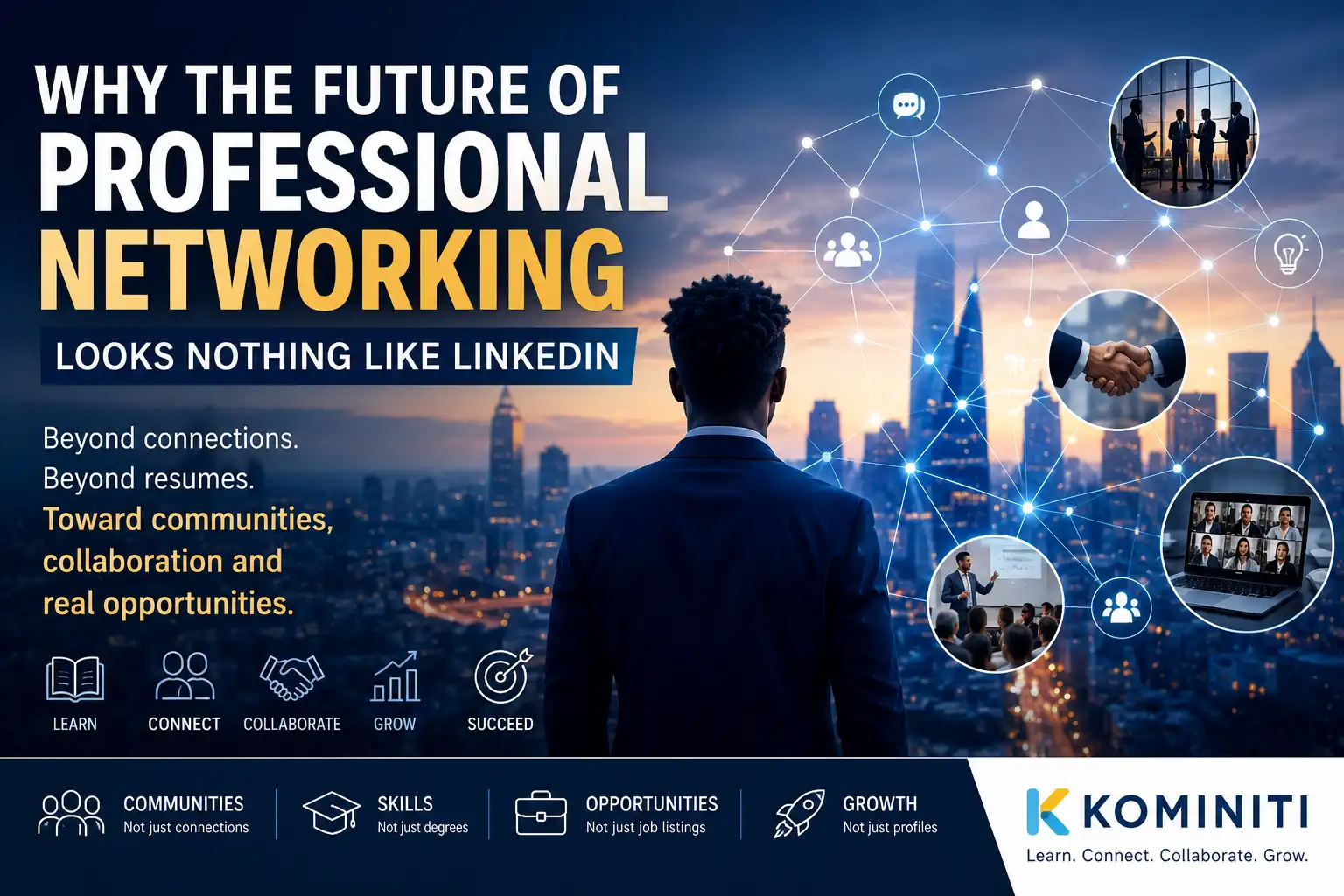
One example of this evolving model is Kominiti.
Kominiti combines professional communities, KLearning for skills development, KJobs for career opportunities, a freelance Marketplace for project-based work, and business pages that allow organizations and professionals to build lasting relationships.
Rather than focusing on a single career activity, Kominiti is designed to support continuous professional growth through learning, collaboration, networking, and opportunity.
Professional Networking Is Becoming Opportunity Networking
The purpose of networking has never been to collect contacts.
Its purpose has always been to create opportunities.
The difference today is that technology allows those opportunities to develop more naturally through active participation, shared learning, and trusted communities.
People are no longer asking:
“How many connections do I have?”
They’re asking:
“What opportunities can my network create?”
That shift changes everything.
Looking Ahead
The future of professional networking will be defined by value rather than visibility.
Communities rather than contact lists.
Skills rather than titles.
Collaboration rather than competition.
Continuous learning rather than one-time qualifications.
The professionals who thrive will be those who actively contribute, continue learning, build meaningful relationships, and participate in communities where opportunities naturally emerge.
Platforms that support this connected journey are likely to play an increasingly important role in the future of work.
Professional networking is no longer just about finding your next job.
It’s about building a career ecosystem that grows with you throughout every stage of your professional life.
As the world of work continues to evolve, the most valuable networks won’t simply connect people.
They’ll connect people to possibilities.