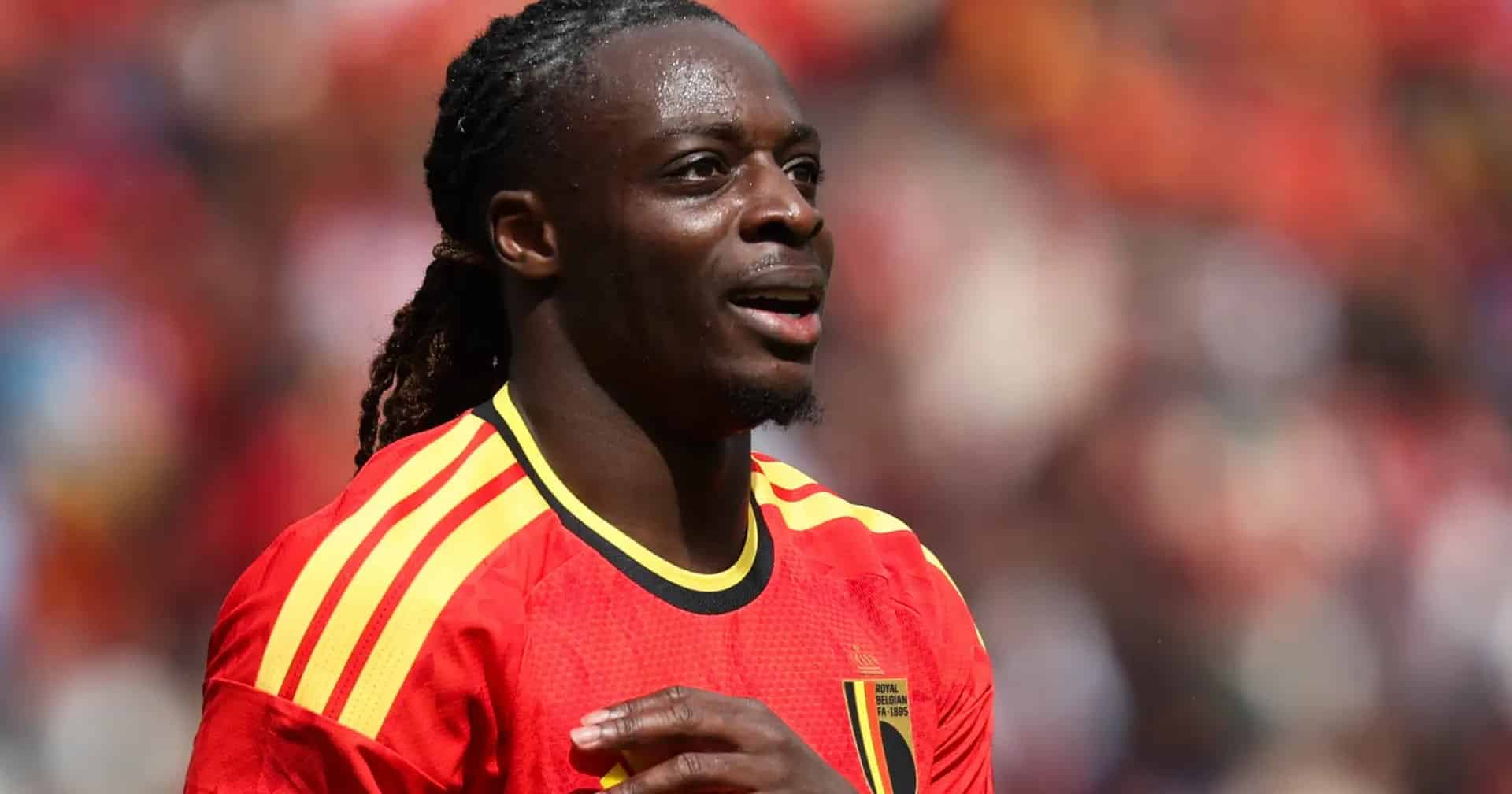
Jérémy Doku’s story did not start with applause; it began with complaints.
Long before he became one of Belgium’s most dangerous wingers, before Manchester City recognized his talent, and before defenders on football’s biggest stages had to prepare for his pace, Doku was just a boy in Antwerp who loved having the ball at his feet.
He loved to dribble. Other parents did not always appreciate this. In a recent interview with FourFourTwo, Doku recalled being criticized as a child for taking on players instead of quickly passing to his teammates. He said;
At a young age, I liked to dribble, and I got a lot of criticism from other parents because I didn’t pass the ball to their children!
What seemed selfish to some adults became the basis of his professional identity.
The lesson is simple: qualities dismissed early can later become defining strengths.
Now 24, Doku is no longer a problem on the playground. He is a forward for Manchester City, a Belgium international, and a clear example in European football of how developing unique skills can lead to success.
His Premier League record reflects that impact: 88 appearances, 11 goals and 19 assists for Manchester City.. UEFA’s data for the European Qualifiers shows his impact for Belgium, with five goals and three assists in eight qualifying matches.
For BlackElites, Doku’s rise goes beyond football. It tells a story about recognizing talent, diaspora identity, family support, elite coaching, and the bravery to build a career around what makes you unique.
The Talent Others Misread
Doku’s dribbling was not a gimmick; it was an early sign of his unique skill set.
According to FourFourTwo, Doku grew up playing on the streets of Antwerp and later linked his style to street football, futsal, family influences, and football idols like Lionel Messi and Eden Hazard. He described his talent as something natural that he learned to express purposefully on the field.
This distinction is crucial because many elite careers face a challenging early question: should a young talent conform, or should the system make room for what is different?
Doku’s answer was not about rebellion. He had to grow. He needed to learn when to dribble, when to pass, and when to turn entertainment into results. But he did not lose the essence of his game; he improved it.
That is the key difference between raw talent and reliable talent.
From Anderlecht to Rennes to Manchester City
Doku’s professional journey unfolded quickly. Manchester City’s announcement states he started his senior career at Anderlecht, made his first-team debut in 2018 at 16, played 37 senior matches, and scored six goals for the Belgian club before joining Stade Rennais in 2020. At Rennes, City credited him with 92 appearances, 12 goals, and 10 assists before moving to England in 2023.
Manchester City signed him from Rennes on a five-year contract in August 2023, making him their third signing of that summer after Mateo Kovacic and Josko Gvardiol. City emphasized that Doku was not just another young winger; he was a valuable attacking player with speed, dribbling skills, and Champions League experience.
In business terms, City acquired a specialist, rather than a generalist. They chose a unique wide player who could make a difference in matches where structure alone was insufficient.
Doku’s story fits the modern talent economy. Elite organizations do not just hire people who fit in; they seek controlled uniqueness. They invest in rare skills that can change results.
Why His Style Became More Valuable
Football is now more tactical, data-driven, and physically demanding. Yet one fundamental truth remains: a player who can beat his opponent forces the entire system to react.
Doku does exactly that.
His value extends beyond goals. He stretches defensive lines, creates overages, wins territory, relieves pressure, and forces opponents to make tough choices. Reuters highlighted his speed, dribbling, and ability to outmaneuver defenders as valuable qualities Belgium could utilize in the 2026 World Cup, especially against elite defenses.
This aspect of Doku’s career carries a leadership lesson. In any competitive field, the most valuable people are not always those who just follow the rules. They are the ones who generate new options.
For entrepreneurs, the comparison is clear. A founder may face criticism for seeing a market differently. A creative might be told their style is unconventional. A young executive may be told their approach does not fit the environment. However, markets do not reward sameness indefinitely; they reward useful uniqueness.
Doku’s talent became valuable because it addressed a genuine problem: how to unsettle defenders when space is tight.
The Diaspora Layer in Doku’s Story
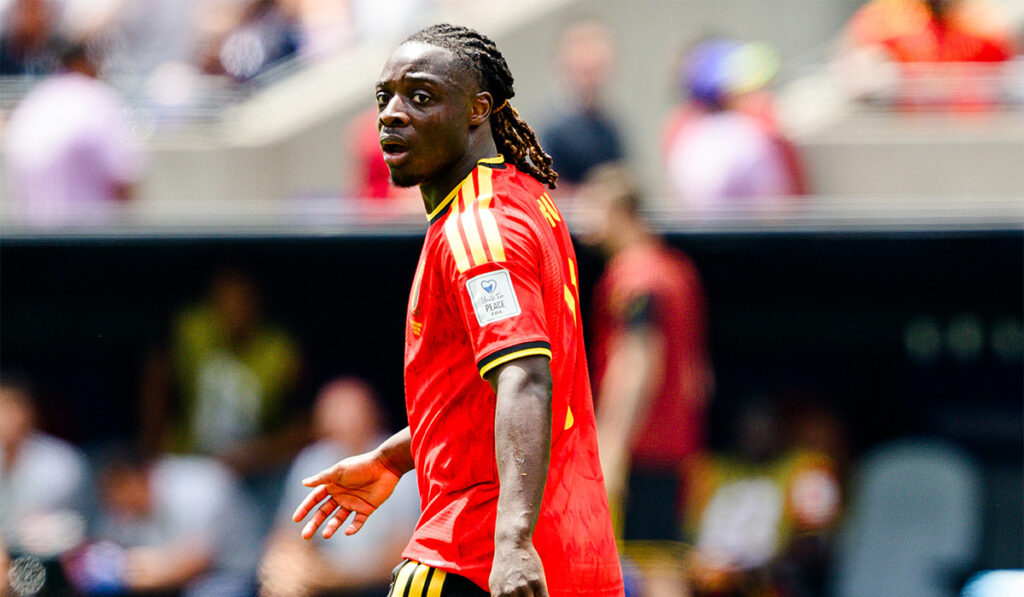
Doku is of Ghanaian descent. His connection to Ghana is part of his football origin story. As FourFourTwo reports, his passion for the game deepened during a family trip to Ghana when he was about five. His father later helped place him in a team back in Belgium to keep him focused and away from negative influences in his neighborhood.
This detail is significant.
Many Black athletes from immigrant and diaspora families bring much more than talent to elite sports. They bring discipline, family sacrifices, cultural pressures, and a need to make the most of their opportunities. Doku’s story embodies this dynamic. His success was not solely about skill; it was shaped by the support around him.
Behind his dribbles was a family that recognized risks and redirected his energy.
This is often how success happens in Black communities across the diaspora. Talent can open doors, but family support, mentorship, and environment often determine if talent lasts long enough to lead to wealth, influence, or leadership.
World Cup Pressure and the Next Stage
Doku’s experience in the 2026 World Cup was not just a highlight reel. Reuters reported that he faced illness, missed a match due to the birth of his son, and lost his starting position during Belgium’s campaign. However, the same report noted that his unique qualities still made him a strategic option.
Belgium defeated the United States 4-1 in the round of 16 to advance to the quarter-finals, but then lost to Spain, which The Guardian described as the symbolic end of Belgium’s golden generation.
This context is crucial. Doku is not stepping into a settled Belgian dynasty. He is part of a new chapter.
Kevin De Bruyne, Romelu Lukaku, Thibaut Courtois, and the older Belgian players defined an era. Doku now represents the shift from the golden generation to a new identity. The responsibility is different. He is no longer just the promising young winger; he is becoming one of the faces expected to lead Belgium forward.
For Manchester City, the challenge is similar. Doku has already shown he can create. The next step is consistency, scoring, and making decisions at the highest level. Reuters noted his ambition to become the best winger in the world while acknowledging his need to improve his goal-scoring.
That is the challenging part of success: talent gets you noticed, but improvement keeps you valuable.
The Business Lesson: Don’t Kill the Difference Too Early
Doku’s story resonates with founders, investors, and leaders because it illustrates the risks of misinterpreting unconventional talent.
At the playground level, his dribbling irritated some. At the elite level, it turned into a valuable skill. The difference was development.
Companies often make the same mistake as those parents. They dismiss what seems unrefined. They underestimate people who think differently and force unique talents into conventional molds. Then they wonder why innovation fades away.
Doku’s rise provides a clearer lesson: not every rough edge should be smoothed out. Some should be nurtured, protected, and turned into an advantage.
The best leaders know how to recognize this difference.
Why Jérémy Doku’s Success Matters
Jérémy Doku’s story is still unfolding. He has not yet reached his full potential, which makes his trajectory all the more compelling.
Doku is a Black European footballer of Ghanaian heritage representing one of the world’s biggest football clubs. He started with Anderlecht, developed at Rennes, faced the pressure of Manchester City, and now carries significant expectations for Belgium. His story shows that success is not just about silencing critics.
Sometimes it is about proving the critics misunderstood the very quality that would define your success.
As a child, Doku was often told to pass more and dribble less.
Today, the world watches because he continues to take on challenges. The very instinct that once drew criticism has become the reason he is feared on football’s biggest stages.