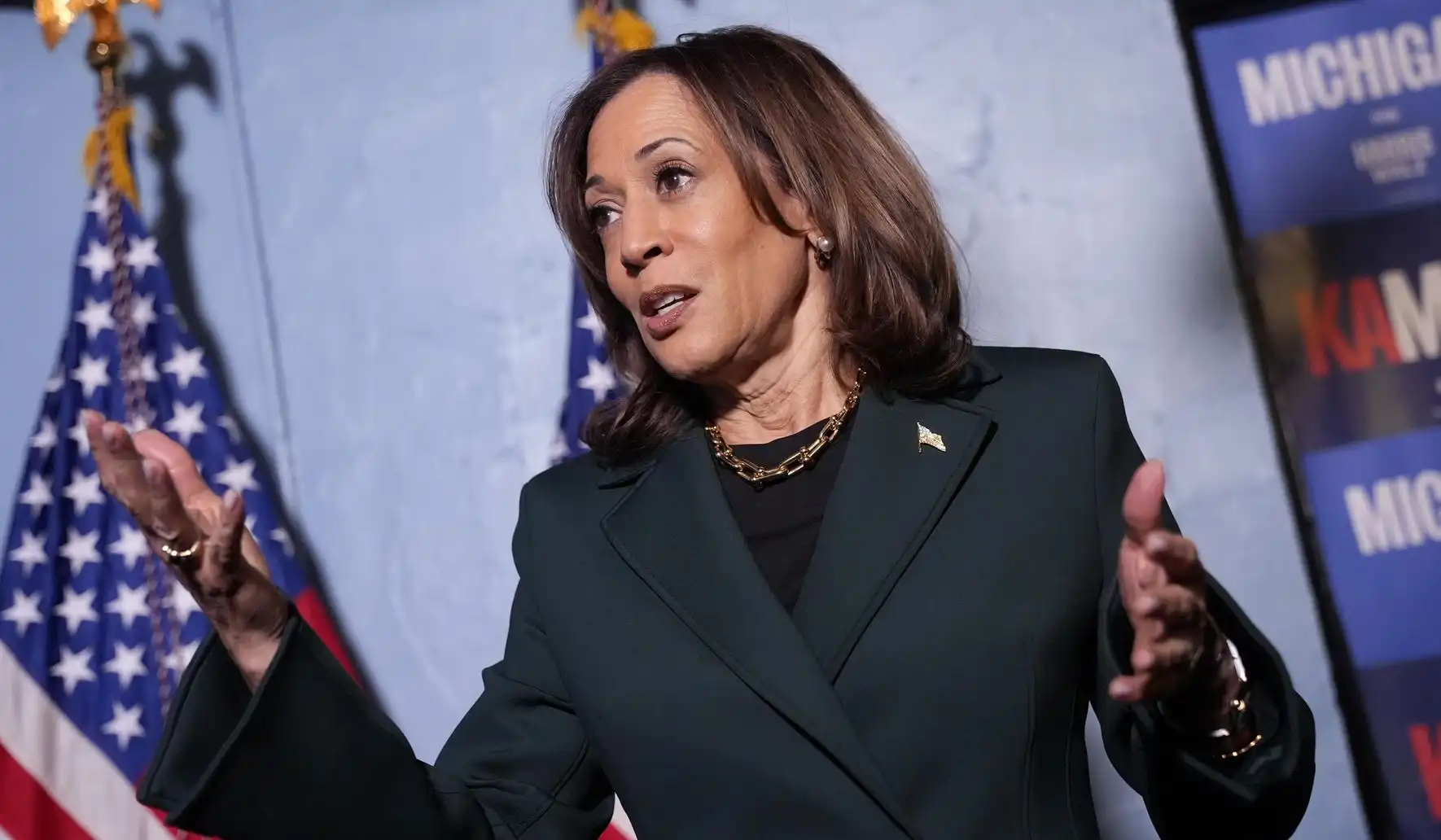
In a notable intervention in the ongoing national debate about U.S. foreign policy, former Vice President Kamala Harris stated this week that the course of the war between the United States and Iran would have been very different if she had been president during the key decision-making period. Her comments, made during a prominent interview and widely discussed in political circles, highlight the ongoing conversation about leadership, diplomacy, and the future of American global strategy.
Harris Frames an Alternative Approach to the Iran Conflict
Speaking on Friday at the Global Leadership Forum in Washington, Harris addressed the controversial Iran conflict. This issue became increasingly tense in early 2026 due to a series of regional attacks and strategic errors. While details about the current state of the conflict remain fluid, Harris’s critique focused on what she saw as missed chances for de-escalation and diplomatic engagement.
“If I had been president at that moment,” Harris said, according to reports, “the Iran situation would have looked very different, not because we would have been soft, but because we would have been strategic, measured, and based in diplomacy.”
Harris argued that her approach would have combined strong defense readiness with active diplomatic engagement, especially with U.S. allies and regional partners. “We would have worked tirelessly to build an international coalition for negotiation before allowing tensions to spiral into wider conflict,” she said. “War should always be the last resort, not the default.”
Balancing Strength and Diplomacy
Harris’s remarks align with her long-standing belief in what she calls principled strength. This philosophy treats military deterrence and diplomatic negotiation as complementary strategies rather than competing ones. Throughout her time as vice president, she promoted strengthening alliances, increasing economic sanctions tied to clear goals, and pursuing back-channel diplomacy with adversaries when needed.
“In moments of crisis,” she continued, “leadership is not measured by how loudly you can threaten retaliation, but by how skillfully you can secure peace without sacrificing security.”
Her comments have received both praise and criticism across the political spectrum. Supporters highlight her focus on diplomatic alternatives in an increasingly polarized foreign policy environment. Critics argue that her vision could embolden adversaries who see restraint as weakness. Yet even some skeptics recognize the importance of rethinking engagement strategies as power dynamics evolve quickly.
Context: The Iran War and U.S. Foreign Policy Turmoil
The conflict with Iran escalated into a wider confrontation in early 2026 after a series of drone strikes in the Persian Gulf and retaliatory attacks on U.S. facilities in the Middle East. This situation is widely viewed as the most serious since the U.S. withdrawal from Afghanistan and the resulting geopolitical shifts. It caused turmoil in global markets and raised questions about America’s strategic priorities.
Political analysts point out that Harris’s comments come at a time when the public’s confidence in traditional military solutions is decreasing. Many voters, especially younger ones, prefer multilateral diplomacy and targeted economic pressure instead of large-scale military actions.
“Americans want leadership that reflects both strength and wisdom,” said one foreign policy expert. “Harris’s framing connects with that desire for thoughtful engagement.” (Paraphrased from analysis circulating in public commentary.)
Harris’s Vision for Future Leadership
Central to Harris’s message is a vision for American leadership that prioritizes partnerships, invests in diplomatic frameworks, and engages adversaries when there is a strategic benefit. She emphasized that confronting authoritarian aggression and defending U.S. interests are not conflicting goals.
“We must maintain a firm commitment to our security,” Harris said. “But that commitment must be matched by our determination to seek solutions that save lives, uphold human dignity, and reinforce the global order.”
She also cited lessons from history, noting that previous conflicts could often have been less severe with earlier engagement and clearer communication with allies. “Leadership requires courage, not just on the battlefield, but at the negotiation table,” she said.
Political and Public Reaction
Harris’s remarks have made waves in Washington and beyond. Democratic leaders mostly welcomed her perspective as an important addition to the national discussion about American global strategy. Some Republican figures dismissed her comments as political rhetoric disconnected from real-world conditions.
Yet across the political divide, her focus on balanced decision-making reflects a broader cultural and generational shift in expectations for U.S. foreign policy. This shift values diplomacy and coalition building alongside defense readiness.
Looking Ahead
As the Iran conflict continues to change, Harris’s intervention is likely to influence how policymakers and the public assess past choices and future directions. Her proposal of an alternative pathway highlights an ongoing debate at the core of American leadership: how to protect security while pursuing peace.