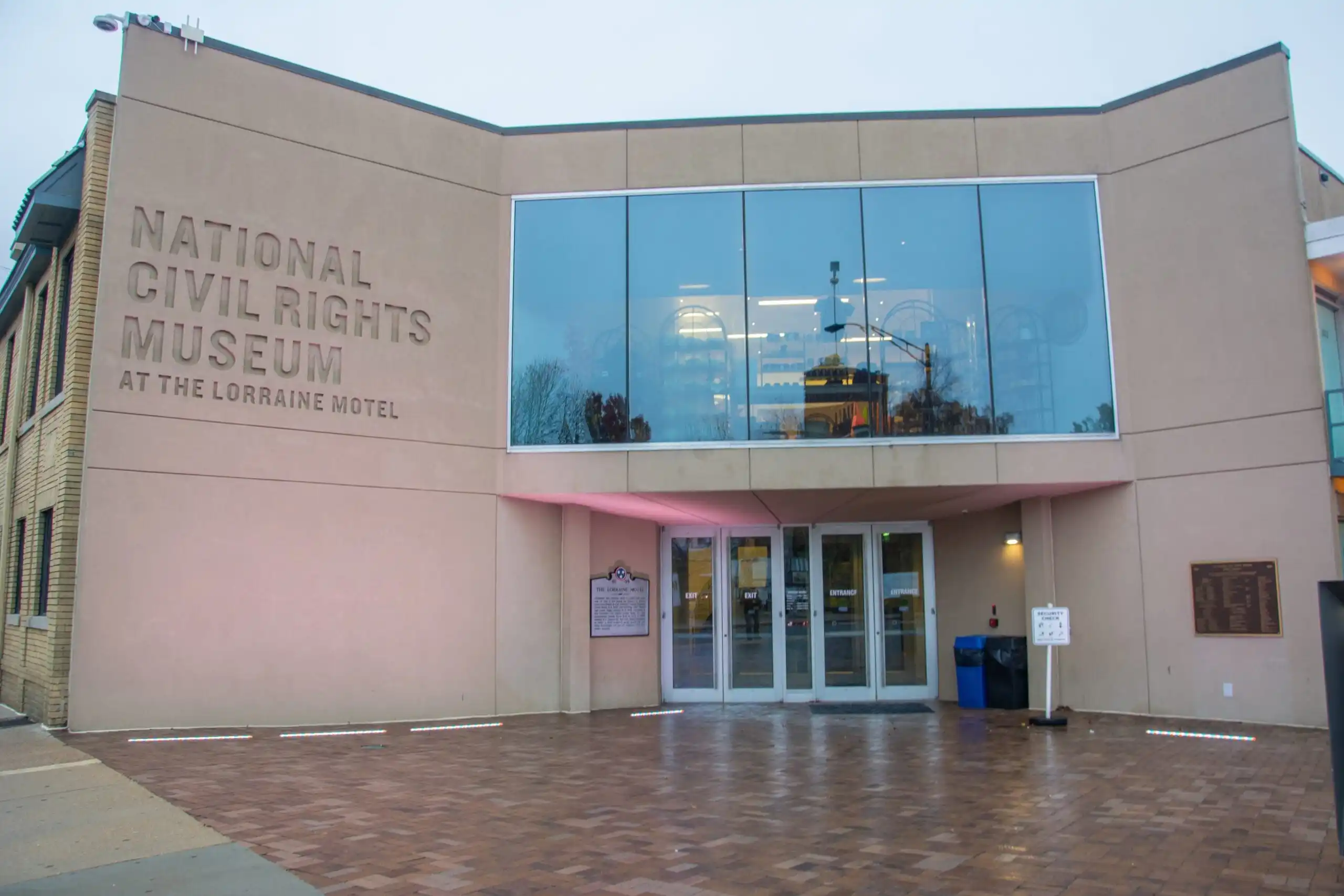
The National Civil Rights Museum has opened the Bayard Rustin Institute for Justice and Education. This national center is the first of its kind. It aims to bring one of the Civil Rights Movement’s most important thinkers into a living curriculum for the 21st century.
The institute officially opened on June 9 at the museum campus, located at the historic Lorraine Motel site. The event brought together educators, civic leaders, youth organizers, and scholars to celebrate both reflection and progress. With support from a major grant by the Lilly Endowment, the Bayard Rustin Institute will serve as a permanent center for:
- research,
- leadership development,
- exhibitions,
- and community engagement. It is rooted in Rustin’s philosophy of disciplined nonviolent action.
Restoring a Strategist to Full Stature
Bayard Rustin was a key strategist in the Civil Rights Movement. He played a crucial role in organizing the 1963 March on Washington. He also served as an advisor to Dr. Martin Luther King Jr. Yet, his contributions were often overlooked due to systemic bias and his identity as a gay man.
“The Bayard Rustin Institute is not just a commemoration; it is a curriculum, a blueprint,” said Dr. Russ Wigginton, President of the National Civil Rights Museum, during the unveiling on Tuesday, according to reports. “Rustin created the tools that made the movement effective, and this Institute aims to put those tools back into people’s hands.”
Museum leaders emphasize that the new institute represents a move from merely remembering history to actively educating. It focuses on strategic organizing, justice rooted in faith, and collective action that is still relevant to today’s democratic movements.
Anchored by History, Built for Today
A key part of the institute’s scholarly mission is the recently acquired Rustin Collection. This collection includes primary sources such as letters, organizing documents, and personal papers that shed light on Rustin’s work. These materials will be accessible to researchers, educators, and students, creating a living archive for in-depth study and interpretation.
“The insight from this collection changes our understanding of how movements are built, not just remembered.” Dr. Luther D says, a scholar in residence and curator for the lecture series. “We’re preparing a new generation with the actual plans behind successful nonviolent strategies.”
Programs Designed for Leadership
Some of the first initiatives under the Bayard Rustin Institute include:
- Rustin Social Change Fellowship (2026)
This six-month leadership training program empowers young leaders to create and lead community campaigns focused on nonviolent civic engagement. The first group will include high school students working with local partners to address real issues. - Community Training
In partnership with MICAH (Memphis Interfaith Coalition for Action and Hope), the institute will incorporate Rustin’s organizing principles into ongoing leadership development and civic engagement programs through 2026. - Rustin Lecture Series (Fall 2026)
This public engagement platform will feature moderated discussions and informal talks with scholars, activists, elected officials, and community leaders about Rustin’s lasting impact on movements for justice, democracy, and human rights. - Traveling Exhibition (2027)
A nationwide exhibit based on the Rustin Collection will launch in community venues outside Memphis, making Rustin’s legacy more widely accessible.
Partnerships with Purpose
The institute opens with three founding partners that reflect both local roots and national influence:
- MICAH – an advocacy organization based in Memphis.
- BRIDGES Youth Action Center – focused on youth leadership and empowering narratives.
- Gamaliel – a national faith-based organizing network that will help bring the institute’s curriculum into practice.
“This initiative changes how American history is taught and experienced,” said a representative from BRIDGES Youth Action Center. “It connects young leaders with strategic theory and practical organizing tools.”
A Vision for Civic Future
Museum officials view the Bayard Rustin Institute as a long-term commitment to justice education. It honors legacy through active learning, intergenerational dialogue, and movement strategies that go beyond traditional classroom settings.
The institute empowers the next generation of civic leaders with the insight of a master strategist who helped shape the nation’s conscience.
“This is where memory meets method,” Dr. Wigginton said, summarizing the institute’s role in American civic education.