Food can tell you where people came from, what they survived, what they had access to, what they refused to forget and what they turned into something of their own. That is especially true in Black America.
Ask someone about the food they grew up eating and you open a door to an entire family history. Maybe it is a pot of collard greens simmering on a Sunday afternoon, or red beans and rice in New Orleans. Maybe it is a plate of fried chicken that somehow tastes better when somebody’s grandmother made it, or macaroni and cheese brought to a family gathering in a foil pan that comes home almost empty.
For many Black Americans, these foods are more than recipes. They are memory, migration, celebration and survival. And sometimes, they are arguments. Who makes the best macaroni and cheese? Does potato salad belong at every cookout? How much seasoning is too much seasoning? Should cornbread be sweet? And perhaps the most dangerous question of all, who made the greens?
The jokes are familiar because the food is familiar, but underneath those everyday traditions is a remarkable story about how African Americans shaped American cuisine while carrying pieces of older cultures with them. Historians and food scholars have a word for this larger web of growing, cooking and passing down food: foodways. The Smithsonian’s National Museum of African American History and Culture describes foodways as more than what people eat. They include how food is grown, prepared and woven into people’s lives. Africans brought to the Americas carried agricultural knowledge, cooking techniques and memories of ancestral recipes with them, and those traditions changed as people encountered new ingredients, new environments and brutal circumstances.
The result is not one single “Black cuisine.” It is a collection of regional traditions, family recipes and cultural influences that have travelled across the United States. Here are some of the foods that help tell that story.
Food carries migration in a way that history books sometimes struggle to capture. A family can move hundreds of miles and still preserve a taste of where it came from.
1. Greens Tell a Story About Making Something Out of What You Have
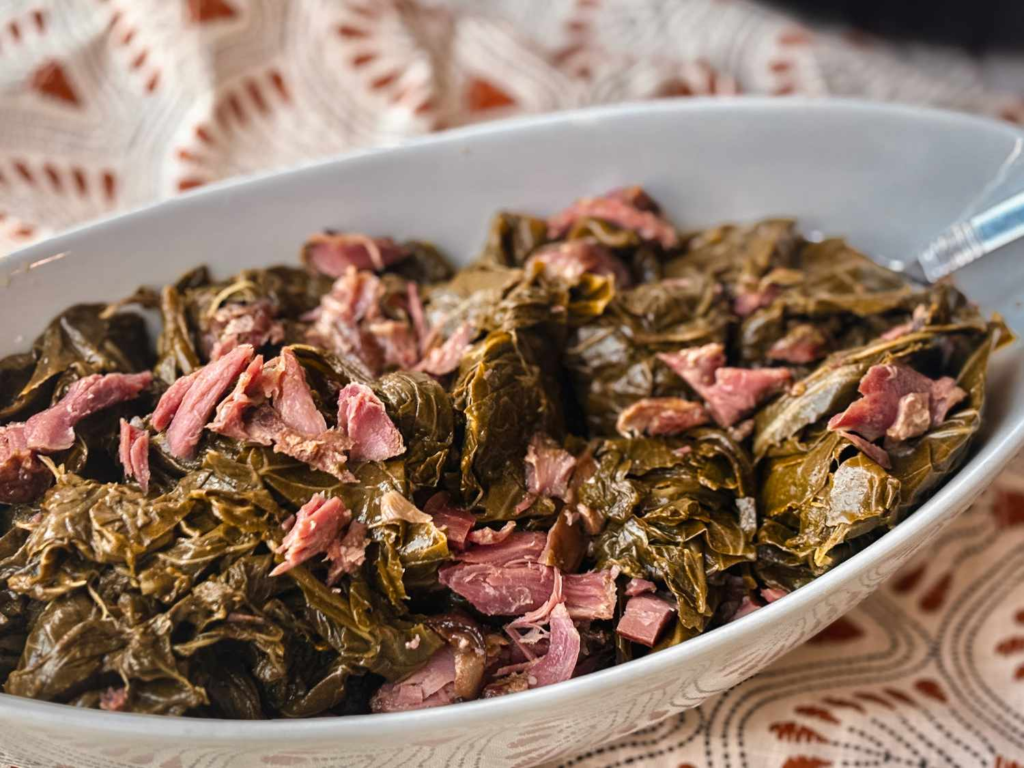
Collard greens may look like a simple side dish, but they are anything but. Greens have existed across Africa, Europe and North America for centuries, though African Americans developed their own traditions around preparing them in the American South. Enslaved African Americans used greens and scraps of meat to stretch limited food supplies, and the Smithsonian’s account of that history describes how those dishes eventually became beloved staples of Southern cooking.
That history is important, but there is a danger in reducing the story to the familiar line that Black people simply “made do with scraps.” African Americans were not merely passive recipients of whatever food was left behind. Enslaved people brought agricultural and culinary knowledge from Africa, adapted it to their surroundings and created new food traditions under extraordinary constraints.
That creativity travelled. During the Great Migration, millions of Black Americans left the South for cities including Chicago, Detroit, New York, Cleveland, Philadelphia and Los Angeles, and they brought their cooking with them. The pot of greens that once belonged to a Southern kitchen could now appear in a Northern city apartment, carrying with it not just a recipe but a memory of home.
That is why a plate of greens can mean something completely different from a generic vegetable side. For somebody it is dinner, for somebody else it is their grandmother’s kitchen, and for someone who grew up far from the South it can be one of the strongest connections they have to a family history they never personally lived.
2. Red Beans and Rice Connects Black America to New Orleans
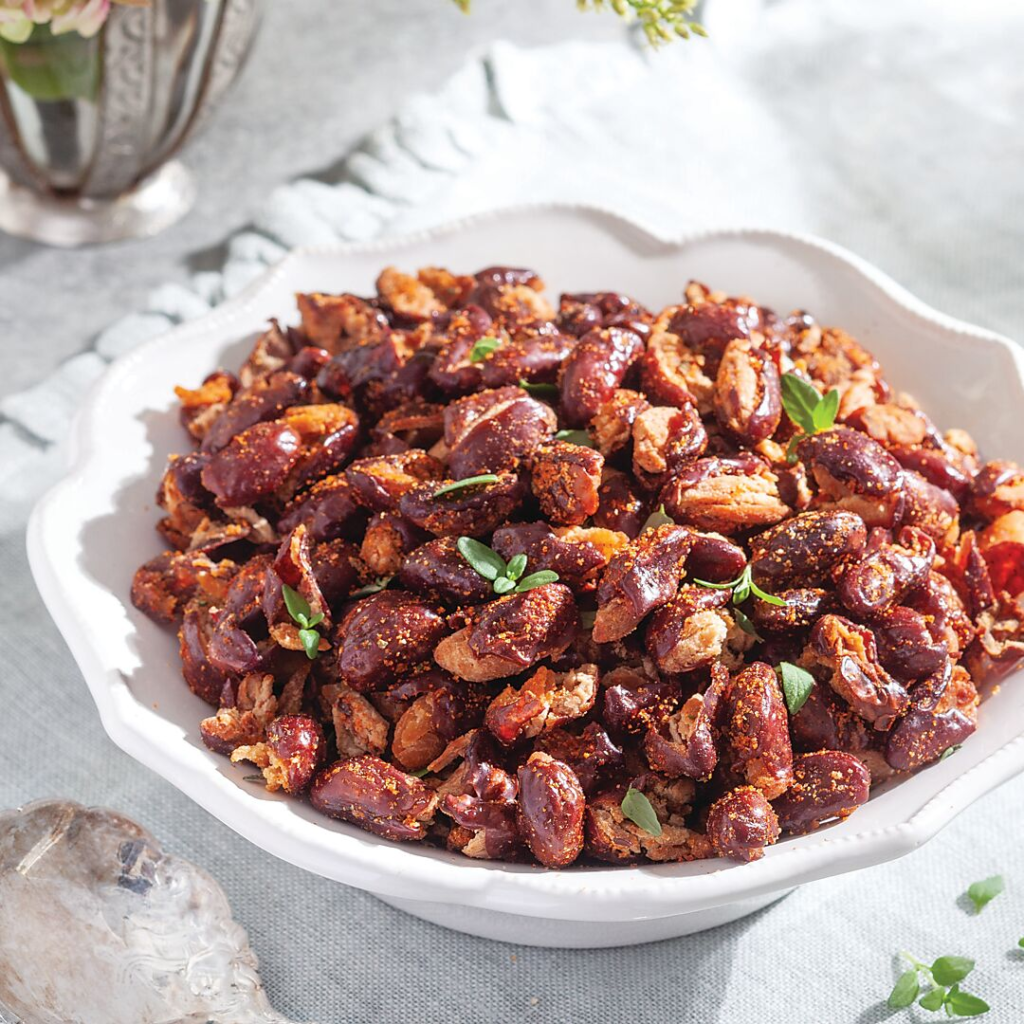
New Orleans has always been a place where cultures collide, mix and produce something entirely new, and red beans and rice is one of the clearest examples. The dish has roots in New Orleans Creole culture, drawing from African, European and Caribbean influences, including rice cultivation techniques carried over from West Africa and kidney beans that arrived with Haitian migration. Jazz trumpeter Louis Armstrong famously signed his letters “Red beans and ricely yours,” which tells you something about the dish’s cultural reach.
Red beans and rice also illustrates why talking about Black American food requires regional thinking. Black America is not a single place. A family in New Orleans may have a completely different food vocabulary from a family in Birmingham. Someone raised in Charleston may grow up with dishes shaped by Gullah Geechee traditions, while a Black family in Detroit may have recipes carried north by grandparents who migrated from Mississippi or Alabama.
The food changes because the geography changes, and the history changes because the geography changes. And yet the thread remains. Food carries migration in a way that history books sometimes struggle to capture. A family can move hundreds of miles and still preserve a taste of where it came from.
A dish can begin under difficult circumstances and eventually become a marker of identity. It can be controversial, it can be mocked, it can be loved.
3. Chitterlings Carry One of America’s Most Complicated Food Stories
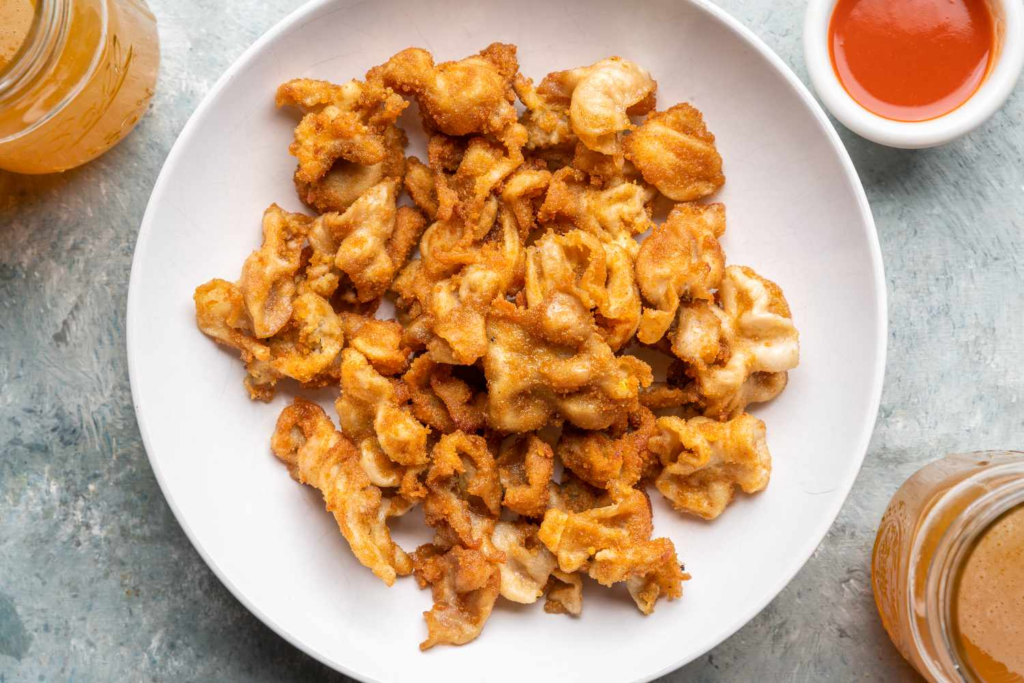
Few foods provoke a reaction quite like chitterlings. For some Black Americans they are a treasured holiday tradition, and for others the smell alone is enough to make them leave the house. Both reactions can coexist.
Chitlins–for short, as they are often presented through the simplified story that enslaved people were given the unwanted parts of pigs and turned them into food. There is truth in the broader history of scarcity and unequal access to food, but the actual history is more complicated than the popular version suggests. Food historian Adrian Miller treats chitlins as part of a much broader African American culinary story, alongside fried chicken, black-eyed peas, macaroni and cheese, greens, candied yams, cornbread and red drinks.
The tradition did not simply disappear as Black Americans moved away from the rural South. It travelled. One of the clearest examples sits in the Smithsonian’s Anacostia Community Museum archives, which document Shauna Anderson, a Washington, D.C. native whose grandmother taught her how to clean and prepare chitlins. Anderson later built a business, the Chitlin Market, around selling cleaned chitterlings, partly because she saw an opportunity to preserve a culinary tradition she believed was disappearing.
That is the part of food history that often gets missed. A dish can begin under difficult circumstances and eventually become a marker of identity. It can be controversial, it can be mocked, it can be loved, but once several generations attach memories to it, it becomes much more than an ingredient.
4. The Cookout is About More than What is on the Grill
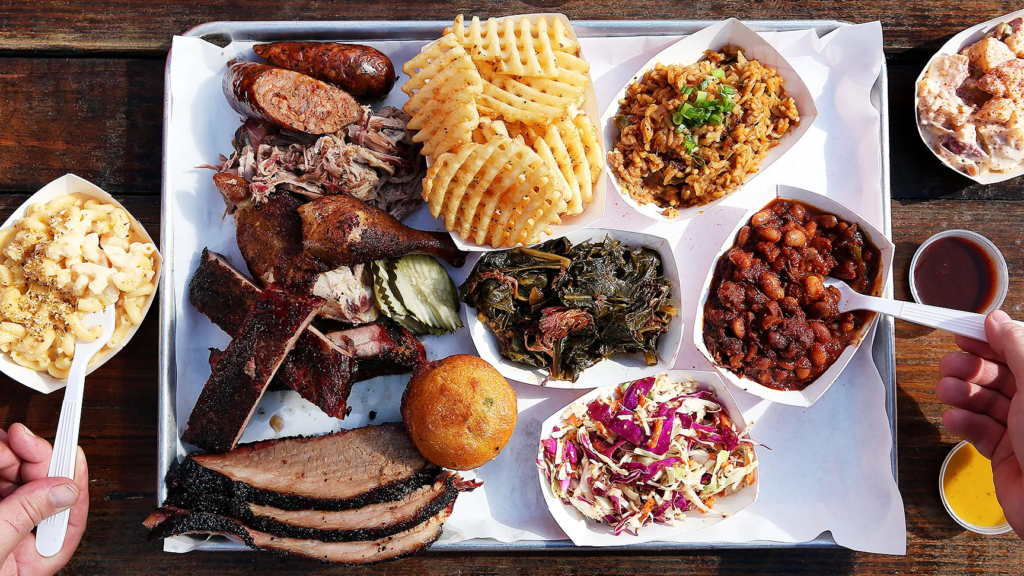
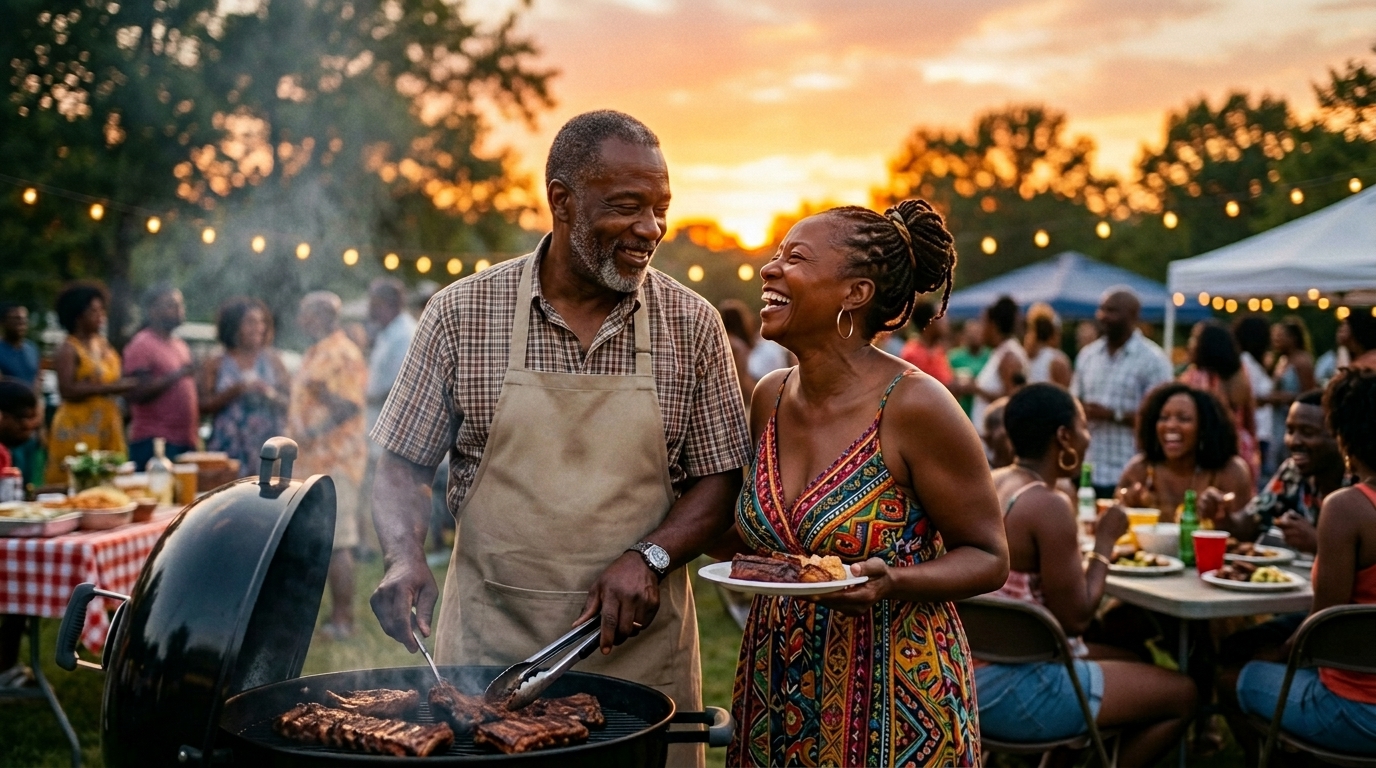
There is no single official definition of a Black cookout, yet everyone somehow knows one when they see one. There is usually a grill and usually far too much food. Someone has brought a dish that nobody remembers asking for but everyone will eat. Children are running around, adults who have not seen each other in months are catching up, someone is controlling the music, and someone else is complaining about the music. Eventually, somebody starts talking about who made the potato salad.
The cookout matters because it turns food into a social institution. It is a space where generations overlap. Grandparents can sit beside teenagers, cousins who barely see one another can reconnect, neighbours become friends and family friends become honorary relatives.
The menu itself varies enormously, which is part of the point. You might find ribs, hot links, chicken, catfish, baked beans, greens, macaroni and cheese, potato salad, cornbread, watermelon or peach cobbler, or whatever else the people involved happen to love. There is no official Black cookout menu, and there does not need to be one. What makes it recognisable is the ritual. The food creates the excuse for everybody to gather.
That is part of the larger story of African American foodways, where food has often been about community as much as nourishment. Sometimes you do not realise something is cultural until you leave it, which may be why someone can move across the country, attend dozens of different gatherings and still spend years searching for the potato salad that tastes like home.
5. Red Drink Has Been Carrying Memory for Generations

Then there is red drink. You know the kind: bright red, sweet, cold, often served at celebrations. It might be Kool-Aid, it might be red soda, it might be a homemade punch, and depending on the family and region, it might go by a completely different name.
The story behind it is surprisingly deep. Smithsonian Magazine has traced the tradition of African American red drink to West African beverages made with hibiscus and kola nut. As enslaved Africans were forcibly transported to the Americas, those traditions travelled with them and changed according to what ingredients were available. In the Caribbean, hibiscus-based drinks became associated with beverages such as sorrel, and on the American mainland, recipes adapted again. Eventually, powdered drinks and red sodas became popular substitutes.
So the red drink sitting in a plastic cup at a family gathering can have a much longer history than anyone standing beside the cooler might realise. It has moved across continents, changed ingredients, changed names and changed form, yet the cultural memory survived. That is what makes food history so fascinating. Sometimes an old tradition does not survive because somebody carefully protects the original recipe. Sometimes it survives because people keep making something that reminds them of home.
Black American Food Is Bigger Than Soul Food
There is a temptation to use “soul food” as shorthand for all African American cuisine, but it does not quite work. Black American food is too regional, too old and too diverse for one label to contain it.
Consider Gullah Geechee foodways in the Lowcountry, where rice, okra, benne seed, groundnuts, cowpeas, greens and seafood reflect deep African culinary influences adapted to the environment of the southeastern United States. Or consider New Orleans, where African, Caribbean, European and Indigenous influences produced food traditions that cannot be reduced to the idea of “Southern cooking.”
Then consider what happened when Black Americans migrated north and west. They carried recipes with them, changed them, combined them with ingredients they found in new cities, opened restaurants, cooked for their neighbours and passed recipes down. Eventually, some of those foods became part of mainstream American cuisine.
The soul food movement of the 1960s and 1970s helped elevate foods associated with Black Southern cooking, and chefs and cookbook authors such as Princess Pamela, Sylvia Woods and Vertamae Grosvenor helped bring those traditions to wider audiences. Even that story deserves nuance, though, because African American cuisine is not simply food created by hardship. It is also food created through expertise, the kind that chefs like Edna Lewis and Leah Chase brought to Southern and New Orleans cooking respectively, each helping shape how the rest of the country came to understand those cuisines.
That distinction matters. There is a difference between saying Black Americans survived by making food from limited resources and recognising that Black Americans became some of the people who shaped what Americans consider good food in the first place.
You are rarely just eating what is on the plate. You are eating where somebody came from, what they carried with them and what they decided was worth passing on.
The Recipe Is Often the Least Important Part
Maybe that is why food can be such a powerful way to understand Black America. A recipe tells you what goes into a dish, but it does not necessarily tell you why somebody still makes it 60 years later, why a grandmother refuses to measure anything, or why somebody who has lived in California for 30 years still wants the same dish their parents cooked in Mississippi. It does not tell you why a family argues over the right way to season greens and then happily eats every last serving, and it certainly does not tell you why a particular smell can send an adult straight back into childhood.
Food does, because food is portable history. It survives moves, generations and changing circumstances. A family may lose property, it may lose photographs, it may lose touch with a particular town, but somebody remembers how their grandmother seasoned the chicken. Somebody remembers the beans, the red drink, the cake that appeared at every birthday, and the dish nobody was allowed to touch until everyone arrived. And suddenly, the history is still there.
Black American food is therefore not simply a collection of dishes. It is evidence of adaptation, creativity, migration, community and memory. It is also a reminder that American culture was not built only in boardrooms, legislatures and famous institutions. It was built in kitchens, at dining tables, behind restaurant counters, at family reunions, at corner stores, at cookouts, in gardens, and around pots that had been simmering long before anyone sat down to eat.
That may be the most interesting thing about the food on a Black American table. You are rarely just eating what is on the plate. You are eating where somebody came from, what they carried with them and what they decided was worth passing on.