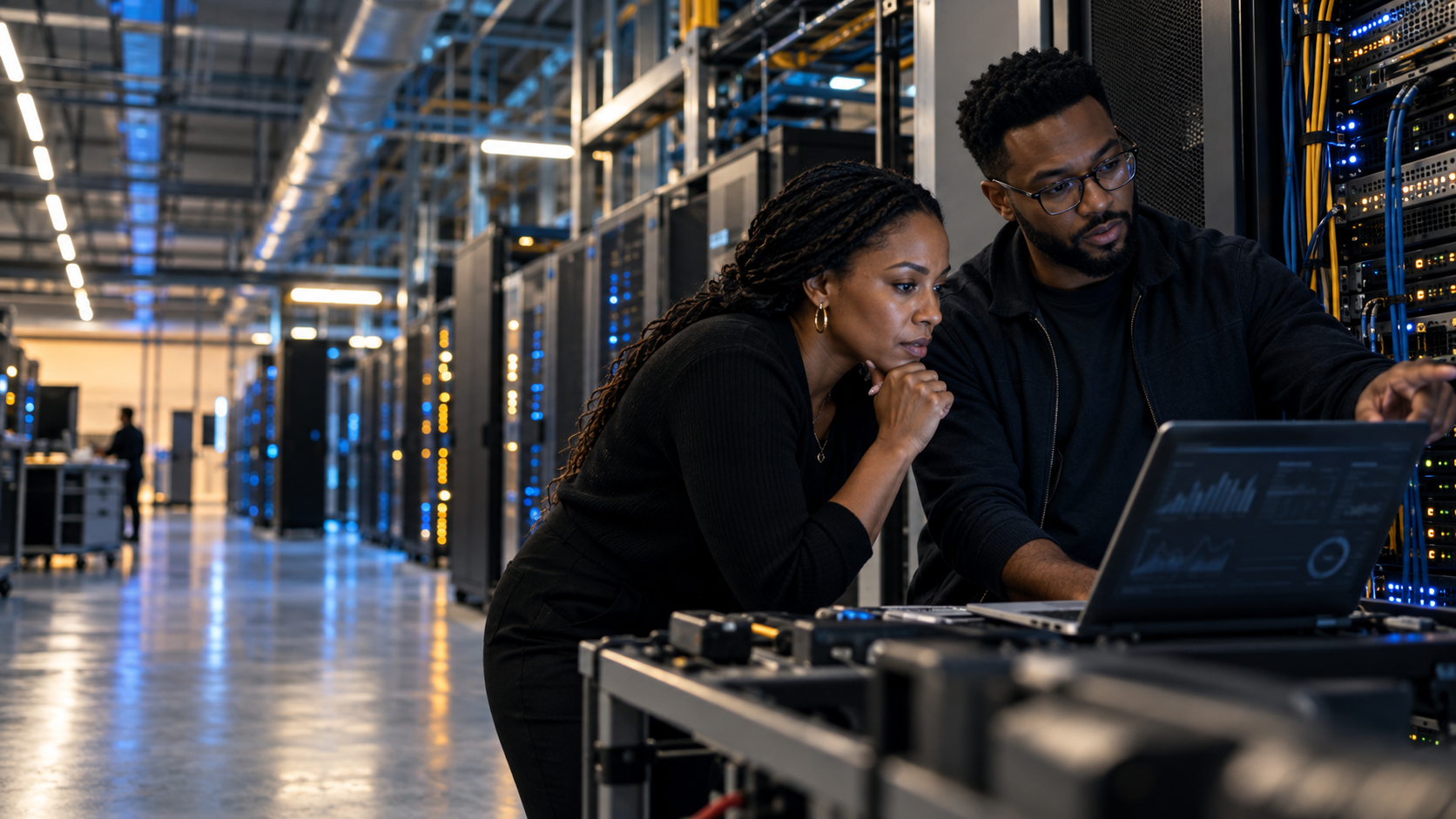
On May 21, 2026, the second and third floors of a former hospital in Tulsa’s historic Greenwood district opened for AI work. The Greenwood Cyber + AI Lab, developed by Black Tech Street and Microsoft, gives startups access to servers, equipment and technical support.
For founders, a working space can help turn an idea into a demo. The AI boom still leaves a harder test: finding buyers and building businesses that can keep going after the demo is done.
The AI Boom Needs More Than Model Builders
The International Energy Agency estimates that global investment in data centres reached about $500 billion in 2024, nearly twice the 2022 level. That is spending on facilities and equipment, not revenue from AI products. Data centres used an estimated 415 terawatt-hours of electricity worldwide that year, about 1.5% of global consumption. The IEA projects that use could rise to around 945 terawatt-hours by 2030, with AI among the main drivers. The 2030 figure is a forecast.
Those facilities need power, cooling, servers, networks and security. Companies using them need help connecting the systems to their own software and data. Some of the resulting business goes to data-centre owners. Some goes to the firms that make the technology work.
For Black founders, cybersecurity, installation, data preparation, maintenance and system integration offer possible entry points. Each still requires skilled people and buyers willing to trust a supplier with critical work. The companies supplying the AI buildout show how much of the investment is flowing beyond the firms building AI models.
David Steward Built a Technology Supplier From Five People
World Wide Technology began in 1990 with five employees and 4,000 square feet. David Steward recalled those beginnings in a 2020 interview with TIME:
In 1990, I started this company called World Wide Technology with five people and 4,000 square feet. — David Steward
By then, WWT had grown into a $12 billion company. It now says it has more than 12,000 employees and is the largest Black-owned company in the United States. Steward founded the business and remains its chairman. WWT works across AI, cloud, networking and data-centre infrastructure.
The company’s Advanced Technology Center gives customers a place to test systems before deployment. WWT says the centre has more than 500 racks and represents $1 billion in infrastructure investment. That is the company’s stated figure for the centre; it does not make WWT a hyperscale public cloud operator.
WWT built a business around getting complex technology to work together before it goes live. Testing can help customers avoid delays and costly failures. The centre supports that service; it is not an open campus competing for cloud tenants.
WWT also says it qualified for and graduated from the U.S. Small Business Administration’s Business Development Program, which provides training and technical assistance to eligible firms. That is one documented step in its history. It does not explain the company’s growth on its own. WWT’s scale reflects years of building the capacity and relationships to serve large customers.
Greenwood Is Building Local Access to AI
The federal funding behind Tulsa’s tech push went to a regional consortium, not to Black Tech Street alone. The U.S. Economic Development Administration announced approximately $51 million for the Tulsa Hub for Equitable & Trustworthy Autonomy, led by Tulsa Innovation Labs. The award covers six projects, including an AI Center of Excellence and programs linking manufacturers and startups to technology supply chains.
The Oklahoma Eagle reported that $10.6 million was allocated to the Greenwood AI Center. The Greenwood Cyber + AI Lab opened in May 2026. The paper also reported that creators will own the intellectual property they develop there. That gives founders a clearer stake in the work, though it cannot guarantee a customer or revenue.
Tyrance Billingsley II, founder of Black Tech Street, described the ambition this way:
Greenwood has an invaluable asset to ensure that its members are leading this revolution and shaping how our nation will lead. — Tyrance Billingsley II
Microsoft brings technical staff and equipment to the lab. Black Tech Street is building local participation. The wider Tulsa coalition connects the work to universities, manufacturers and public institutions. Whether that network helps startups secure paid work is still the key measure.
A demo does not pay a team while it waits for the next contract. Founders have to find buyers, negotiate terms and cover costs as they build. Felecia Hatcher’s work building an ecosystem for underrepresented founders points to the value of connecting entrepreneurs to investors and business support, alongside community institutions.
Data-Centre Growth Also Affects Local Communities
For most startups, owning a large data centre is not a realistic first move. Projects require land, power, equipment and years of financing and construction. A technical team cannot overcome those costs with a good product alone.
Black-owned firms can still pursue work around the facilities: cybersecurity, data preparation, installation, maintenance and integration. Those areas require less capital than building a campus, but buyers still expect a skilled team, reliable delivery and a track record.
People living near new data-centre projects have their own stake. The IEA says electricity demand is concentrated in the regions where facilities cluster. A project’s headline investment does not say who pays for grid upgrades, which local firms win contracts or how many jobs remain after construction. Those details matter to residents and policymakers weighing a proposal.
Partnership terms matter to founders, too. Does access include enough computing power to build and test? Who owns the code and data? Do cloud credits expire? What does a corporate partner expect in return? A short period of access may help with an experiment. A business needs customers and money to continue.
The Greenwood lab and WWT’s technology centre occupy different places in the same market. One gives local founders a place to work. The other supports a large Black-owned supplier serving major customers. Tulsa has opened the lab; the next evidence will come from what founders build there and whether buyers show up.
FAQs
What is AI infrastructure?
AI infrastructure includes data centres, chips, electricity, cloud platforms, networks, cybersecurity and services that connect and maintain these systems. Some parts require huge capital investment. Others rely on specialised skills and contracts with businesses that use AI.
Is the Greenwood Cyber + AI Lab a data centre?
No. It is a technology hub in Tulsa’s historic Greenwood district, opened by Black Tech Street and Microsoft in May 2026. Startups can access equipment, servers and technical support there, but it is not a hyperscale data-centre campus.
How much federal funding went to Tulsa’s tech hub?
The U.S. Economic Development Administration announced approximately $51 million for the broader Tulsa Hub for Equitable & Trustworthy Autonomy consortium. The Oklahoma Eagle reported that $10.6 million was allocated to the Greenwood AI Center.
How can Black founders enter the AI infrastructure market?
Founders can build services in cybersecurity, data preparation, installation, maintenance, AI testing and system integration. These areas usually require less capital than a data-centre campus, but buyers still expect specialised skills, reliable delivery and strong security.
Why does intellectual-property ownership matter?
Founders who retain the intellectual property they create can build products and companies around it, subject to their agreements. Access to a lab or equipment alone does not guarantee ownership, so founders should review partnership and funding terms before work begins.
What should communities ask about data-centre investments?
Ask who owns the facility, which local firms will win contracts, what jobs will last after construction and who pays for grid upgrades. The answers help residents and policymakers judge who benefits from a project and who carries its costs.