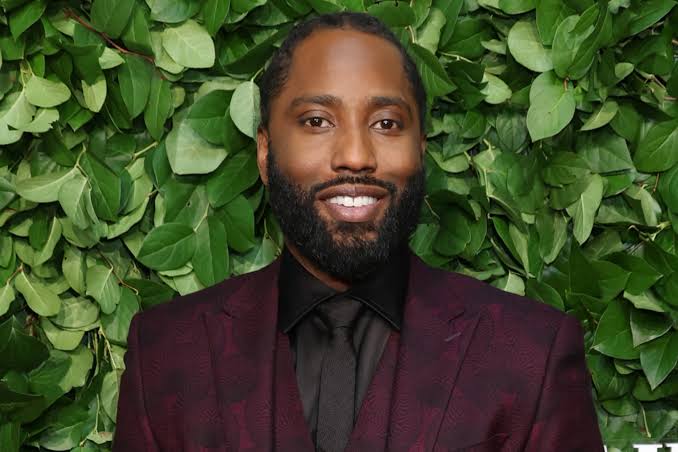
John David Washington sometimes told people his father worked in construction. Other times, he said Denzel Washington was in jail.
“I used to lie, saying he was a construction worker or in jail, just to have some sense of normalcy,” he explained in a 2020 interview with Mr Porter.
The false answer gave Washington a temporary escape from the assumptions attached to his surname. People could meet the young man running in front of them before discovering that he was the eldest son of one of Hollywood’s most respected actors.
The concealment rarely lasted. Denzel’s face was too recognisable, and the Washington name carried too much weight. Still, the instinct behind it followed John David from Morehouse College to professional football, from HBO to a Christopher Nolan blockbuster and, eventually, to Broadway.
Washington was born with access most aspiring actors never receive. He also understood early that access could become a trap. Every role would invite the same question: was he there because he deserved it or because Denzel Washington could make a call? He has spent much of his adult life trying to produce an answer that belongs to him.
Before Hollywood, There Was Morehouse Football
Washington arrived at Morehouse College as a running back, not an actor preparing for his inevitable debut. In 2005, he rushed for 1,198 yards, then a single-season school record, and led the Southern Intercollegiate Athletic Conference in rushing. He averaged 5.6 yards per carry and scored nine touchdowns. Morehouse inducted him into its Athletics Den of Honor in 2024.
Those numbers remain an important part of his story because football gave him a place where pedigree counted for very little. Once the ball was snapped, nobody cared who attended his childhood birthday parties or whose films sat on the family shelf.
Washington signed with the St. Louis Rams as an undrafted free agent in 2006. He did not make the regular-season roster, but his career continued with Rhein Fire in NFL Europa and later in the United Football League, where he played for the California Redwoods and Sacramento Mountain Lions.
It was not the NFL career he wanted. It was still a real professional career, complete with the injuries, uncertainty and constant threat of being replaced that come with life outside football’s small circle of stars.
Washington held tightly to that identity. He had grown up around film sets and had even appeared briefly as a child in Malcolm X, but acting felt too close to the family business. Football gave him his own language, his own teammates and results that could be read from a statistics sheet.
The admission that he hid his father’s identity says more than a polished statement about privilege could. Washington knew how quickly people’s behavior changed once they made the connection. He feared that even good work would be explained through Denzel. A ruptured Achilles tendon eventually took football away. By then, Washington was approaching 30 and confronting the end of the career around which he had built his independence.
Ballers Gave John David Washington a Familiar Way In
Washington did not enter acting by immediately chasing the sort of commanding dramatic roles associated with his father. His first sustained job placed him back inside the world he knew.
In HBO’s Ballers, which premiered in 2015, he played Ricky Jerret, an NFL receiver with talent, money, an unruly ego and a career that never felt entirely secure. Washington knew the locker-room rhythms. He understood what injury could do to a player’s sense of self and how quickly a contract could change a life.
The role lasted five seasons. There is an easy version of Washington’s career in which Ballers becomes proof that the transition was always destined to work. His own account has been less tidy. Acting exposed him in a different way. Football had conditioned him to compete, but it had not removed the suspicion that audiences were waiting to compare his voice, posture and screen presence with his father’s.
Spike Lee presented a larger test in 2018. Washington played Ron Stallworth in BlacKkKlansman, the story of a Black Colorado Springs police officer who infiltrated the Ku Klux Klan. The film required him to carry a volatile mix of comedy, danger and racial politics without turning Stallworth into a symbol instead of a man.
The performance earned Washington a Golden Globe nomination for best actor in a motion-picture drama—his first nomination from the organisation.
The news reached him at home. Denzel woke him so they could watch the nominations together. When John David’s name was announced, father and son embraced, then called Pauletta Washington, who was travelling to Chicago to audition for Hamlet. Washington told the Los Angeles Times that the moment reminded him of the NFL draft, when he had waited for a call that never came. This time, his name was called.
Then Came the Roles that Could Go Wrong
Hollywood generally rewards recognizable packaging. A performer finds a successful lane, and studios ask for more of it. Washington’s filmography after BlacKkKlansman is harder to package.
Christopher Nolan cast him as the unnamed Protagonist in Tenet, a production with a reported budget of roughly $200 million, built around inverted time, international espionage and complex action sequences. Washington had to hold the centre of the film while deliberately revealing little about the man he played.
Then came Malcolm & Marie, shot in black and white with Zendaya and almost nobody else on screen. The explosions and international locations disappeared. Its long arguments left both actors exposed to the audience and to critics, some of whom found the film exhausting.
Washington followed those projects with David O. Russell’s crowded ensemble film Amsterdam, Gareth Edwards’ science-fiction drama The Creator and August Wilson’s The Piano Lesson.
The results have varied. Tenet became a major international release under pandemic conditions. Amsterdam struggled with critics and at the box office. Malcolm & Marie divided viewers. Washington has not responded to those uneven outcomes by repeating his safest performance. Even the roles that failed to connect widened the range of work against which he could be judged.
Broadway Left Him Nowhere to Retreat
When Washington agreed to play Boy Willie in the 2022 Broadway revival of The Piano Lesson, his fear was not abstract.
I told myself, if I fail at this, I’m going to stop acting. —Washington
Boy Willie arrives at his sister Berniece’s Pittsburgh home determined to sell a family piano and use the money to buy land once worked by their enslaved ancestors. Berniece refuses. Carved into the instrument is their family’s history.
The part is forceful, funny and physically demanding. It also gives the actor few opportunities to retreat from the audience. A film performance can be reshaped through editing. On Broadway, the actor returns to the beginning each night and carries the performance to its end in front of a live audience.
Washington found parts of the routine familiar. Football had taught him to prepare for a fixed starting time, recover from mistakes without stopping and trust the people working beside him. The stage asked him to do it eight times a week.
Football is more applicable to the stage, because of the beginning, middle and end.
—John David Washington
The production began previews on September 19, 2022, opened on October 13 and closed on January 29, 2023, after an extended run at the Ethel Barrymore Theatre. It became the highest-grossing Broadway revival of a play that season and later recouped its original investment.
For Washington, the more personal result came before the box-office announcement. He had made it through the role he believed might end his acting career.
The Family Name Returned to the Centre
The film adaptation of The Piano Lesson placed the Washington family’s involvement in plain view.
Malcolm Washington directed. Denzel Washington produced. Katia Washington served as an executive producer. Pauletta Washington appeared as Mama Ola, while Olivia Washington played the younger version of the character. John David returned as Boy Willie.
Earlier in his life, John David might have viewed that arrangement with suspicion. He had spent too many years trying to escape the assumption that proximity to Denzel explained everything.
By the time the film was made, concealment would have looked more awkward than collaboration. John David had accumulated years of screen work, a Golden Globe nomination, a Nolan blockbuster and a successful Broadway run in the same role. Malcolm, meanwhile, was making his feature-directing debut after developing his craft behind the camera.
The finished film does not erase the advantage of having a family capable of mounting such a production. It does show the Washington children working inside a legacy they once had to define themselves against.
August Wilson’s story asks what a family should do with an inheritance carrying both pain and value. Boy Willie wants to convert the piano into land. Berniece believes selling it would surrender the history carved into its wood. John David Washington had been wrestling with his own version of that question long before he played the part.
He Is No Longer Running from Denzel’s Shadow
Washington is unlikely to end comparisons with his father. Few actors could. Denzel has won two Academy Awards, directed films, built a long relationship with August Wilson’s work and created one of the most durable careers in modern American cinema. Any son entering the same profession would be measured against that record.
John David’s response has changed.
At first, he created distance. He chose football, concealed his father’s occupation and resisted acting. Later, he accepted roles carrying different kinds of risk: political drama, blockbuster science fiction, an abrasive two-person film and live theatre. Eventually, he returned to the family circle without pretending that the connection did not exist.
He has benefited from his surname. He has also chosen enough difficult, exposed and occasionally unsuccessful work to prevent it from becoming the whole story.
“Denzel Washington’s son” remains the simplest available description of John David Washington. It is accurate, but it no longer explains enough.
Frequently Asked Questions
Who is John David Washington?
John David Washington is an American actor and former professional football player. He is the eldest son of actors Denzel and Pauletta Washington. His best-known credits include Ballers, BlacKkKlansman, Tenet, Malcolm & Marie, The Creator and The Piano Lesson.
Did John David Washington play professional football?
Yes. After playing running back at Morehouse College, Washington signed with the St. Louis Rams as an undrafted free agent in 2006. He later played for Rhein Fire in NFL Europa and for the California Redwoods/Sacramento Mountain Lions organisation in the United Football League.
Why did John David Washington leave football?
His career was affected by several injuries, including a ruptured Achilles tendon. After football ended, he turned to acting and secured the role of Ricky Jerret in HBO’s Ballers.
What was John David Washington’s breakout role?
Ballers introduced Washington to a broad television audience, but Spike Lee’s BlacKkKlansman established him as a film lead. His performance as Ron Stallworth earned him a 2019 Golden Globe nomination.
Did John David Washington appear on Broadway?
Yes. He made his Broadway debut as Boy Willie in the 2022 revival of August Wilson’s The Piano Lesson. The production became the season’s highest-grossing revival of a play and later recouped its original investment.
Has John David Washington worked with his family?
Yes. The film adaptation of The Piano Lesson was a major Washington family collaboration. Malcolm Washington directed, Denzel Washington produced, Katia Washington served as an executive producer, Pauletta and Olivia Washington made appearances, and John David reprised the role of Boy Willie.