
There is a quiet, specific indignity that comes with promoting a new venture. It happens online when a launch post meets absolute silence — and it hits just as hard in person. You mention your new business to a friend or a former colleague, and you watch their eyes glaze over behind a polite smile: “That’s so cool, good for you!”
You took real risk. You quit a comfortable job, or sank late nights into building something real, and now you feel like a door-to-door salesman working a street of closed doors. It compounds, too. Every ignored post makes the next one harder to publish.
Most of the time, though, the cringe isn’t about you. It’s about doing the marketing in a way that forces everyone into awkward positions — you included. Fix the approach and the humiliation mostly disappears.
The Enthusiasm Problem
The first time you pitch someone, you do it the obvious way. You explain the backstory, the mission, the features. You’ve lived inside this thing for months, it all feels important, so you say all of it.
Meanwhile the other person is doing math. They’re trying to work out why any of this should matter to them, and they’re doing it as a favor to you. Most people stop after about thirty seconds. That’s when the nodding starts and the eyes drift somewhere over your shoulder.
It isn’t rudeness. You’re carrying months of context they don’t have. No amount of enthusiasm on your end closes that gap.
So lead with the problem instead of the business.
Instead of “I just launched a custom web application studio for local logistics brands,” try: “You know how mid-sized logistics firms lose hours every week tracking dispatch updates over WhatsApp? We build portals that automate that.”
The right person either recognizes the problem or they don’t. You don’t have to convince everyone. If you want a rule for this: before you describe your business to anyone, write one sentence that names a frustration before it names your company. If the frustration isn’t in the first breath, rewrite the sentence.
You’re Announcing to the Wrong People
You post the launch announcement. A few people like it, somebody from high school writes “congrats!!”, an aunt asks if this is still the app thing. Then nothing.
It’s tempting to read that silence as a verdict. It isn’t. Your high school friends, your family, your old manager — they were never going to be customers. You asked people with no need for the product to pay attention out of politeness, and people will like your post, wish you luck and forget about it five minutes later. That tells you your uncle doesn’t need dispatch software. It tells you nothing about whether the business works.
So stop announcing to everyone and start choosing. Make a list of fifty people who could genuinely buy what you sell and write to them one at a time. Three sentences: who you are, the specific thing you noticed about their situation, one honest question. No deck. No attachments. No “just following up!”
In person, it’s the same job. Save the pitch for rooms full of people who showed up because of the problem — industry meetups, trade groups, conferences. Mention your business at a dinner party and you’ll collect polite nods. Say the same sentence to someone who spent last Tuesday fighting the exact problem you fix, and they’ll interrupt you to ask what you charge.

The Cringe of Performing for the Algorithm
Somewhere along the way, marketing advice decided everyone has to perform. Dance on camera. Post dramatic threads about hitting rock bottom. Open with a hook, always be hooking.
If you’ve ever watched a quiet, competent person attempt this, you know how it goes. The voice goes up half an octave. The smile freezes. Everything they say sounds like it was written by someone else, because it was.
That discomfort when you hit publish isn’t stage fright to push through. It’s your taste telling you the thing is fake.
That discomfort when you hit publish isn’t stage fright to push through. It’s your taste telling you the thing is fake. You know how you actually talk. When the person in the video isn’t that person, everyone can tell — starting with you.
It’s worth asking where the advice comes from, too. The dance-and-hook style exists because it can work when you’re selling a cheap product to millions of people. If you sell specialized services, you might need twenty or thirty good clients a year. You don’t have a volume problem, so stop borrowing solutions built for volume.
What sells expensive work is boring: proof, clarity, patience. Publish a teardown of a mistake you see constantly in your industry. Show a before-and-after. Record a plain ten-minute walkthrough of how you’d fix one specific problem — no music, no hook, no energy. A calm breakdown of why a dispatch workflow leaks hours will still be pulling in clients three years from now, long after the dancing has been forgotten.
The Moment Money Enters the Room
Something strange happens to a lot of builders when it’s time to talk price. The identity flips. Five minutes ago you were a capable person explaining something you know how to do. Suddenly you’re a peddler, and you can feel it, and the person across the table can feel it too.
People can smell desperation. It shows up in the rushed follow-up emails, the “totally flexible on pricing!”, the way you start quietly reshaping your offer to fit whatever they might pay. And that’s the actual source of the dirtiness — not money itself. Selling feels gross when you’re trying to convince someone to buy something they don’t need. It feels fine when you’re checking whether they need it.
So run the conversation like a check, not a pitch. Have they tried to fix this already? What is it costing them to leave it broken? Who else has to say yes? Sometimes the answers tell you they shouldn’t buy from you, and then you say so: “Honestly, at your stage I’d just handle this internally.” A Harvard Business Review study of complex sales found the best performers diagnose before they prescribe — and sometimes talk people out of buying at all.
The moment you’re genuinely comfortable walking away from a bad deal, the whole interaction changes. You’re no longer trying to convince someone to buy. You’re figuring out whether they should. Buyers can tell the difference, and it’s that difference that makes them trust you.
You’re Protecting Your Ego, Not Your Business
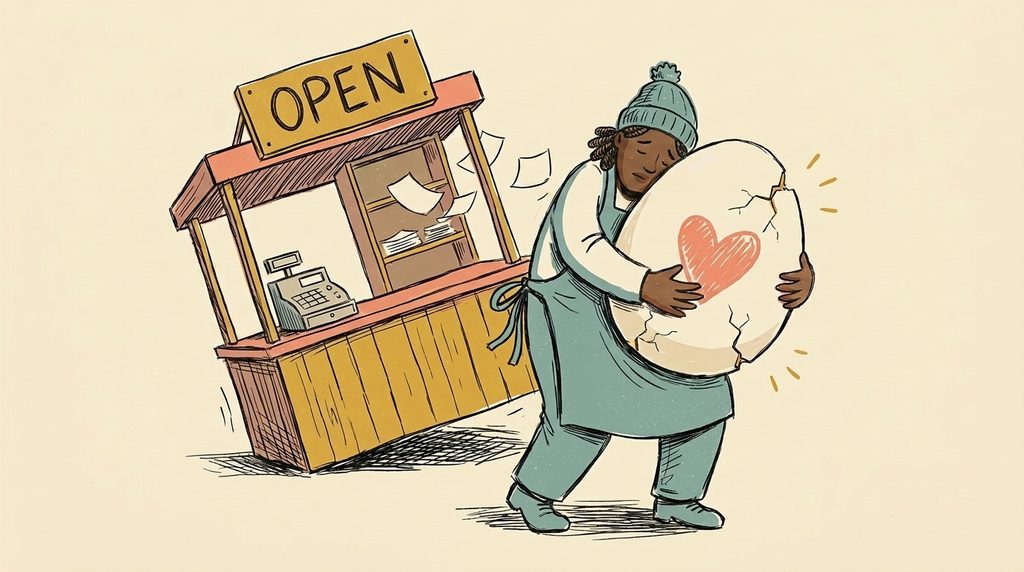
Ask yourself who you’re actually afraid of when you hesitate to post. It’s almost never strangers. It’s the former boss who might see it. The old coworkers. People from your industry who remember you with a bigger title and a corporate email address.
You’re editing your business around people who will never pay you a dollar.
So we hedge. We soften the claims. We bury the link at the bottom of a long post. Some of us schedule promotion for 2 a.m., which is just a way of publishing without being seen. I’ve written strong drafts and closed the tab instead of posting them, and if you’ve done it too, you know the particular flavor of that cowardice.
And here’s the uncomfortable part: the jury you’re protecting yourself from isn’t watching. Your former boss saw your launch post, if he saw it at all, for about a second between emails. Meanwhile the hedging is real and it’s expensive. Diluted language, buried links, posts that never went up — all of it costs you customers every month. You’re editing your business around people who will never pay you a dollar.
The fix is unglamorous. Separate the channels. Build the newsletter, the outreach list, the landing pages somewhere your past isn’t in the audience. Mute the old colleagues if you have to. That isn’t avoidance. You wouldn’t run ads targeted at your old college roommate, so there’s no reason to tune your public presence for him either.
Promotion stops feeling like a humiliation ritual when you stop treating it as a performance for everyone you’ve ever met. The polite nods stop stinging once you notice they were never the point. You weren’t there for the room. You were there for the one person in it with the problem.
Handle those few well and they’ll send you word of mouth business you never had to beg for. You don’t need everyone to care. You need the few people with the problem to know you exist — and one last check before you publish anything: would you say these exact words, out loud, to a real customer’s face? If yes, ship it. If you’d wince, the problem was never promotion. It’s the draft.