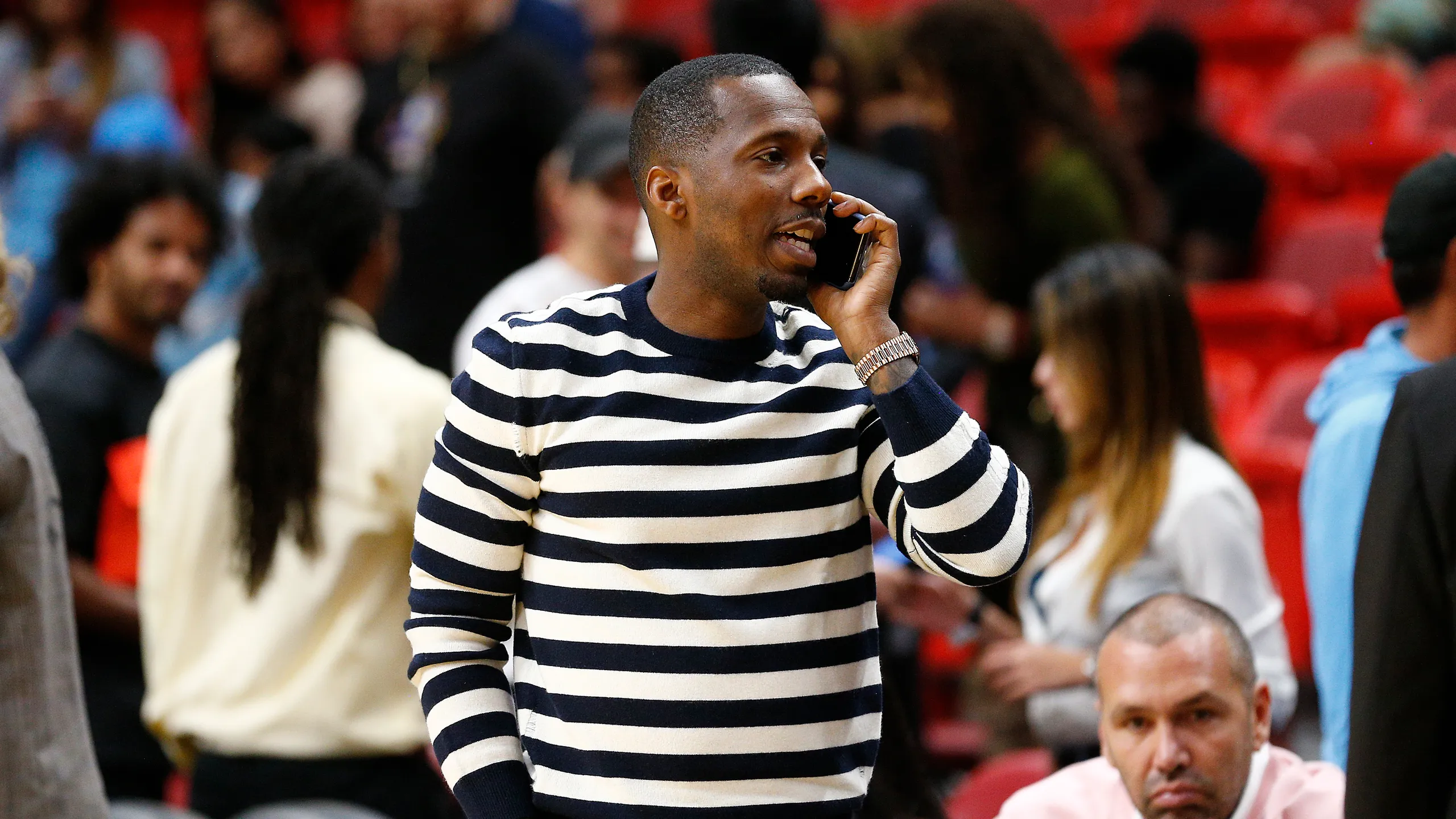
For decades, sports worked on an unwritten rule: teams held the power, players took what they were offered. Free agency loosened that grip a little, sure. But most agents still just fought for bigger paychecks. They rarely helped clients think past the court. Rich Paul saw something else.
Before “player empowerment” became the phrase everyone in the NBA throws around, Paul already believed something bigger. Elite athletes, he thought, could shape not just where they played, but how entire franchises got built, how brands got made, how wealth actually moved. He built an agency on that belief, going against decades of how things were done. Today that agency represents more than 40 NBA players and over $1 billion in active contracts.
The Trade Demand That Repriced Player Leverage
Paul’s signature move came in 2019, when Anthony Davis tried to leave the New Orleans Pelicans.
The situation was pretty stark. Davis was elite, and New Orleans was running out of time to lock him down or lose him for nothing. The Pelicans had made the playoffs just twice in his first six full seasons. Davis stood to earn a five-year extension worth roughly $240 million. Demanding a trade meant walking away from that kind of money, and risking his reputation too. The NBA fined him $50,000 simply because Paul made the request public.
But Paul didn’t stop at asking for a trade. He let every interested team know Davis planned to hit free agency in 2020. That single fact changed everything. Any team that traded for him without believing he’d re-sign risked giving up major assets for a one-year rental. Suddenly, fewer teams wanted in. The Lakers’ position got stronger.
Eventually, the Lakers landed Davis for Brandon Ingram, Lonzo Ball, Josh Hart, a pile of draft picks, and cash. Davis helped Los Angeles win the 2020 championship. Then he signed a new deal worth up to $190 million.
Here’s the real insight, though. It wasn’t that stars deserved more freedom, everyone kind of agreed with that already. It was that you could price destination risk. You could build it into the negotiation on purpose.
Three Rules for Making Leverage
Make Private Intentions Economically Credible
A preference doesn’t mean much until the other side believes it’ll hit their bottom line. As Paul put it in an interview about the Davis negotiation, “It was necessary to go public.”
Once New Orleans failed to move the private talks forward, Paul made Davis’s position public, then clarified the free-agency timeline. After that, no team could pencil Davis in as a safe, long-term asset anymore.
Deploy Power Only After Scarcity Is Established
Real negotiating power comes from being hard to replace, not from confidence, not from talk. Paul said it himself in a GQ interview, “Stature gives you the opportunity to do certain things, to position certain things.”
Notice that Paul’s boldest plays always involved athletes whose production, reach, or championship pedigree made them nearly irreplaceable. Try the same tactic without that kind of scarcity, and it probably falls apart.
Represent the Athlete’s Entire Enterprise
An agent’s job, in Paul’s view, goes way beyond contracts. Media access, brand deals, ownership stakes, cultural influence, all of it belongs on the table. When Klutch partnered with United Talent Agency, Paul said athletes needed an entirely new kind of perspective from the people representing them.
UTA invested in Klutch back in 2019 and put Paul in charge of UTA Sports, linking his athletes to entertainment and commercial machinery most agents can’t touch. By 2024, Klutch had negotiated over $4 billion in contracts spanning basketball, football, and baseball.
The Failed First Push That Improved the Playbook
Here’s the part people forget: the Davis campaign didn’t work at first. No trade happened before the February 2019 deadline. Davis got fined. The Pelicans’ season fell apart. Relationships got strained.
Paul later admitted some things could’ve gone better. So the next round of communication got sharper, more specific. Davis would honor his current contract, then hit free agency in 2020. That turned an emotional trade demand into a hard financial variable every team could actually model.
The lesson wasn’t really about emotion at all. Escalation works when it spells out exact consequences. Frustration alone doesn’t move anybody.
The Network Behind the Leverage
Backers: LeBron James gave Paul the anchor relationship, the credibility, the access that let Klutch get off the ground in the first place. UTA later added capital and institutional muscle.
Operators and development bets: Paul brought in Damarius Bilbo to push the player-empowerment model into the NFL. He also backed Darius Bazley’s unusual move, skipping college for a New Balance internship worth at least $1 million.
Strategic access: The network ties together elite talent, front-office executives, sponsors, entertainment buyers, and media distribution. That’s what lets Klutch negotiate across several dimensions of an athlete’s value at once, instead of just chasing a bigger contract number.
Build a Leverage Memo Before You Negotiate
Before you make a big ask, try writing a one-page leverage memo. Four things go in it: the exact outcome you want, your credible alternative, the deadline creating urgency, and the measurable cost to the other side if nothing gets done.
Don’t go public until the private process has actually failed. And whatever you do, don’t issue an ultimatum unless you’re ready to follow through on it.