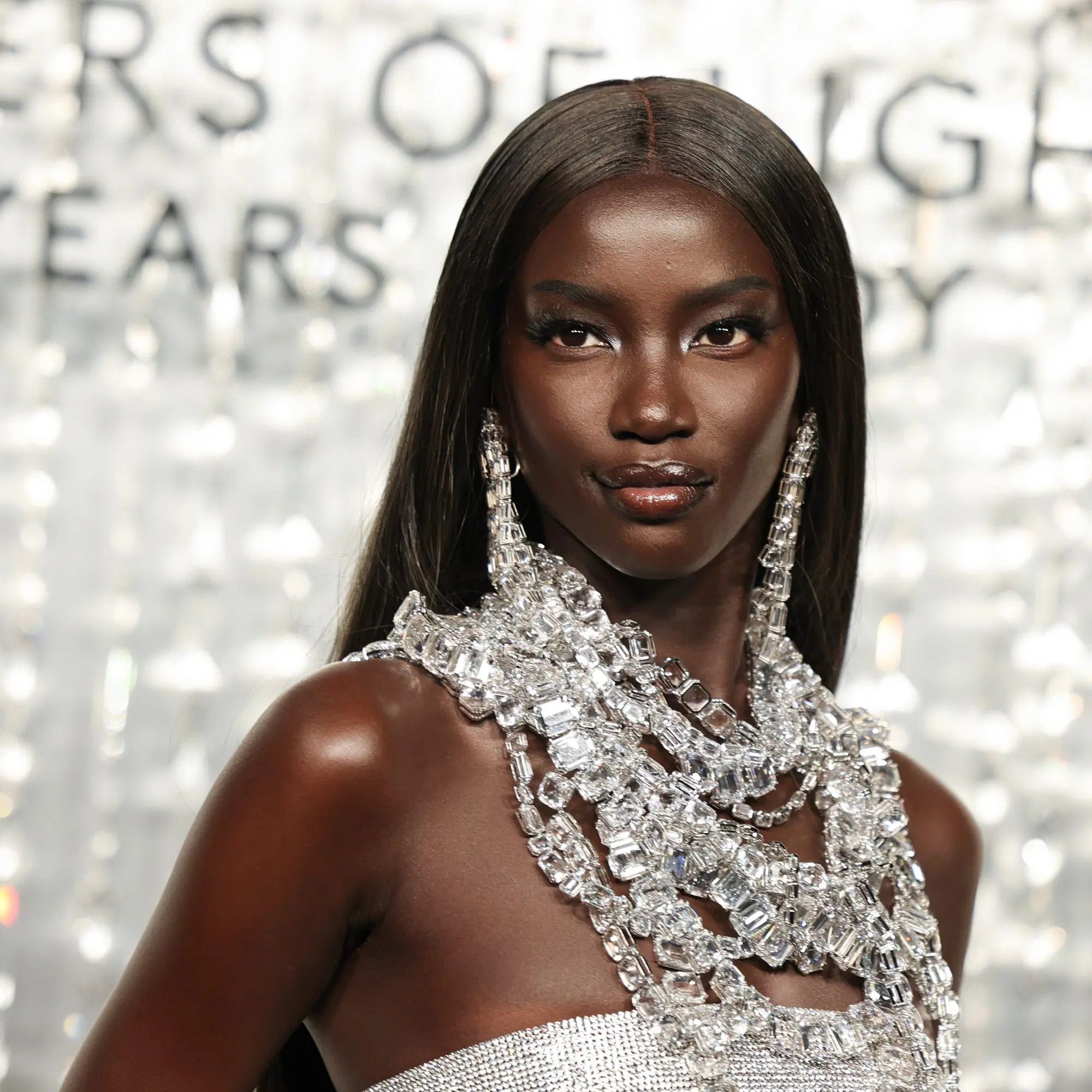
Three weeks after Anok Yai stood on the stage at London’s Royal Albert Hall and was finally, after two prior losses, crowned Model of the Year, she was lying in a hospital bed at NYU Langone asking her family if her hair looked good for surgery.
That is not a metaphor. It is documented, on video, on her own Instagram account. A congenital defect she didn’t know she had — one that had spent a year quietly overworking her heart and eating away at her lung tissue — had finally caught up with the woman who built a career on outrunning everyone else. She’d been coughing up blood between fittings. She kept booking shows anyway. By the time she stopped long enough to see a doctor, there was no longer a convenient moment to have the surgery; there was only the surgery. Robotic thoracic surgery, performed by Dr. Robert Cerfolio, followed days later by an emergency, life-saving procedure for a postoperative sepsis complication that could have ended things entirely. She was 28 years old, at the exact summit of an industry that had spent the better part of a decade deciding whether it wanted her.
That collision — peak career validation followed almost immediately by a brush with mortality — is not an aside in Anok Yai’s story. It is the story. Everything that came before it explains how she got to that stage. Everything after explains why the win almost didn’t matter to her anymore once she was out of the recovery ward.
Regardless of any doubts or barriers, always fight for your dream – Anok Yai
The discipline underneath the discovery myth
The public version of Anok Yai begins with luck: a photograph taken at Howard University’s 2017 homecoming, posted, and gone. Within a day she’d picked up tens of thousands of followers and a queue of agencies fighting to sign her, including IMG. She chose Next Model Management instead, and four months later — four months — she was booked to open a Prada runway show, becoming only the second Black model after Naomi Campbell in 1997 to do so. It reads like a lightning strike. What it obscures is that the girl in the photo had already spent years building the kind of resolve that turns a viral moment into a career instead of a headline that fades by Christmas.
Talk to anyone who’s tracked her rise and a pattern surfaces that has nothing to do with luck. She doesn’t take half-measures, and she says so plainly: “Whenever I want to do something, I do it at 100 percent.” That single sentence, given to W Magazine, functions almost like her personal underwriting standard — the filter she runs every commitment through before agreeing to it. It shows up in small decisions and large ones. It’s there in her insistence, early in her career, on doing hair and makeup on her own terms rather than accepting whatever the industry defaulted to for dark skin and natural texture — a fight that was frightening for a teenager with almost no leverage to pick, and one she picked anyway, because the alternative was letting someone else define the terms of her participation. It’s there again in the instinct to convert the very things that got her mocked as a kid — dark skin, a lanky frame that didn’t fit anywhere — into the exact commercial signature that now anchors ad campaigns for Prada, Yves Saint Laurent, Estée Lauder, and Gap. She didn’t wait for the industry to reclassify her insecurities as assets. She did the reclassifying herself, then made the industry catch up.
Your colour is not a curse – Anok Yai
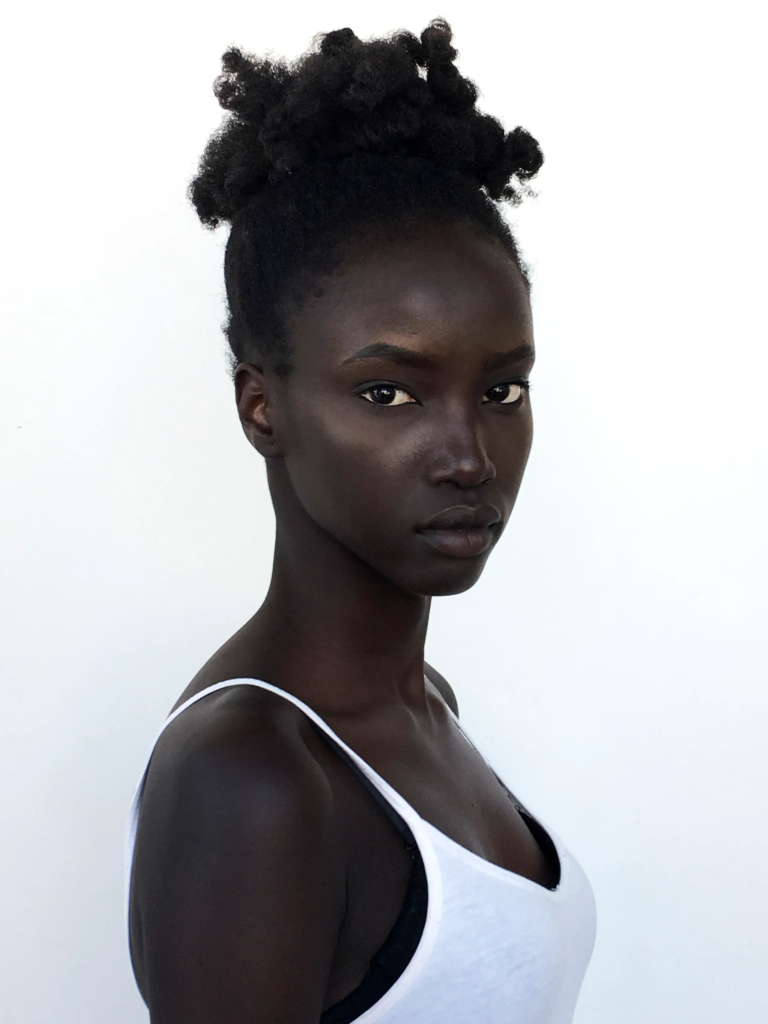
Losing on purpose, in public, twice
Before the 2025 win, there were two very public losses. Yai was nominated for the British Fashion Council’s Model of the Year in 2023 and again in 2024, and lost both times — first to Paloma Elsesser, then to Alex Consani. The second loss came with an edge: in the moment, visibly frustrated, she posted on X that she no longer wanted the award, before immediately pivoting to congratulate Consani with real warmth. It’s the kind of unscripted, imperfect reaction that would sink a lot of careers built on image management. It didn’t sink hers, largely because what followed wasn’t spin — it was work. She kept opening and closing the shows that matter most: Coperni, Ferragamo, Hugo Boss, Fendi, Ralph Lauren, Chanel’s Matthieu Blazy debut. By the time her name was called again in December 2025, the win didn’t read as a makeup call. It read as arithmetic finally catching up with output.
That two-year stretch of visible disappointment is the part of the resume most profiles skip, because it isn’t flattering in the usual sense. But it’s the part that explains the poise in her acceptance speech, and the instinct — while holding the biggest prize of her career — to spend her stage time on something other than herself: a direct appeal for peace in Sudan, and a message to the next generation of Black girls watching that “your colour is not a curse.” Six words, delivered to a room that had made her wait three award cycles to hear them applauded rather than merely tolerated.
The universe has a way of slowing you down and waking you up – Anok Yai
The names behind the numbers
Every career this steep has an infrastructure most people never see. For Yai, that infrastructure starts with Miuccia Prada and Riccardo Tisci, both of whom backed her before the rest of the industry had fully worked out what to do with her — Prada by putting her in a campaign and then, four months into her career, handing her a runway opening that hadn’t gone to a Black model in twenty-one years; Tisci by staying close as a mentor in the years since. That early, high-conviction bet from two of fashion’s most decisive tastemakers did something a hundred smaller bookings couldn’t: it told the rest of the industry her casting wasn’t a trend piece.
Her agency arrangement has evolved in step with her leverage. She started at Next Model Management, the agency that flew her to New York and signed her the day they met her. She now works across IMG Models, No Smoking Management in New York, and SAFE Management in Paris — a multi-market structure that mirrors how her business has outgrown any single relationship. The commercial side has scaled to match: an Estée Lauder beauty contract, a Yves Saint Laurent fragrance and campaign relationship, Gap, Mugler’s Alien fragrance — the kind of portfolio that sits a runway model closer to a beauty-industry executive’s calendar than a casting director’s.
Where other profiles in this format would point to protégés — junior operators mentored into their own success — Yai’s version of that leverage runs through advocacy rather than succession. She has used the exact stages built for her own recognition — the BFC ceremony, magazine cover slots, a TIME100 placement — to put pressure on two causes that don’t obviously benefit her career at all: the humanitarian crisis in Sudan, where she has family, and the treatment of dark-skinned models and natural hair backstage, an issue she was still raising publicly years after she’d personally solved it for herself. That’s the access her position actually buys: not favors, but a microphone loud enough that the industry has to at least hear the complaint, even from people who’d rather not.
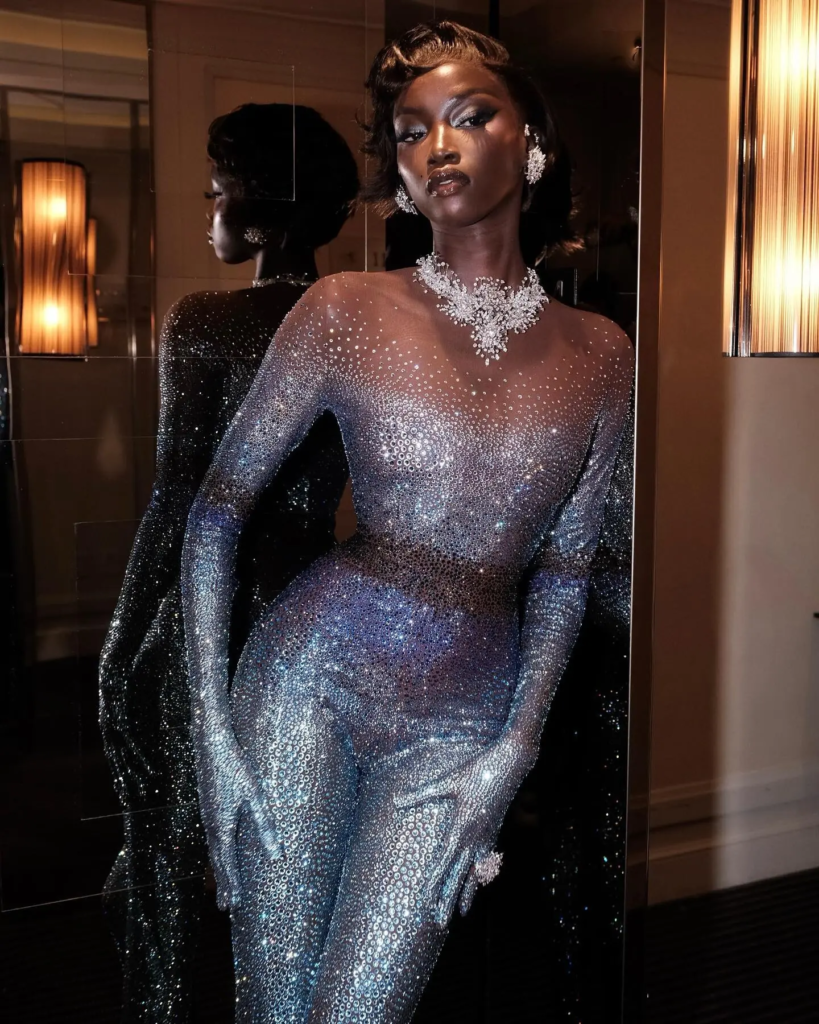
What the surgery actually changed
It would be tidy to say the health scare humbled her, and leave it there. The truer read, based on what she’s said publicly since, is narrower and more specific: it forced a recalibration of pace, not identity. In her own words, posted from a hospital bed rather than polished for print, she’d always believed she could outwork anything — until, in her words, “the universe has a way of slowing you down and waking you up.” She returned to fashion’s pages months later on the cover of British Vogue, styled not alongside another model or designer but alongside her own parents, Nyibol Akuei and Kenyang Yai — a photograph that reads less like a comeback story and more like a correction: the runway made her famous, but the family in that frame is what she was actually protecting when she finally stopped and had the surgery. A cameo as herself in The Devil Wears Prada 2, filmed during its Milan Fashion Week scenes alongside Winnie Harlow and Ashley Graham, arrived in the same stretch — proof that the recovery didn’t shrink her career, it just made her more selective about what she spent it on.
Stop treating the thing that makes you structurally different as a liability to manage, and start treating it as the asset you refuse to negotiate away.
The one thing worth stealing
If there’s a transferable lesson in all of this, it isn’t “work hard” — she’d tell you that almost cost her her life. It’s narrower: stop treating the thing that makes you structurally different as a liability to manage, and start treating it as the asset you refuse to negotiate away. Yai didn’t get lighter, straighter-haired, or more conventional to survive the fashion industry. She got specific — about her hair, her rate, her causes, her pace — and let the market adjust to her terms instead of the reverse. Most people flinch at the first “no” that costs them something. She built an entire career on saying it early, saying it scared, and saying it anyway.
Career at a glance
| Marker | Detail |
|---|---|
| Discovery | Howard University homecoming, October 2017 — signed by Next Model Management within 24 hours of going viral |
| Historic first | 2018 — second Black model since Naomi Campbell (1997) to open a Prada runway show |
| Vogue covers | Three American Vogue covers, plus editions in the UK, France, Italy, Japan, Germany, Korea, Netherlands, and Brazil |
| Award trajectory | BFC Model of the Year nominee 2023 (lost), 2024 (lost), 2025 (won) |
| 2026 recognition | TIME100 list of the world’s most influential people |
| Health crisis | December 2025 — robotic lung surgery for a congenital defect, followed by an emergency procedure for a postoperative sepsis complication |
| Comeback | June 2026 British Vogue cover with her parents; cameo as herself in The Devil Wears Prada 2 |
| Current representation | IMG Models; No Smoking Management (New York); SAFE Management (Paris) |
Frequently asked questions
Is Anok Yai the first Black model to open a Prada show? No — she’s the second. Naomi Campbell opened for Prada in 1997; Yai’s 2018 show marked the first time a Black model had done so in the twenty-one years since.
What happened to Anok Yai’s health? In December 2025, she revealed she’d been diagnosed with a congenital defect that had been overworking her heart and gradually damaging her lung tissue. She underwent robotic lung surgery, followed by an emergency procedure after developing a postoperative sepsis complication. She has since returned to work.
Did Anok Yai act in The Devil Wears Prada 2? She appears as herself, in a cameo during the film’s Milan Fashion Week scenes, alongside other real-world models including Winnie Harlow and Ashley Graham.
Who discovered Anok Yai? No single scout is credited. A candid photo of her taken during Howard University’s 2017 homecoming by photographer Steve Hall went viral on social media, prompting a multi-agency bidding war that she settled by signing with Next Model Management.
What is Anok Yai’s connection to Sudan? She was born in Cairo to South Sudanese refugee parents and has used major public platforms — including her 2025 Model of the Year acceptance speech — to draw attention to the ongoing conflict in Sudan.