Twenty-seven. That’s the whole list, worldwide, as of the 2026 Forbes count. Twenty-seven Black billionaires out of 3,428 billionaires total on the planet — fewer than one percent of a group that itself is a rounding error among eight billion people. Combined, they’re worth $121 billion. Sounds massive until you remember Bill Gates alone was worth more than that by himself back when the first Black billionaire hadn’t even shown up on the list yet.
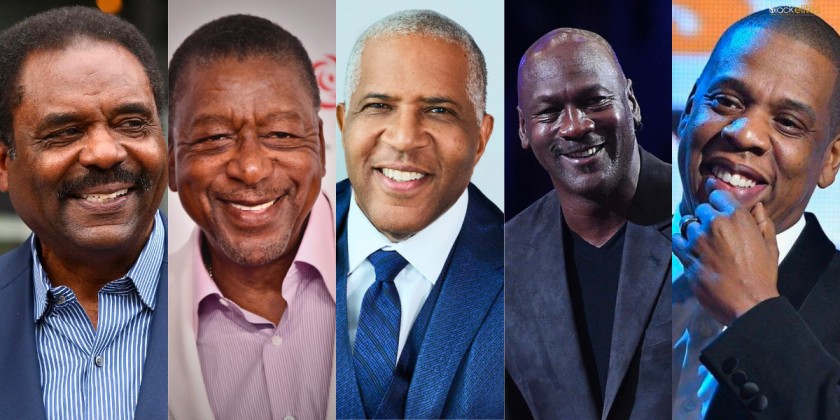
Robert L. Johnson got there first, in 2001, after selling BET to Viacom for roughly $3 billion and pocketing a stake worth just over one. Twenty-five years later the club has grown to twenty-seven names — Dangote, Karp, Steward, Rabiu, Smith, Jordan, Oprah, Jay-Z, Beyoncé, Dr. Dre, a small constellation spread across cement, software, sports, and music. Different industries. Different continents. Different decades of birth. And yet dig into how each of them actually got there, and one thread runs through every single name on the list, and it isn’t a number.
None of them inherited it
Not one. Look at the wider Forbes 400 — roughly two-thirds of that entire list is self-made, which sounds impressive until you realize that leaves a third who mostly just showed up already rich, heirs to fortunes somebody else built decades or centuries earlier. Now look at the Black members of that same list. In 2024, when there were four — all four scored as self-made. Not mostly. Not three out of four. All four.
David Steward’s story is the sharpest version of it. He grew up in segregated Missouri, one of eight kids, in a house where his father worked as a mechanic, a janitor, and a trash collector — sometimes all three within the same stretch of years, whatever paid that week. Steward built World Wide Technology into a $12.4 billion fortune, and Forbes gave him a perfect 10 on its self-made scale, a score only about two dozen people on earth currently hold. My chest actually tightened reading the criteria for that number: born into poverty, faced real adversity, built the whole thing with no safety net underneath.
Roughly two-thirds of the Forbes 400 is self-made. Every Black member of that same list scores the same way — one hundred percent.
The wealth didn’t skip a generation. It skipped every generation.
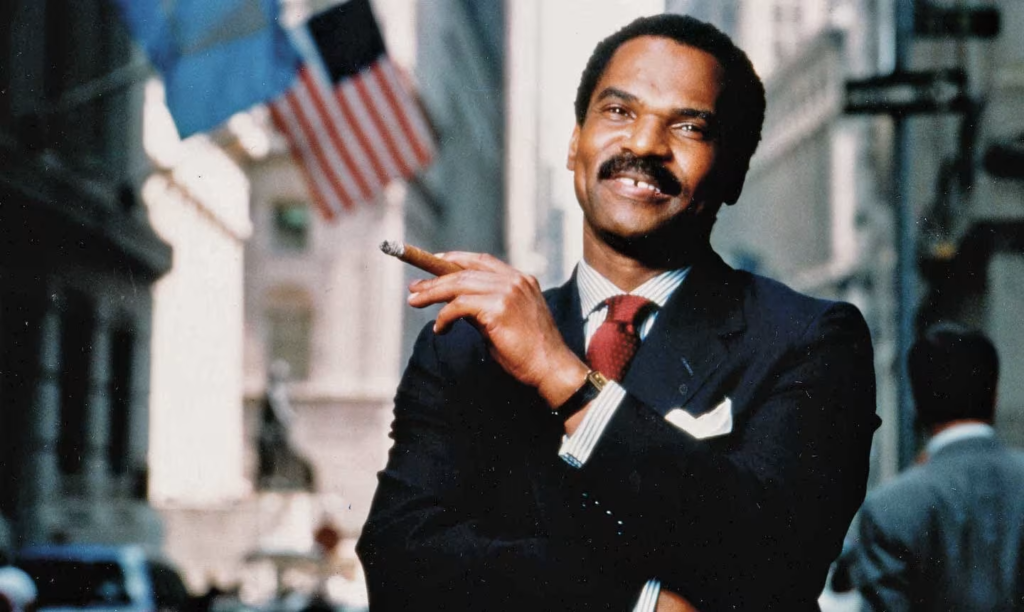
Reginald Lewis is the name that should get taught next to Johnson’s, and mostly isn’t. Before Johnson, before BET, Lewis built the first Black-owned company to break a billion dollars in revenue — no family fortune behind him, no connections waiting at the door. Just a kid from Baltimore who made it into Harvard Law before he’d technically applied, because someone finally let him prove it on paper. It’s the same first-generation grind that shows up in how Byron Allen turned Hollywood’s closed doors into a media empire — no inheritance, just a door somebody eventually had to open by force.
That pattern doesn’t break once you leave finance for entertainment or sports. Michael Jordan didn’t inherit a basketball career or a Charlotte Hornets ownership stake — he built both, decades apart, out of a game he was once famously cut from in high school. Oprah Winfrey didn’t inherit a media empire; she was born in rural Mississippi to a teenage mother, raised partly on a farm with no running water some years, and built her fortune one syndicated hour at a time. Even Aliko Dangote, sitting at the very top of the list with $28.5 billion, didn’t inherit an empire — he started with a small trading loan from an uncle in 1977 and turned cement, sugar, and eventually a 650,000-barrel-a-day oil refinery into the largest fortune Africa has ever produced.
Why that gap exists, and what it costs
Here’s the uncomfortable arithmetic underneath all of it: inherited wealth is the fastest path onto a billionaire list, and it’s a path that’s been structurally unavailable to Black families for most of American and colonial history. Redlining, exclusion from the GI Bill’s housing benefits, segregated banking, land theft, decades where Black-owned businesses simply weren’t permitted to grow past a certain size in a certain zip code — all of it adds up to one blunt fact. There was no third-generation fortune sitting around to inherit, because the second generation was never allowed to build one large enough to pass down.
So every Black billionaire alive today is, in a very real sense, a first-generation billionaire. Not first-generation immigrant, necessarily — first-generation wealth, full stop, the actual founding node of whatever family tree eventually inherits from them. That’s not true of Christy Walton, who inherited her Walmart fortune when her husband died in a plane crash. It’s not true of the Cargill brothers, sitting on wealth their great-grandfather built in the 1800s. It is true of every single name on the Black billionaire list, without exception, in 2026.
The number that’s actually growing
To be fair to the other side of this story: the list is getting longer, and fast. Twenty-three Black billionaires became twenty-seven in a single year, their combined net worth climbing from $96 billion to $121 billion. Beyoncé and Dr. Dre both crossed the threshold for the first time in 2026. That’s real, measurable movement — not a static injustice frozen in amber, but a gap that’s visibly narrowing, even if it started from close to zero. It tracks with a broader shift happening across entertainment, too — the same instinct that led Quinta Brunson to sign a five-year, first-look deal moving her production company to Disney is the same instinct every name on this billionaire list shares: build the thing yourself, then own it outright.
Twenty-three Black billionaires became twenty-seven in a single year — their combined net worth climbing from $96 billion to $121 billion.
Still, one percent of the world’s billionaires being Black, when Black people make up roughly fourteen percent of the American population alone and closer to eighteen percent globally, is not a coincidence a chart can shrug off. It’s not a talent gap. Every name on this list disproves that on sight. It’s a starting-line gap, one generation deep, showing up in the data exactly where you’d expect it to if wealth had been legally blocked from compounding for a couple hundred years and then handed a thirty-year head start to catch up.
What the list actually proves
Twenty-seven people didn’t inherit their way onto a list that mostly runs on inheritance. They built the whole ladder themselves, rung by rung, in industries that ranged from Nigerian cement to Mississippi television to a Missouri auditing firm bought on a community-bank loan. None of them got a head start. All of them are the head start now — for whoever comes after them, assuming anyone lets that fortune sit long enough to become the very inheritance none of them ever had.