Maybe the smartest thing Doechii ever did was decide a project mattered less than everyone assumed it did. By 2022 she was past the independent-artist stage — Top Dawg Entertainment and Capitol Records had teamed up around her, which meant real distribution, real marketing muscle, a label machine with actual experience behind it.
Capitol pointed out that “Yucky Blucky Fruitcake” had already crossed 32 million Spotify streams by the time the partnership got announced. More resources came with the deal. So did more people with opinions about what she should be making.
She told Cole Cuchna on Dissect later that she’d gotten “very codependent” on what her team and label thought, to the point where she stopped trusting her own instincts much at all. When the pressure of making an actual album got to be too much to work through, she just… reframed it. Alligator Bites Never Heal became a mixtape instead of a debut album, at least on paper.
Calling it a mixtape gave her room to just write, without every song needing to satisfy someone’s idea of what a first album is supposed to sound like.
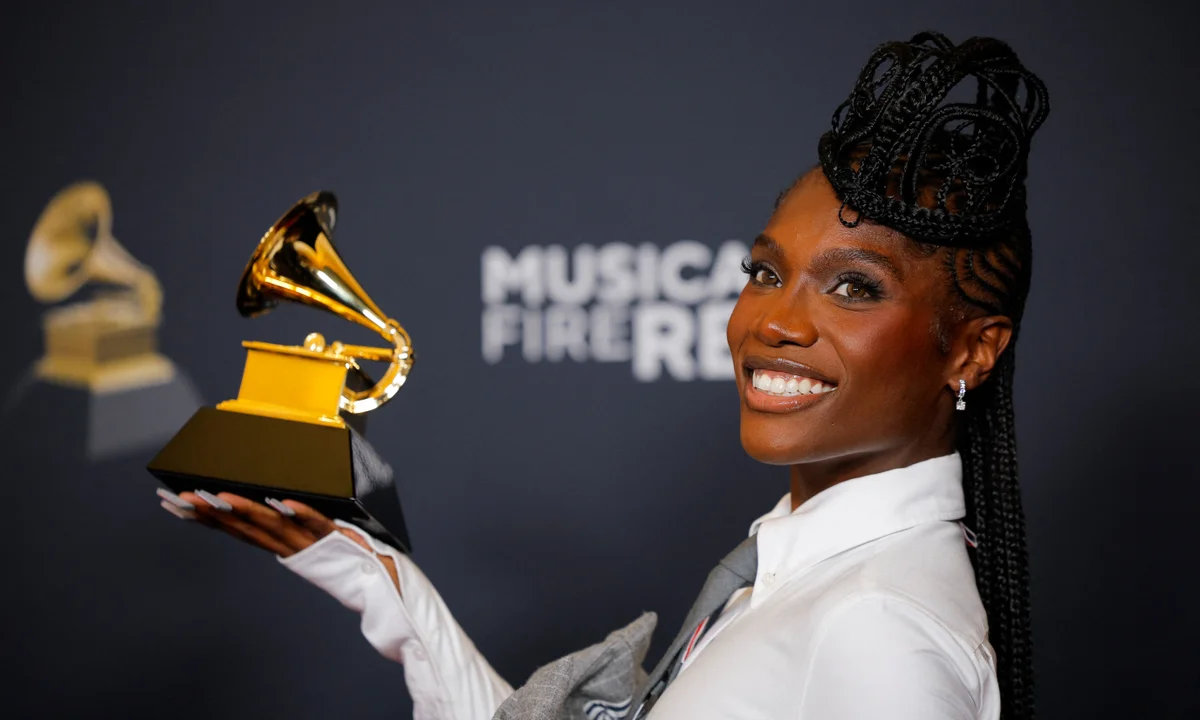
That lower-stakes project turned into her breakthrough anyway. Alligator Bites Never Heal won Best Rap Album at the 2025 Grammys. She’s up to two wins from eight nominations now — “Anxiety” picked up Best Music Video in 2026.
She didn’t walk away from the machinery that had built up around her, for what it’s worth. She just changed how much say it got over the actual work.
Doechii’s Strategies
Keep the Label Out of the Room Where the Songs Get Written
Before any of this, she’d built something called COVEN MUSIC Sessions — write a song, record it, come up with a visual, put it online. Nothing fancy. She brought that process back later, calling it the Swamp Sessions, once she noticed she’d drifted away from the habits that made her sound like herself in the first place. She mentioned;
I had to reteach myself how to trust my own creative ideas again and rebuild myself again. — Doechii
This isn’t a story about cutting people out. Alligator Bites Never Heal still had producers, engineers, label people, plenty of collaborators involved. The line she drew was narrower than that — those people could make the work better without getting to decide what the work was.
Companies run into a version of this constantly. You hire specialists, you adopt processes that worked somewhere else, and both things genuinely help execution. They can also quietly sand off whatever made the thing distinctive to begin with, if every call ends up getting negotiated among a room full of experienced people.
Make the Whole Aesthetic Recognizable, not just the Songs
Her fashion choices tend to track pretty closely with whatever she’s putting out musically. For the 2025 Grammys she worked with Thom Browne on four custom looks, and she told Vogue that studying old hip-hop fashion — the Jay-Z era of guys suddenly wearing real tailoring — shaped the direction. It matched the academic, tailored feel running through Alligator Bites Never Heal.
Same instinct at her first Met Gala in 2025, where Louis Vuitton put her in a Pharrell-designed short suit. She showed up all through Paris Fashion Week too, with her styling team talking about individual looks as extensions of whatever story the clothes were telling that day. By 2026 Levi’s had her in its global “Behind Every Original” campaign, alongside ROSÉ, Shai Gilgeous-Alexander, Questlove, and Stefanie Giesinger.
A brand signing Doechii isn’t just buying access to someone with a big following. They’re buying into something that already looks and feels consistent everywhere it shows up — music, clothes, performance, visuals.
Don’t Assume a Song Has to Stay a Song
She’s also never treated a track as necessarily the final shape of an idea. She appeared in Savanah Leaf’s 2023 A24 film Earth Mama, an early step outside the usual music-video box. In 2025 she showed Vogue a script she was carrying around — something she’d written with Jaboukie Young-White — and talked about where her head was at. She mentioned;
I’m interested in blending theater and hip hop, and turning performances into plays kind of. — Doechii
It fits with everything else she’s doing. Choreography, wardrobe, staging, video — they’re starting to feel less like promotion for a song and more like parts of one bigger thing. The song’s still usually where an idea starts. It doesn’t have to be where it ends anymore.
When More Help Became Too Much Help
The most useful low point in her rise happened right when things looked like they were going well. After signing, she got exactly what most ambitious artists say they want — bigger infrastructure, experienced people who know how to build a hit record.
Her account on Dissect makes the downside pretty clear. She leaned too hard on other people’s opinions, got stuck under the weight of what an “album” was supposed to be, and eventually just brought back the old low-stakes creative habit from before anyone was really paying attention to her.
The usual takeaway from stories like this is “ignore outside advice,” but that’s not really what she did. She didn’t reject the help. She figured out where it should stop.
The People Behind the Career
None of this happened alone, even the parts that read like a solo comeback. TDE is still the core relationship — the 2022 Capitol deal added major-label reach without pulling her out of Anthony “Top Dawg” Tiffith’s company, and Anthony “Moosa” Tiffith, TDE’s president, was involved in shaping that arrangement too.
The creative side runs deeper than that. Engineer Jayda Love worked on the Grammy-winning Alligator Bites Never Heal and later picked up a Record of the Year nomination tied to “Anxiety.” On the fashion side there’s Thom Browne, stylist Sam Woolf, and Pharrell through the Louis Vuitton connection. Samsung folded her “swamp” identity into commercial work too, including Galaxy S25 Edge and Galaxy Z Fold7 campaigns — the May 2025 New York launch even built out a “swamp in the sky” setup around her performance.
Different pieces doing different jobs — labels for distribution, collaborators for execution, fashion houses for access, big brands for ad budgets none of them could fund alone.
What “Anxiety” Says About Old Work
“Anxiety” is a good example of what happens when an audience grows into work that already existed. She made the song years earlier, during her COVEN MUSIC period, and renewed online interest eventually brought people back to it. After its official 2025 release, it climbed to No. 9 on the Hot 100 — a song that existed long before she had an audience capable of turning it into a top-10 hit.
People tend to treat old work as done once its original moment passes, but a growing audience can undo that pretty fast. New listeners go digging backward, and something made when barely anyone was watching can suddenly have a much bigger market than it ever had the first time around. The 2026 Grammy for the video gave it a third life on top of that.
The same pattern shows up in the bigger numbers. Per Billboard/Luminate, Alligator Bites Never Heal moved 31,000 equivalent album units the week after its 2025 Grammy win — more than double the previous week and its strongest Billboard 200 week up to that point.
Reach Isn’t the Same Thing as Ownership
Samsung can hire her for a campaign. Levi’s can put her in a global ad. Louis Vuitton can dress her, a studio can cast her. Every one of those deals adds income and visibility, sure. None of them leaves her holding an asset once the contract’s done.
What she already has, though, is something a lot of companies spend enormous money trying to manufacture — a recognizable identity and an audience willing to follow her into a completely different category. If she eventually turns that into something she actually owns a piece of — production, fashion, theater, some kind of consumer business — the math around her career shifts. Music would still matter, obviously. It just wouldn’t have to carry the entire weight of everything by itself anymore.
What’s Actually Worth Copying Here
The real lesson isn’t “be authentic,” which is close to useless as advice. It’s narrower than that: figure out which single part of what you do can’t be handed over to a committee.
For her, that was creative judgment. Once she noticed other people’s formulas were starting to replace her own instincts, she changed how she worked without throwing out the people or infrastructure who could actually help her scale.
Any founder could run the same test — on product, on customer experience, pricing, whatever the thing is that makes the company weirdly good at what it does. Name it. Decide who gets final say over it. Then make sure growth adds people and money around that thing instead of slowly negotiating it out of existence.
Frequently Asked Questions
What label is Doechii signed to?
Top Dawg Entertainment and Capitol Records, who announced their partnership around her in March 2022 after she’d already built an independent following. Capitol noted “Yucky Blucky Fruitcake” had passed 32 million Spotify streams by the time the deal came together.
Why was Alligator Bites Never Heal so important?
It let her work outside the pressure she associated with making a formal debut album. It went on to win Best Rap Album at the 2025 Grammys and became the clearest proof that going back to a more self-directed process could still work at a much bigger commercial scale.
How many Grammys has she won?
As of August 2026, two wins from eight nominations — Best Rap Album for Alligator Bites Never Heal in 2025, and Best Music Video for “Anxiety” in 2026.
What’s her core strategy, if you had to name one?
Protecting her own creative judgment while still working with experienced collaborators and big institutions. She didn’t respond to pressure by rejecting scale. She just rebuilt a process where outside expertise could support the work instead of automatically deciding its direction.
Could her career eventually outgrow music?
Her audience already follows her into fashion, advertising, film, and live performance. The bigger opportunity would come if some of that attention eventually builds intellectual property, production, or consumer businesses she actually holds a stake in, rather than just showing up through contracts and endorsement deals.