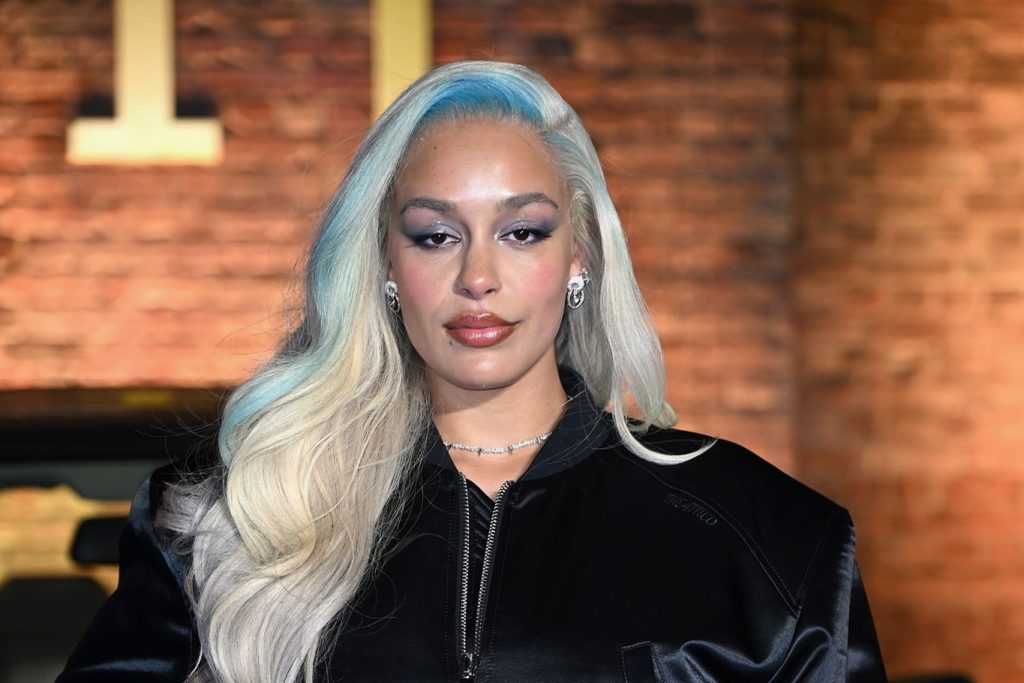
By 2018, most artists in Jorja Smith’s position would have taken the label meeting. Drake had put her on two More Life tracks and brought her out on tour. She’d opened for Bruno Mars, worked with Stormzy, landed a song on the Black Panther soundtrack.
She signed with FAMM instead — her own label — and let Platoon handle distribution. “It gets my music on Apple Music and Spotify and everywhere it needs to be,” she told The Guardian in 2018, which undersells what she’d actually kept for herself: control over a record a major would have wanted to shape.
No big marketing budget came with that. No radio department working the phones. What came instead was a No. 3 debut on the UK Albums Chart, a Mercury shortlist spot, and a BRITs Critics’ Choice win that made her the first independent artist to take the award. British Female Solo Artist and a Grammy nomination for Best New Artist followed.
There wasn’t a hit single anywhere in this run. Smith got by on a voice that people picked out of a crowd immediately, and a catalogue that wandered through grime, jazz, soul, garage and Afrobeats without ever apologizing for the range.
So no, I haven’t had a hit single. I personally am not bothered about that. -Jorja Smith
Build the Audience Before Chasing the Hit
“Blue Lights” is a strange song to build a career on. It sampled Dizzee Rascal’s “Sirens,” released in 2016, and talked about policing and fear in language specific to London and to young Black men. It picked up 400,000 SoundCloud plays in a month regardless.
What it gave her wasn’t reach so much as a fixed identity. By the time Drake was praising “Where Did I Go?” and putting her on More Life, people coming from his audience already knew roughly what they were getting.
There are no guest features on Lost & Found. Drake got her noticed. She didn’t need him on the record to be believed.
Jorja Smith’s Strategy
Use Instinct to Recognise Momentum
Smith describes her process as instinctive, though what that usually means is she’s paying close attention in the room. She and producer P2J sat down to make a dance EP after “Little Things.” Two days later they had nine finished songs. “I think this is an album, not an EP. This is serious,” she reportedly told her label, per The Guardian.
The result, What Are the Odds, ran through UK garage, two-step, funky house and Afrobeats. Released in August 2026, it topped the UK Independent Albums and Dance Albums charts and landed at No. 17 on the main chart, according to the Official Charts Company.
A lot of artists would have kept calling it an EP and released it as planned. Smith didn’t, mostly because nine finished songs is a hard thing to argue with.
Protect Identity, but Borrow Distribution
FAMM keeps the creative calls close and pays other companies to handle everything else — shipping, streaming placement, the parts of the job Smith has no particular interest in doing herself. Her collaborators tend to serve one specific function rather than several. Preditah brought UK garage. Burna Boy and Wizkid brought African audiences she hadn’t reached solo. Drake brought North America. P2J brought Black British dance music, and made it sound like she’d always belonged there.
She had no big solo hit in 2018 when she won those first awards, and Lost & Found still hit No. 3. “Little Things” eventually became her first UK Top 20 single, peaking at No. 11 and staying on the chart for 22 weeks, according to her Official Charts history — a hit that arrived after the audience did, not before it.
Change the Environment When It Starts Changing the Work
London helped build her career and then started to crowd it. “I just needed a reset,” she told The Guardian, explaining the move back to Walsall.
Falling or Flying was largely made with DameDame*, a Walsall-based production duo, away from the industry noise of the capital. The record moved through rock, soul, electronics and Afrobeats. Its main-chart run was shorter than her debut’s, but it hit No. 3 on the Albums Sales, Physical Albums and Vinyl Albums charts and topped the Record Store Chart, according to Official Charts.
Walsall didn’t have London’s infrastructure. It had quiet, and family nearby, and that turned out to matter more. She mentioned;
Keep at it, don’t stop, keep going. And trust your gut. -Jorja Smith
When Momentum Became Overexposure
Smith’s roughest period didn’t follow a failure. It followed years of nearly everything going right. During the pandemic she realized she hadn’t spent more than two consecutive weeks at home in three years — touring, recording and promotion had quietly taken over most of her life.
Then, around the release of Falling or Flying, online conversation turned to her body. “Jorja Smith weight gain” trended on X for two days, The Guardian reported. She started avoiding photoshoots. For a while she avoided leaving the house, worried about being photographed. “It really knocks your confidence,” she said at the time.
She didn’t stop working — the touring and recording continued — but her team took over her social accounts, and she stopped reading what strangers wrote about her online.
Who Actually Does What
FAMM keeps Smith independent. Distributors get the records into shops and onto streaming platforms. Producers push the sound somewhere new each time. Bigger artists lend her an audience she couldn’t reach alone yet.
She started working with Maverick Sabre at 15, years before any awards or headline tours. “I’m really lucky I’ve always had him in my corner,” she told HURS — the kind of relationship that outlasts whatever else is happening in a career, because it started before the career did.
Drake, Stormzy, Kendrick Lamar and Bruno Mars helped give Jorja Smith scale. DameDame and P2J helped shape what the records sounded like. FAMM, meanwhile, has grown beyond Smith’s own catalogue, with artists including ENNY, Maverick Sabre, Konyikeh, Mychelle, Demae, Shivani Day and Bricknasty.
Where the Independence Actually Cost Her Something
Independence wasn’t free. FAMM had less money than a major label and fewer people to do the same amount of work. It also meant nobody was waiting to override a decision Smith wanted to make.
Falling or Flying is the clearest example of that trade-off cutting both ways. It performed well on specialist charts and undersold on the main one, compared to her debut. Moving home fixed something in how she worked without fixing the commercial numbers. Both things were true at once.
A Label Built Out of Small Decisions
Nobody at FAMM decided, in one meeting, to build an “independent brand.” Smith kept the masters. She picked Platoon for distribution because it did the job without asking for anything in return. She left guest verses off her debut because she didn’t need them. She went quiet on social media for a while because reading comments about her body was making her afraid to leave the house.
Add those up and you get something that looks, from the outside, like a strategy. From the inside it looks more like a person repeatedly choosing the option that let her keep making the music she wanted to make.
Frequently Asked Questions
Is Jorja Smith signed to a major label?
No — she releases through FAMM, her own label, and uses outside companies like Platoon for distribution.
What was Jorja Smith’s breakthrough song?
“Blue Lights,” from 2016. Drake’s support for “Where Did I Go?” and her feature on More Life later widened her audience internationally.
What is Jorja Smith’s biggest solo UK hit?
“Little Things” — No. 11, and 22 weeks on the UK chart.
Why did Jorja Smith move back to Walsall? She’s described needing a reset after London became too tangled up with work. It also put her near family and collaborators like DameDame*.
How did Jorja Smith redefine modern R&B? By keeping the British specificity in her sound instead of smoothing it out. Grime, jazz, garage, Afrobeats and dance all sit inside her catalogue, and her independence has given her the room to move between them.