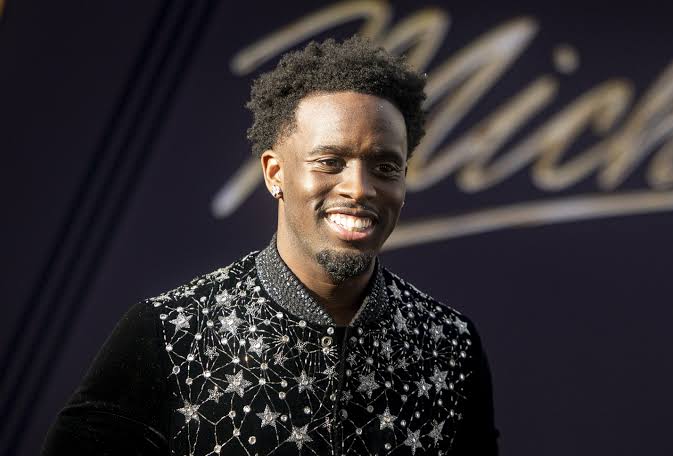
Kai Cenat spent September 2025 demonstrating how much money he could generate inside another company’s platform. His Mafiathon 3 broadcast made him the first Twitch streamer to cross one million active subscriptions, reaching the mark in 27 days.
Four months later, he disclosed what he had been developing away from Twitch. Vivet is a self-funded fashion label that Cenat says he owns outright.
The order of those events reveals the business logic. Twitch and YouTube supplied attention, income and access to an enormous audience. Cenat is putting some of those resources into a company that could retain value even if an algorithm changes, a platform revises its contracts or he no longer wants to spend hours each day broadcasting.
Vivet made its runway debut in New York on September 12, 2026, following roughly nine months of product development. The presentation placed the brand in a difficult category. Consumers now have to decide whether the clothing deserves to exist beyond its founder’s fame.
Kai Cenat’s Clothing Brand Is an Ownership Bet
Cenat introduced Vivet in a 23-minute YouTube film titled I Quit on January 13, 2026. Despite the title, the film was less a resignation than an account of his attempt to work outside the role audiences had assigned him.
He described travelling to Italy, learning about garment production and participating in the development of the collection. He also disclosed that other parties had tried to become involved in the company.
People wanted to get in on this, and I said, ‘Nah, I can do this by myself, – Cenat
His position is consistent with how he has discussed Streamer University, the live creator boot camp he launched in 2025. Cenat said he resisted approaches involving Netflix and Amazon because he wanted to control the project.
At his scale, rejecting capital is easier than it would be for most first-time fashion founders. Cenat already controls an unusually large promotional channel. He can introduce a product to millions of people without waiting for a retailer, media company or licensing partner to grant him access.
The decision still leaves him exposed. Investors can bring far more than money. Fashion companies need production knowledge, inventory financing, retail contacts and managers who understand fulfilment. Cenat will have to recruit those capabilities, contract for them or learn some of them while the business is operating.
Full ownership does not rescue a weak operation. It does, however, preserve Cenat’s room to negotiate. If Vivet establishes consistent demand, future discussions with investors would begin with sales and customer data rather than assumptions about how many social-media followers might become buyers.
Twitch Produced Cash, but It Did Not Produce Equity
Mafiathon 3 began on September 1, 2025, and passed one million active Twitch subscriptions on September 28. No Twitch creator had previously reached that threshold. Cenat also had millions of followers across Twitch, YouTube and Instagram, giving Vivet a launch platform that an unknown fashion founder would struggle to purchase.
Those numbers describe reach and earning power. They do not represent an ownership stake in the system producing the income.
Twitch subscriptions operate under a platform agreement. Streamers receive revenue, while Twitch retains control of the service, payment infrastructure and commercial relationship with users. Its monetised streamer agreement determines how creators qualify for programme fees and other revenue.
Cenat has considerable influence over his community. He cannot take Twitch’s infrastructure or its subscriber accounts with him. If his broadcasting slows, the income attached to those subscriptions can decline quickly. Mafiathon’s record also depended on an intensive month-long event—a format that places obvious demands on his time, health and creative output.
A fashion company holds a different collection of assets. Vivet can own its trademarks and designs. It can develop supplier contracts, customer records and purchasing data. Its products remain available when Cenat is offline, and they can reach people who have never watched one of his streams.
The creator economy has grown rapidly without distributing durable ownership evenly. Goldman Sachs Research estimated in April 2023 that the sector could expand from roughly $250 billion to $480 billion by 2027. Only about 4 percent of an estimated 50 million global creators qualified as professionals earning more than $100,000 annually. Brand deals supplied approximately 70 percent of creator revenue in survey data cited by Goldman Sachs.
In a typical campaign, the creator receives a fee for helping another company reach customers. When the campaign ends, that company still owns the product, brand and resulting customer relationships. Vivet places Cenat in the position normally occupied by the advertiser.
Vivet Has to Become More Than Expensive Merchandise
Vivet’s first collection does not resemble a conventional creator merchandise shop. Its official store lists a $320 electrician boot, a $395 balaclava sweater and a $550 streaming backpack. A journal sells for $20. The assortment extends across apparel, footwear and accessories instead of depending on familiar logo hoodies and T-shirts.
The streaming backpack provides the clearest evidence of what Vivet could contribute. It was designed to hold equipment used during outdoor broadcasts, connecting the product to a practical problem Cenat knows firsthand.
Established fashion houses do not typically design for livestreamers who want to transport production equipment without carrying something that looks like a technical kit. That gap is narrow, but it is identifiable. Cenat’s experience gives him information about the customer that an established designer may not possess.
Whether the backpack works as promised will matter more than the story surrounding it. Buyers paying $550 will assess its materials, comfort, storage, durability and appearance. Familiarity with Cenat may secure the first order. It will offer little protection from complaints if zippers fail or equipment does not fit.
The rest of the operation is less visible than a runway presentation. Vivet has to forecast demand across different styles, colours and sizes. It must manage returns, quality control and delivery while avoiding excessive unsold inventory. An apparel company can report attractive margins on individual products and still struggle because too much cash remains tied up in stock.
Market conditions add another layer of difficulty. McKinsey and The Business of Fashion project low-single-digit global fashion growth in 2026. Their State of Fashion 2026 report describes value-conscious consumers, volatile operating costs, tariff pressures and changes in how shoppers discover products. More than half of the fashion executives surveyed identified customer retention as a major priority.
Customer retention is therefore more important than ever, with 50 percent identifying it as a top priority for 2026. –The State of Fashion 2026
Cenat enters this market with an advantage in customer acquisition. His audience gives every launch immediate visibility. Retention will come from less dramatic parts of the business: fit, quality, fulfilment, customer service and the strength of later collections.
The first release may sell because it represents a moment in Cenat’s career. What happens when the moment is over will tell us more about Vivet.
The Black Creator Opportunity Is Larger Than Merch
Black creators have helped produce the language, aesthetics, formats and online communities that platforms and advertisers later commercialised. The creators may receive advertising income, subscriptions or sponsorship fees. The platform retains its network; the sponsor owns the product.
Once the campaign or viral moment ends, there may be little left on the creator’s balance sheet.
An operating company changes what can remain. It can produce current income while accumulating trademarks, customer relationships and intellectual property. If it survives, its owners may later extract value through profits, licensing, investment or a sale.
Fashion is only one route. Creators can apply the same logic to production studios, software, education, beauty products and live-event formats. Some categories will prove more credible than others. An audience can tell when a famous founder has lent a name to a generic product, particularly after the novelty of the launch wears off.
Cenat’s background offers Vivet a plausible starting point. He knows how streamers work in public, which equipment they carry and how online communities respond to product releases. His media reach can make the label visible without the advertising budget normally required of a new fashion company.
None of this explains whether Vivet can manufacture consistently or turn first-time buyers into regular customers. It explains why Cenat can afford to try.
For Black creators considering a similar move, timing may matter as much as the category. Attention fluctuates. Converting it into an asset is easier while the audience is still expanding and the creator can finance experimentation without accepting unfavourable terms.
The people hired around the founder matter too. A creator may understand the customer and still know little about inventory, production or finance. The challenge is finding experienced operators without casually surrendering control of the company they are meant to strengthen.
What Success Would Actually Look Like
The runway show generated headlines and social-media conversation. Neither establishes whether Vivet works as a business.
More useful indicators will emerge gradually: how many customers return, how much inventory remains unsold, how often products come back, and what margins remain after fulfilment. Another revealing figure would be the proportion of buyers who discover Vivet somewhere other than Cenat’s personal channels.
The brand’s demands on its founder will also be worth watching. If sales rise only when Cenat streams, posts or stages an event, Vivet will still depend on his labour. A more independent company would attract product searches, recommendations and repeat orders without requiring him to introduce every transaction personally.
For now, Vivet remains closely attached to Cenat’s image. That is how it secured attention in the first place, and no young company with such an advantage would ignore it. The unanswered question is whether customers will eventually mention Vivet without mentioning him.
Fashion provides no easy answer. A famous founder can push a first collection past weaknesses that ordinary market testing would expose immediately. Later collections tend to be less forgiving.
Cenat already proved that he can assemble a million paying subscriptions on Twitch. Vivet will measure something else: how many of those people see him as more than the reason a product appeared on their screen.
Frequently Asked Questions
What is Kai Cenat’s clothing brand?
Vivet is the independent fashion label Cenat introduced in January 2026. Its first collection includes apparel, footwear and accessories, some influenced by his experience as a livestreamer.
Does Kai Cenat still stream on Twitch?
Yes. I Quit did not announce a permanent departure from streaming. Cenat stepped back while working on Vivet and later returned for major broadcasts, including the 2026 edition of Streamer University.
Why does Vivet matter to Black creators?
It shows one way a creator can direct income and audience reach towards an asset they own. Whether that produces lasting value depends on the company’s products and operations, not the founder’s popularity alone.
Did Kai Cenat accept outside investment for Vivet?
Cenat says he rejected outside participation and financed the company himself. Vivet is privately held, so its precise ownership structure has not been independently confirmed through public filings.
How much do Vivet products cost?
Prices listed after the runway presentation included $20 for a journal, $320 for an electrician boot, $395 for a balaclava sweater and $550 for a streaming backpack.
Can Vivet survive without Kai Cenat’s fame?
That remains unproven. Repeat purchases, organic product searches and sales generated without direct promotion from Cenat would provide stronger evidence that Vivet has developed demand of its own.