Enterprise AI has a friction problem: humans hate picking tools before they start working. Making employees choose upfront between a quick chat box, a doc editor, or an agent mode builds a wall of hesitation. People just close the tab and go back to Google Docs or email.
Anthropic’s decision to fuse Chat, Cowork, and Design into one box kills that friction. You type what you need, and the backend handles the routing—whether that means answering in two sentences, making a slideshow, or running background tasks. It shifts the focus from software modes to getting work done, leaving rivals like OpenAI stuck defending clunky dropdown menus.
Why Anthropic Removed the Choice
The old arrangement required people to classify a job before Claude had properly encountered it. An experienced user might know when a request had become “Cowork work.” Many others stayed in Chat because that was where they had started. The tool with the deeper capability could remain untouched, even after a company had paid for access to it.
Anthropic says customers complained about deciding where a task belonged. Context did not always travel cleanly when work moved between environments either.
Those are adoption problems, not merely navigation complaints. Enterprise software regularly accumulates features faster than employees learn the labels attached to them. Anthropic’s answer is to put the classification work behind the input box. The model sees the request first and selects the machinery.
The initial rollout covers Pro and Max subscribers across web, mobile and desktop. Team and Free plans are expected later. Enterprise customers are on a slower timetable: administrators will receive at least 30 days’ notice before the unified experience reaches their organisations.
That delay is telling. A consumer can try a new interface and abandon a bad result. Inside a company, the same experiment may touch client material, shared drives or a scheduled process.
One Legal Request, Several Kinds of Work
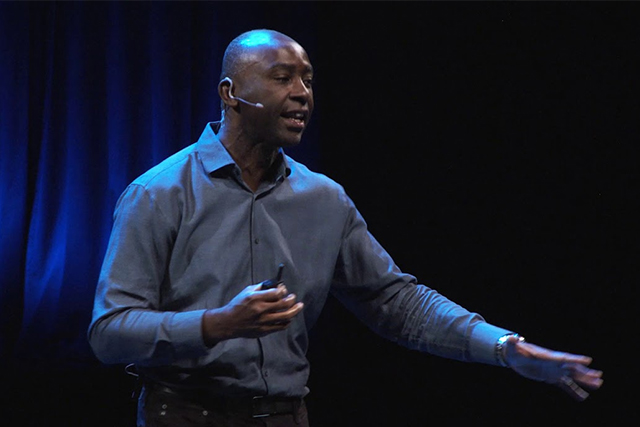
Andrew Keller, identified by Anthropic as a senior economist, described a task that does not fit neatly inside a chat window:
I could have Claude pull up [my legal research database], and it would pull all the cases, read them, figure out which other cases I might need, download them, and store them in a folder for my personal review. -Andrew Keller
The request begins as retrieval. It soon becomes reading, gap identification and file preparation. Under the old product logic, the user might have had to notice those transitions. In the new interface, they are treated as parts of the same assignment.
Keller’s last four words matter: “for my personal review.” The work ends with a person inspecting what Claude assembled. Hiding the hand-off between search and execution may save time; hiding the point at which evidence needs checking would create a different problem.
Some employees will now use agentic features without deliberately opening an agent product—or necessarily knowing that Anthropic classifies the work that way. That may be exactly what drives usage. It also leaves the interface carrying more responsibility for explaining what Claude has done.
The Report and the Slides Share a History
An ordinary office assignment often loses detail as it moves between applications. The source sits in a drive. Colleagues discuss it in Slack. Someone checks the figures in a spreadsheet, writes the report in Word, and sends it to another person to turn into slides. A qualification that was obvious in the source may be missing from the version management sees.
Claude Docs and Slides are meant to keep more of that working history in one conversation. The same sources and instructions used for the report remain available when Claude produces the presentation. The user can edit the output, leave comments for Claude and share the work by link.
Anthropic is not forcing the finished file to remain there. Documents can be exported to Microsoft Word or Google Docs; presentations can be exported as PowerPoint or PDF files.
For enterprise buyers, the exports are useful. For Anthropic, they expose an unresolved question. Docs and Slides are beta products competing for attention against software with years of formatting features, approval routines and employee habit behind it. Claude may become the place where a document is researched and drafted, while Word, Google Docs or PowerPoint remains where it is actually finished.
If that is how people use the product, Anthropic has improved the preparation layer. It has not yet captured the whole workspace.
What Happens After the Prompt
The same box can now produce a short answer, consult a connector, create a document or keep working after the employee leaves. There is no mode selector requiring the user to announce which one is needed.
So the routing decision becomes less visible just as it becomes more consequential.
Consider a vague request written between meetings: “Check what changed and update the team.” Claude could interpret that as a summary. It might search several sources, alter a file or prepare a recurring task. The correct scope depends on company practice and on details the employee may assume are already understood.
Anthropic says Claude asks for approval before acting by default. Users can grant more freedom and have the system interrupt only when closer review is needed. Neither setting settles the central question for enterprise deployment: how well does Claude recognise when the request is underspecified?
The useful tests will be untidy ones. Administrators should watch what sources Claude consults after an ambiguous instruction, when it asks a follow-up question, and how plainly it records its activity. They should also time how long it takes an employee to stop or redirect work that began on the wrong premise. A launch demonstration, written to make the route obvious, cannot answer much of that.
KPMG’s Live Test
KPMG is already putting Anthropic’s proposition into a working system. In May 2026, the professional-services firm said Claude would be made available to more than 276,000 employees. Cowork and Managed Agents are also being embedded in Digital Gateway, KPMG’s platform for tax and legal work.
This is not a blank workspace. Digital Gateway contains proprietary tools and client information. A wrong assumption can survive into advice; material from one engagement cannot casually turn up in another.
Rema Serafi, vice chair of tax at KPMG US, described the earlier process this way:
Building an AI agent to help clients adjust to changing tax regulations used to take weeks and required teams to switch between multiple tools and chat windows. — Rema Serafi
Serafi said the integrated system cut that work to minutes. Anthropic’s published material does not provide an independent test of the claim, so the comparison remains an account from the two partners responsible for the deployment.
Even with that qualification, KPMG offers a useful test case because most of its staff will not be building agents from scratch. They will meet Claude inside assignments they already recognise. Administrators choose the available systems; employees ask for work to be done.
The less glamorous details will decide whether that scales. Which client context did Claude retain? Why did it select a particular source? What happens when project memory carries forward a mistaken assumption? Tax and legal teams cannot treat those questions as interface trivia.
The Pressure on Rival AI Workspaces
Reuters reported that Anthropic’s announcement followed OpenAI’s July introduction of ChatGPT Work, which brought conversational work closer to Codex capabilities. The two companies are confronting the same product problem: their AI systems can do more, but the growing collection of tools and workspaces can make that capability harder to approach.
OpenAI has models and specialised work surfaces serving different users. The choices are useful when someone already understands them. They are less helpful when an employee arrives with an assignment that will change shape after the first prompt. Anthropic’s redesign puts pressure on rivals to justify every mode decision they leave to the user.
Microsoft and Google start elsewhere. Their employees already know where a document, spreadsheet or presentation belongs, and AI has been inserted into those familiar applications. Anthropic does not have an established office suite that constrains the design. It can organise the experience around a continuing conversation.
That freedom does not supply the mature formatting, administrative controls or workplace habits already attached to Microsoft 365 and Google Workspace. The exports acknowledge as much.
Claude Code remains separate, while Design can still be opened on its own. For now, Anthropic has concentrated the merger on assignments that move among conversation, research and everyday office files. Whether users accept the model’s routing choices will matter more than whether the missing selector makes the screen look cleaner.
Questions Employees and Buyers May Have
Has Anthropic discontinued Cowork? Cowork’s capabilities are moving into ordinary Claude conversations rather than disappearing. Anthropic says existing chats, projects, skills and connectors will remain available.
Who receives the unified experience first? Pro and Max subscribers are first in the rollout. Team and Free access is expected later. Enterprise administrators will control internal availability after receiving at least 30 days’ notice.
Can Claude Docs replace Microsoft Word? That is not what the available product evidence establishes. Claude Docs may be useful when research, drafting instructions, and revision need to remain in the same conversation. Users can still export the file to Word or Google Docs, where established formatting and review processes may continue.
What if Claude selects the wrong workflow? The employee can redirect the assignment, but companies should test the recovery process themselves. The important questions are whether Claude shows what it is doing early enough, whether a user can stop it easily, and whether an unsuitable route reaches a connected system before anyone notices.
Is Claude Code included? No. Claude Code remains a separate developer product. The September announcement concerns Chat, Cowork, Design, Docs, and Slides.