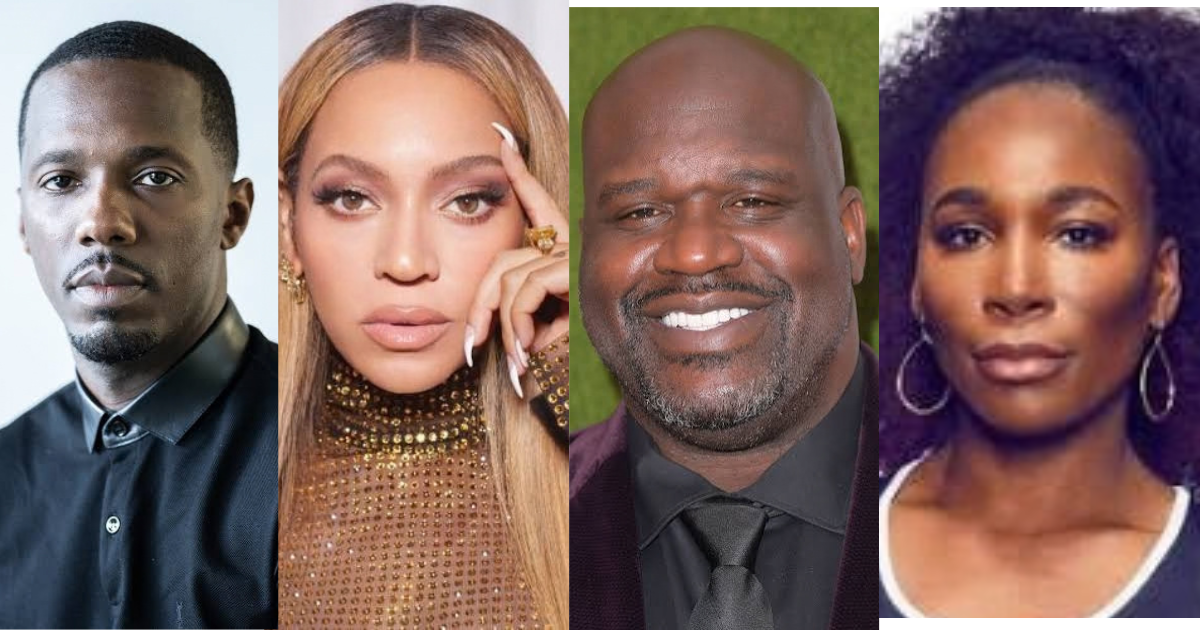
In August 1992, the Orlando Magic signed rookie Shaquille O’Neal to a seven-year contract reported at $40 million. He was 20. The figure made clear how much the team valued his potential, but it did not mean he received $40 million at once.
This feature uses “millionaire” to describe people who crossed a documented or reported million-dollar earnings milestone before 30. The figures are not all net-worth estimates: they include prize money, a contract’s reported value, an earnings estimate and a personal account. Each route depended on a different market—professional basketball, tennis, entertainment or sports representation.
Five Routes to a Million-Dollar Milestone
Shaquille O’Neal’s First NBA Contract
O’Neal was the first pick in the 1992 NBA draft. Orlando’s reported seven-year, $40 million deal was an extraordinary commitment to a rookie. Its full value would be paid over time, under the terms of the contract.
O’Neal later recalled spending $1 million within about 45 minutes of signing his first professional contract. In a CNN interview, he said his priority was to relieve his parents of their jobs.
I (spent) a million dollars in about 45 minutes, but it was well worth it. — Shaquille O’Neal
The anecdote captures both the scale of the opportunity and what O’Neal chose to do with some of the money. His wealth milestone began with a rare position in a professional league: the No. 1 pick. The contract was not ownership of a team or league, but it gave him access to income few rookies in other fields could expect.
Venus Williams’ Earnings at 19—and a Reebok Agreement
Wrist tendinitis had kept Venus Williams from playing a match in 2000. In March, The Washington Post reported that she was considering leaving tennis to focus on education and investments. She was 19, and the paper put her career earnings at nearly $4.6 million.
The retirement idea did not become her next step. Later that year, Reebok signed her to an endorsement deal reported at an estimated $40 million. Her father, Richard Williams, described it as a three-year arrangement with a two-year extension. Incentive clauses could add money. That was the reported potential value over time, not a payment made on signing.
The episode shows two ways an athlete’s career can produce income. Tournament earnings came from competing. Reebok’s money came from a commercial agreement built around Williams’ profile. The injury also shows the fragility behind the numbers: performance could create opportunity, while a physical setback threatened the work itself.
Serena Williams’ Tournament Record
Serena Williams’ prize money did not need to be estimated. The WTA lists her 2001 earnings at $2,136,263, when she was 19. In 2002, at age 20, she topped the tour’s prize-money list with $3,935,668. That total included singles, doubles and mixed doubles. Venus was second that year, with $2,583,571.
Serena won the French Open, Wimbledon and the U.S. Open in 2002. The Australian Open victory in 2003 completed her run of four consecutive Grand Slam singles titles, known as the “Serena Slam.”
Those records document tournament winnings, not the full economics of a tennis career. They do not include endorsement income, taxes, coaching or travel expenses. Even with that narrower measure, the WTA totals show that Serena earned more than $1 million in prize money in two successive seasons before turning 21.
Beyoncé’s Earnings and Parkwood
Forbes estimated Beyoncé’s earnings at $87 million from June 1, 2008, to June 1, 2009, when she was 27. The magazine’s estimate included music, film, touring, fashion, and endorsements. In that period, she released I Am… Sasha Fierce, appeared in films, and began a 110-date international tour. The $87 million was an earnings estimate for a year, not a valuation of her assets.
Beyoncé also started Parkwood Entertainment at 27. In a later Harper’s Bazaar interview, she described that move as part of taking control of her independence.
I took control of my independence at 27 and started Parkwood Entertainment. — Beyoncé
Parkwood created an organisation around creative work, production and management. That is distinct from the earnings estimate: income measures what came in over a period; a company provides a structure for managing projects and decisions. The company’s existence does not establish that Beyoncé owned every right tied to every recording or distribution deal. Those rights depend on the agreements behind each project.
Rich Paul’s First Million and the Later Agency
Rich Paul has said he made his first million at 27. He gave that age in a 2026 interview with School of Hard Knocks. The exchange offers no income breakdown and does not identify a particular client deal as the source.
Paul met LeBron James in 2001 and gained experience in player representation before launching Klutch Sports Group in 2012. The timing matters: his first-million claim came before the agency existed. The interview does not establish that Klutch made him his first million.
Klutch later became a substantial agency. CBS reported in 2023 that Paul had negotiated more than $4 billion in deals for clients. That figure is the value of contracts he negotiated, not his personal income. Agents may receive commissions and fees, but the athletes’ full contract values do not belong to the agent.
Paul’s account and Klutch’s growth mark two points in a career, not one event. The first is his claim about reaching a million at 27; the second is the agency he launched later.
The Contract Is Only Part of the Story
The headline figures invite comparison, but they measure different things. O’Neal’s was the reported value of a seven-year agreement. Williams’ $4.6 million was career earnings at 19, while Reebok’s $40 million was an estimated deal value. Serena Williams’ prize money was recorded by the WTA. Beyoncé’s $87 million was Forbes’ estimate for one year. Paul’s first million is his own account.
The money also came with different forms of control. O’Neal signed to play for a team. Tennis winnings followed tournament results; an endorsement required a separate agreement. Beyoncé added Parkwood as a company around her creative work. Paul’s later agency built a business around representing clients, but the $4 billion in negotiated contracts was never his personal fortune.
That is the part of early wealth creation worth studying. A high income can provide choices: support for family, savings, investments, or capital for a business. Ownership can add another layer, whether through a company, equity, or rights to work. Yet neither a large paycheck nor a company name tells the whole story. Contract terms, expenses, and the assets actually owned shape what lasts.
The five stories do not offer a universal formula. They show how a rare opportunity can become substantial income, and how different the next step looks depending on whether the person is paid for performance, a commercial relationship, or professional service—or builds an organisation around that work.
FAQs
Does “millionaire” mean each person had a net worth above $1 million?
No. The article covers recorded prize money, reported earnings, an estimate or a person’s own account. It does not calculate each person’s assets after debts and obligations.
How much prize money did Serena Williams earn before turning 21?
The WTA recorded $2,136,263 for Serena in 2001 and $3,935,668 in 2002. She was 19 and 20 in those seasons, respectively.
Was Venus Williams paid $40 million upfront by Reebok?
No. The deal was reported at an estimated $40 million, with a three-year arrangement and a two-year extension described by her father. It was not an upfront payment.
What did Forbes’ $87 million Beyoncé figure measure?
It was Forbes’ estimate of her earnings from June 1, 2008, to June 1, 2009. The estimate covered several income streams and did not represent her net worth.
Did Rich Paul personally earn more than $4 billion?
No. CBS reported that Paul had negotiated more than $4 billion in deals for clients by 2023. That figure represented contract value, not his personal income.
Did Klutch Sports make Rich Paul’s first million?
The interview does not establish that. Paul said he made his first million at 27; he launched Klutch in 2012, later in his career. The interview gives no income breakdown.