At Detroit’s 2024 NFL Draft, local organizers reported that Black-owned businesses won 34 contracts to work directly with the NFL, including 15 Black-owned concession stands. Those awards show what NFL procurement can mean in practice. The headline’s $125 million figure, however, refers to an earlier period: in June 2022, the NFL and Ice Cube’s Contract with Black America Institute announced a partnership and reported that the league had spent and allocated that amount with Black-owned businesses during the preceding year. It was not a new $125 million payment made when the partnership was announced.
What the $125 Million Figure Meant
The June 2022 partnership announcement, issued by Contract with Black America (CWBA), said the NFL had “spent and allocated” $125 million with Black-owned and operated businesses over the previous year. It named Ariel Investments, CityFirst/Broadway Bank, Cover Communications and Fearless Technology as examples. The announcement did not assign a dollar amount to each business.
The figure covered spending and allocations together. The announcement did not describe it as a new grant or a single contract, and it did not say the entire amount was paid directly to operating vendors. The distinction is central to the story: the NFL reported past business activity, then announced a partnership intended to identify more opportunities in finance, technology and production.
The named companies suggest the variety of relationships in the picture. Ariel Investments is an investment-management firm; CityFirst/Broadway Bank is a financial institution; Cover Communications works in communications; and Fearless is a software company. Those are different kinds of businesses and engagements. The announcement establishes that the NFL named them in connection with the spending and allocations; it does not disclose the terms of each relationship.
That matters because “corporate spending” can cover more than buying products from small suppliers. It may include financial services, professional services, technology work or subcontracting. A large client can offer revenue and a reference that helps a supplier pursue other institutional customers. But those benefits depend on the actual work, payment terms and whether the relationship leads to repeat business.
How CWBA and the NFL Framed the Partnership
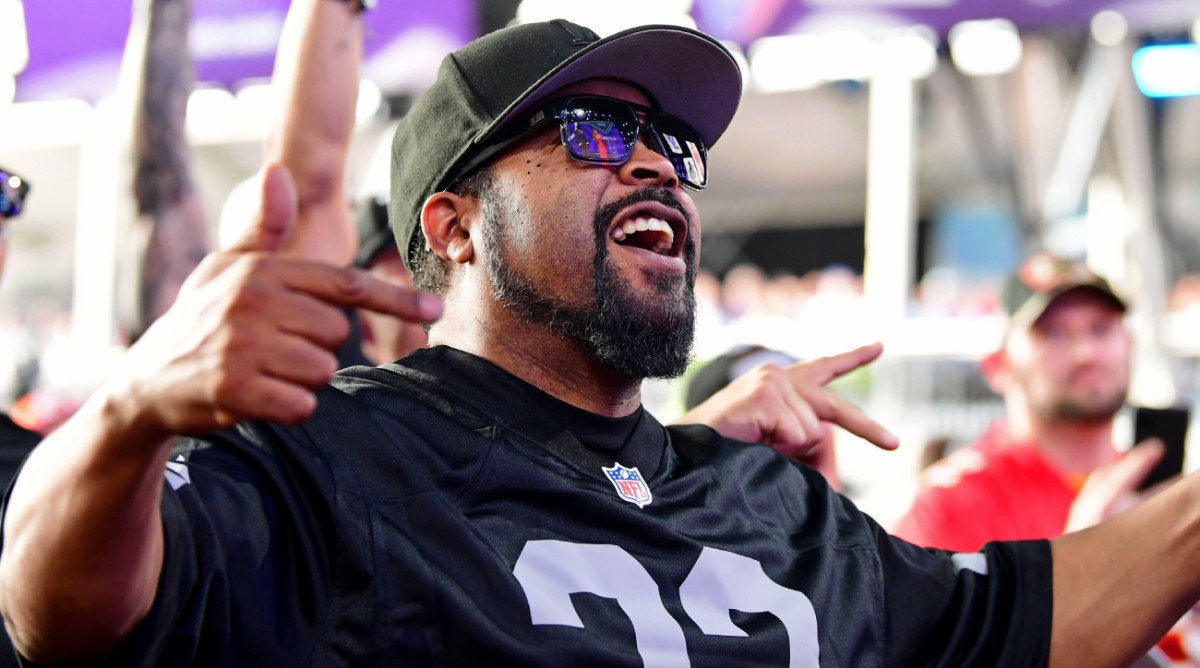
Ice Cube launched CWBA in 2020 as an economic-equity initiative. In the 2022 announcement, the organization described its role as helping identify resources and opportunities for stronger business relationships between the NFL and Black communities.
For more than a year, the CWBA Institute has been working closely with the NFL on identifying resources to build stronger, more substantive economic partnerships with the Black community.
— O’Shea Jackson (Ice Cube)
The announcement emphasized direct and indirect spending. Direct spending can come from the league or a club buying from a supplier; indirect spending can flow through a prime contractor or another vendor. Both can generate work, but the supplier’s role, customer access and share of the contract may differ.
CityFirst Bank’s president and CEO, Brian Argrett, described a strategic partnership with the NFL and CWBA focused on access to capital and growth opportunities. That relationship shows why economic participation can extend beyond vendor payments: financial institutions can serve corporate clients and finance businesses. It should not be confused with the NFL paying $125 million directly to Black-owned suppliers.
This partnership supports and accelerates each organization’s commitment to ensuring that minority businesses have access to capital and opportunities to fuel their growth.
— Brian Argrett
The NFL also pointed to Business Connect, its existing program for connecting diverse firms with opportunities around events such as the Super Bowl and Draft. For a local company, an event can be an entry point into a major buyer’s supplier network. The Super Bowl LVII host committee’s Business Connect program described a resource guide that NFL vendors and event producers could use to identify local suppliers for subcontracting needs. Being listed makes a supplier easier to find.
What Later NFL Procurement Programs Delivered
In May 2024, the NFL announced NFL Source, a broader initiative to standardize supplier-diversity efforts across the league and its clubs. The NFL described plans for procurement training, a supplier-diversity playbook and event-specific requirements for host clubs and local organizing committees. It also said it would work with the U.S. Black Chambers to help businesses obtain certifications needed to do business with the league.
Detroit’s 2024 Draft offers a concrete measure of event procurement. Visit Detroit and the Detroit Sports Commission reported that the NFL spent $12.1 million with local minority-owned businesses. Separately, they said Black-owned businesses secured 34 direct contracts with the NFL, nearly 40% of local contracts. The work included 15 Black-owned concession stands, as well as staffing, catering, bartending, photography, transportation, décor, laundry and arts services. Michigan Black Business Alliance members also hired more than 500 workers for Draft week, generating about $1.2 million in staff income, according to the organizers’ post-event report.
The $12.1 million figure applies to local minority-owned businesses overall, not solely Black-owned businesses. The 34 contracts and nearly 40% figure are the report’s specific measures for Black-owned firms. Keeping those figures separate avoids treating all minority-owned supplier spending as Black-business revenue.
VisitPITTSBURGH reported that 164 businesses participated in the Draft Source Program, more than 100 local contracts were issued, 64% went to local diverse businesses, and 63% went to program members. The organization also reported $17.7 million in direct spending with Pittsburgh-based businesses. These are results for the broader local supplier program, not totals for Black-owned firms alone. In a specific example, Aunt Cheryl’s Café owner Cheryl Johnson told the New Pittsburgh Courier that her Black-owned business received a paid NFL contract to provide boxed lunches for construction workers and serve sweet potato pies at a Draft event.
These later examples show that NFL procurement has produced paid work for Black-owned suppliers at major events. They do not establish that CWBA caused each contract. They do show the practical value of a supplier pipeline: businesses need a way to learn about opportunities, qualify, bid and deliver.
What Businesses and Buyers Can Learn
For corporations, supplier diversity depends on more than a public commitment. Buyers need clear requirements, visible procurement calendars and a process that allows qualified businesses to compete. Tracking contract awards and payments separately can show whether a program is producing actual business for suppliers. Tracking prime contracts and subcontracting also matters because the role a company occupies can affect its margin, customer access and future references.
For entrepreneurs, an institutional client can bring revenue and credibility, but the contract must work financially. Suppliers should understand payment schedules, insurance requirements, staffing needs, subcontracting terms and renewal conditions before committing resources. A large award can strain a small company if it has to cover labor and materials while waiting for payment.
The NFL-CWBA announcement put a large purchasing figure beside a partnership designed to expand Black-business access. The later Draft examples show how that broader procurement work can turn into specific contracts, spending and jobs. The $125 million remains a 2022 report of spending and allocations from the previous year; the more recent evidence comes from separate event programs and contracts. For suppliers, the durable measure is not only whether a league announces an opportunity, but whether businesses can win the work, get paid and build from it.
Frequently Asked Questions
Did the NFL give $125 million to CWBA?
No. The 2022 announcement said the NFL had spent and allocated $125 million with Black-owned and operated businesses during the prior year. It announced a partnership with CWBA to identify further economic opportunities; it did not describe a $125 million grant to the organization.
Was the $125 million a new commitment made in June 2022?
No. The announcement reported spending and allocations from the preceding year. The new announcement was the NFL-CWBA partnership. The $125 million was not described as a fresh payment made when the partnership was publicized.
Which businesses did the announcement name?
It named Ariel Investments, CityFirst/Broadway Bank, Cover Communications and Fearless Technology as examples of Black-owned and operated businesses connected to the NFL’s reported spending and allocations. The announcement did not give individual amounts or contract terms for those companies.
What did Black-owned businesses earn from the 2024 NFL Draft in Detroit?
Detroit’s local organizers reported that Black-owned businesses secured 34 direct NFL contracts, nearly 40% of local contracts. The NFL’s $12.1 million spend figure covered all local minority-owned businesses, not just Black-owned businesses.
What happened with NFL supplier programs in Pittsburgh in 2026?
VisitPITTSBURGH reported 164 Draft Source Program participants, more than 100 local contracts and $17.7 million in direct spending with Pittsburgh-based businesses. Aunt Cheryl’s Cafe owner Cheryl Johnson also told the New Pittsburgh Courier that her business received a paid NFL contract.
What should a small business prepare before pursuing an NFL contract?
A prospective supplier should document its qualifications, insurance, references, staffing and ability to deliver. It should also assess payment timing, contract scope and cash-flow needs. A directory listing can improve visibility, but the company still needs to compete for and execute the work.