

For most of Hollywood’s history, the deal worked like this: a Black actor got cast as the action lead, somebody else got strapped into the costume to do the actual fighting, and an editor papered over the difference with quick cuts. The actor sold the poster. The stunt team did the work and got a thank-you in the credits, if that.
Audiences caught on. The quick cutting became a tell in itself. If a director wouldn’t hold a wide shot, you assumed the lead couldn’t fight, and you were usually right.
What’s changed over the past twenty years is a small group of performers who showed up already knowing how. Not “trained for the role” knowing how. Decades-in-the-gym, trophies-on-the-shelf knowing how. When the lead can genuinely fight, the grammar of the whole movie changes. The camera pulls back. Takes run longer. A fight can be a scene instead of a montage.
Their leverage changed too, and that’s the real thread here.
A studio can shelve a movie, recast a role, or cut a project loose without explanation. It can’t take back what an actor’s body knows.
Here are some movie stars who successfully merged excellent acting with great stunt work, and changed the game.
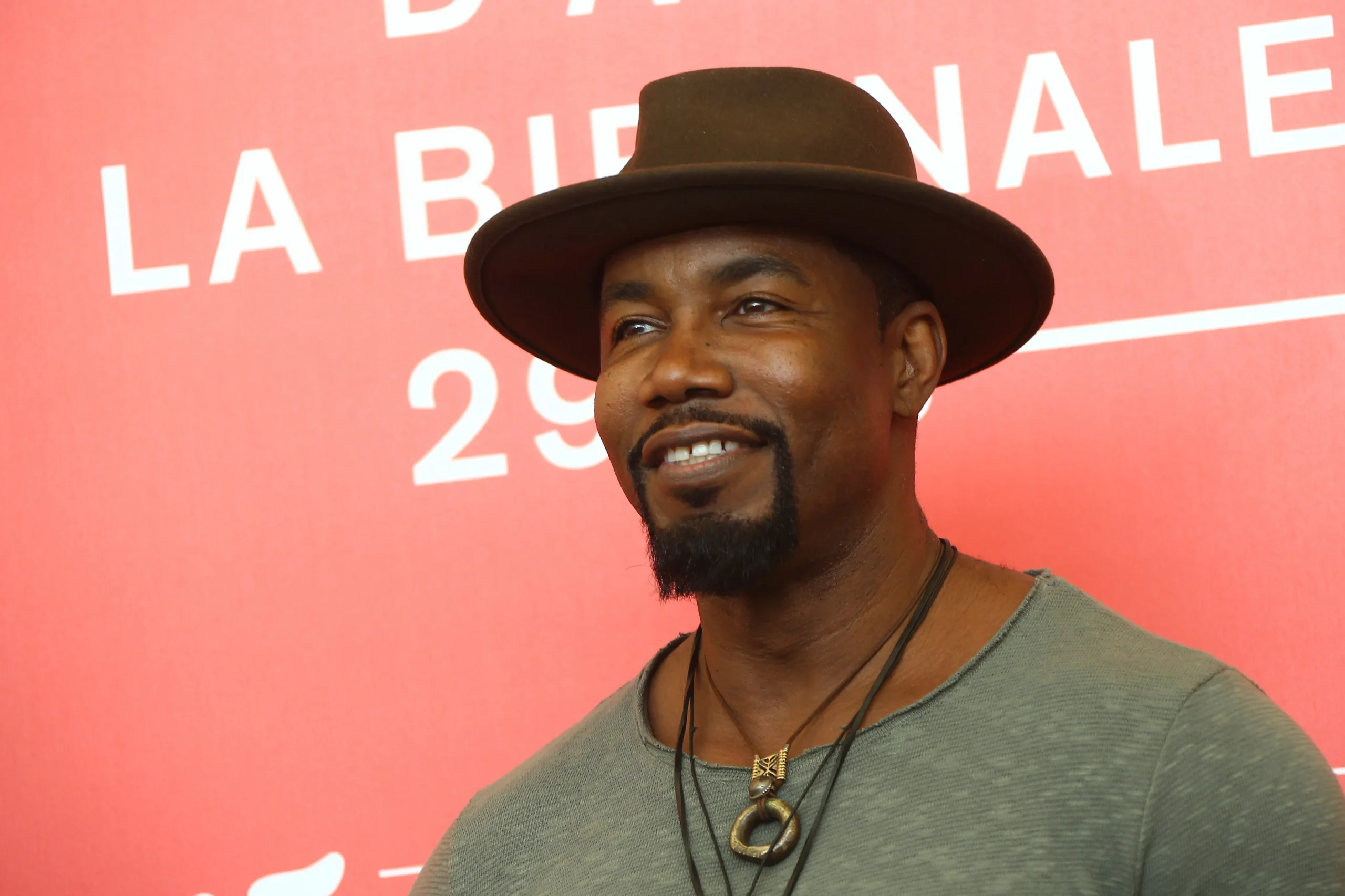
Michael Jai White stopped waiting
Put on Blood and Bone sometime and just watch the camera. It doesn’t cut much, because it doesn’t need to. Michael Jai White, then in his early forties, is doing all of it: the combinations, the takedowns, the timing. There are no editing tricks to hide behind because none are required.
The background explains it. White grew up between Brooklyn and Bridgeport and started martial arts at seven. Over the following decades he earned black belts in seven disciplines (Shotokan, Kyokushin, Goju-Ryu, Taekwondo, Kobudo, Tang Soo Do, Wushu) and won 26 titles along the way, including the U.S. Open. Before acting paid the bills, he taught kids with emotional and behavioral problems, work he has said shaped him as much as any dojo did.
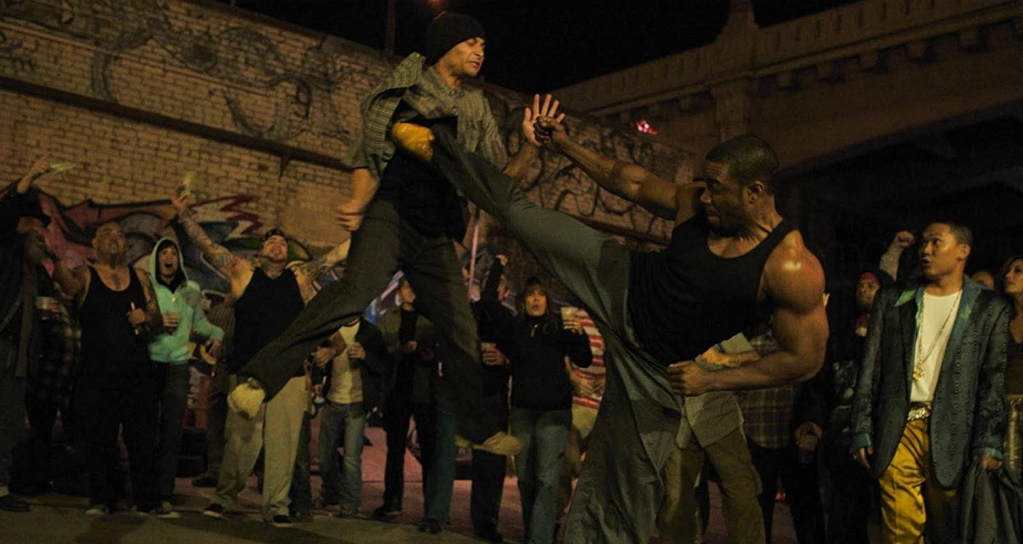
Then came Hollywood: Mike Tyson in HBO’s Tyson (1995), and the lead in Spawn (1997), which made him the first Black actor to headline a major superhero film. Then the ceiling arrived, the same one every Black martial artist of his generation hit. The roles on offer were enforcers. Henchmen. Costume villains. Nobody was greenlighting an action franchise for a man with seven black belts if that man was Black.
So he stopped asking. He starred in Blood and Bone, a low-budget fight movie that became a cult classic on the strength of its choreography. He co-wrote and starred in Black Dynamite, a spoof funnier than it had any right to be. He directed Never Back Down 2 and Never Back Down: No Surrender, which contain some of the cleanest MMA sequences ever filmed. And he bootstrapped his own production company, Jaigantic Studios. Everything in it is sweat equity: his training, his name, his money. The next project doesn’t need anybody’s permission.
Lateef Crowder put capoeira inside Star Wars
Capoeira was invented by enslaved Africans in Brazil who needed to hide a fighting system inside a dance. That origin matters here, because for most of film history capoeira was set dressing, something a video game character did between gunfights. Nobody built an action sequence around it.
Lateef Crowder grew up inside the art. Born in Salvador, Bahia, he learned it from his father from early childhood, later moving to California and joining the ZeroGravity stunt team. In 2005, the team behind Tony Jaa found his movement reels and brought him in for Tom-Yum-Goong (The Protector in the West). The result is one of the great screen fights: a flooded, burning temple, Jaa’s knees against Crowder’s spinning kicks, and a camera content to let both men work. Crowder tore his Achilles during filming and kept going. Action fans have been passing that clip around for two decades.
Hollywood caught up slowly. He played Eddy Gordo in the live-action Tekken movie. He fought Scott Adkins in Undisputed III: Redemption. Then came the strangest and biggest milestone of all: Jon Favreau and Lucasfilm made him the primary stunt performer for Din Djarin on The Mandalorian.
The helmet hides his face, which is exactly the point. Every fight Mando has, the way he closes distance, redirects, attacks from angles nobody sees coming, is capoeira architecture underneath Star Wars armor.
Millions of people have watched capoeira footwork in a billion-dollar franchise without ever clocking what they were looking at.
Marrese Crump learned the old way, in Thailand
White’s route to control ran through producing. Crowder’s ran through an art the industry had ignored. Marrese Crump took a third path: he went and found the source.
Crump trained in everything American studios had no use for, taekwondo, karate, boxing, capoeira, Filipino Kali. His real education happened in Thailand, where he tracked down Panna Rittikrai, the choreographer who created Tony Jaa and Ong-Bak. By Crump’s telling, he is the only American Rittikrai ever took into his inner circle. He spent years in the Thai stunt camps learning Muay Boran, the older and harder ancestor of modern Muay Thai, along with Krabi-Krabong, the weapons system, and Silat.
The screen payoff came in Tom-Yum-Goong 2 (2013), where he went toe-to-toe with Jaa himself and held his own in scenes built around hand speed and elbow strikes.
His biggest contribution happened off camera, though. When Chadwick Boseman began preparing for Black Panther, he brought Crump in as his personal trainer. Crump built him a movement vocabulary out of Silat and Kali: low, flowing, animal. Watch T’Challa fight next to the average Marvel hero and you can see the difference. Boseman is actually in those shots, moving through real combinations, because he had done the work to be. Director Ryan Coogler and fight coordinator Aaron Toney never had to hide him. That difference belongs to Crump, mostly, and almost nobody outside the industry knows his name.
Mahershala Ali trained for a movie that barely happened
Here’s the cruelest version of this story.
In 2019, Marvel announced that Mahershala Ali, already a two-time Oscar winner, would play Blade. The role has history: Wesley Snipes played him in three films with genuine martial arts underneath, since Snipes has trained since childhood. Ali took the preparation seriously. Years of it: sword work, weapons handling, close-quarters fighting, all of it underway long before any camera was scheduled to run.
Then the project came apart. Directors signed on and left. Release dates came and went. The script got rewritten, and rewritten again. By the most recent reports, Ali has stepped away from the role after close to seven years of it hanging over him.
So: all of that training, for a movie that mostly didn’t happen. Except that framing is wrong, and correcting it is the most important point in this piece. Marvel owns the word “Blade.” It never owned what Ali built getting ready for the part. The swordsmanship, the fight literacy, the changed body, that’s human capital in the most literal sense, and it goes wherever he goes next. He has talked about carrying it into original action projects. The studio lost a development slate. He kept the transformation.
Yahya Abdul-Mateen became his own stunt double
Every man before this one earned his physicality over decades. Yahya Abdul-Mateen II built his on deadline — which is exactly why he belongs here. He’s the first person in this piece who never came up through martial arts, and his career shows where the new hierarchy goes once it hardens into the default.
He came to acting sideways. Architecture at Berkeley, a city planning job in San Francisco, then Yale School of Drama, then an Emmy for Watchmen. No dojo in the backstory, no lineage, no trophy case. What he has instead is a record of treating every physical role like a project with real specifications. Months of choreography for the fight work in The Matrix Resurrections. Real conditioning under the Black Manta armor. Then, for Wonder Man, Marvel’s Hollywood-set series where he plays Simon Williams — an actor and stuntman long before any superpowers arrive — he put in months of gymnastics training: flips, aerials, the kind of work that leaves no body double to hide behind, because the man doing the movement on camera is the man on the poster.
Hollywood spent fifty years hiding its Black action leads behind stunt doubles. Now it built a series about a stuntman — and cast an actor who trained until he didn’t need one.
The order of events is the point. White had to seize his independence. Crowder waited two decades for the industry to notice his art. Abdul-Mateen was handed a franchise role with a stuntman at the center of it and treated the training as the job posting. What used to be a negotiation between actor and studio has become the entry fee. That’s the surest sign the four men before him actually won.
What actually changes when the lead can fight
The old system needed short takes and heavy editing because the person in frame couldn’t do the thing. Remove that problem and a whole chain of decisions reverses itself. Directors can shoot wide and long. Fights play out as choreography instead of chaos. Cultures get represented by their actual arts, capoeira, Muay Boran, Kali, instead of generic bar-brawl flailing. And the performers get something the previous generation never had: the ability to fund, make, and own their own action movies when the studios pass.
Beyond the movies, what White, Crowder, Crump, Ali, and Abdul-Mateen all figured out is that the skill itself is the asset. Everything else, the roles, the franchises, the deals, was always negotiable.

![Box Office Breakdown: Did [Black-Led Films] Dominate Summer 2026?](https://blackelites.com/wp-content/uploads/2026/10/Box-Office-768x432.png)