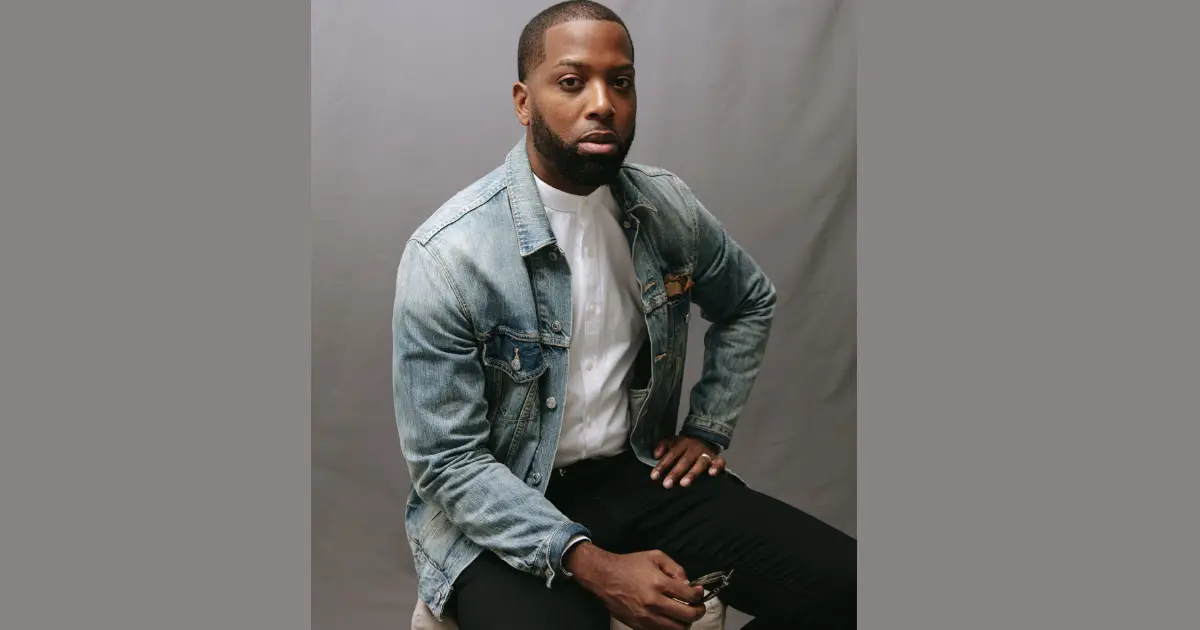
Before Tristan Walker founded Walker & Company Brands and Bevel, he experienced a unique early career journey in modern tech. He moved from Wall Street to Stanford, then to Twitter, and Foursquare, and later ventured into capital investment at Andreessen Horowitz. His story is about more than just changing jobs. It highlights timing, courage, taste, persistence, and the ability to recognize how culture and technology would evolve before the market caught up.
Walker was born in Queens, New York, on July 5, 1984. His childhood faced challenges, including the murder of his father when he was just three years old. He later secured a full scholarship to Hotchkiss, graduated as valedictorian from Stony Brook University in 2005 with an economics degree, and began his career in finance. EBSCO notes that he worked at Lehman Brothers and J.P. Morgan before shifting toward business school and technology.
From Wall Street to Stanford: The First Career Reset
Walker’s initial ambition was in finance. He worked as an energy trader, first at Lehman Brothers and then at J.P. Morgan. However, Wall Street was not where he wanted to stay long-term. In 2008, J.P. Morgan laid him off during restructuring, which coincided with his acceptance to Stanford Graduate School of Business. That moment turned into a career reset rather than a setback.
At Stanford, Walker entered a new environment. He admitted he hadn’t fully understood Silicon Valley before his arrival. In a Masters of Scale conversation, he mentioned, “I had no idea,” when asked about Stanford’s location at the heart of Silicon Valley.
That lack of knowledge did not hinder him. It fueled his curiosity.
The Twitter Moment: Seeing Communication Change in Real Time
Walker’s introduction to technology happened through Twitter. EBSCO records that he interned at Twitter in 2009 while still pursuing his MBA at Stanford.
One significant moment highlighted the platform’s power. During an accounting class at Stanford, students were debating whether MC Hammer would attend a scheduled campus talk. Walker took to Twitter and asked him directly, “Are you coming?” According to Walker, the response came promptly, showing him how Twitter was transforming communication.
That brief interaction mattered. It revealed to Walker that technology encompassed more than just code or screens. It was about access, speed, culture, and human connection. At a time when many dismissed Twitter as a space for trivial updates, Walker recognized it as a new layer of public communication.
Foursquare: The Cold-Email Breakthrough
If Twitter opened Walker’s eyes, Foursquare presented his first significant operational challenge.
Foursquare, a fledgling location-based social app, allowed users to “check in” at places, discover venues, and earn digital badges. Walker became intrigued. In an interview with Collaborative Fund, he recalled his excitement upon hearing about Foursquare, saying he “knew I wanted to be a part of it.” He found the email addresses of co-founders Dennis Crowley and Naveen Selvadurai and reached out to them multiple times.
This turning point has become part of startup lore. Walker mentioned that he emailed the founders eight times. When Crowley finally replied, asking if he was ever in New York, Walker, then in Los Angeles, responded that he planned to be in town the next day. He booked a flight, spent a week with the team, and joined the company about a month later.
It was daring, but it was more than mere bravado. It was focused persistence driven by genuine belief in the product.
Building Foursquare’s Business Engine
From 2009 to 2012, Walker served as Director of Business Development at Foursquare, where he managed strategic partnerships and monetization efforts. His role put him at the center of a company that was trying to define a new category in social, local, and mobile technology. Shake Shack’s corporate governance profile notes that he facilitated integrations with brands and media companies like American Express, The New York Times, CNN, MTV, Starwood Hotels & Resorts, and Starbucks.
This work was anything but routine. Foursquare was still explaining itself to advertisers, retailers, and media organizations. Walker helped translate a new consumer behavior, location-based social discovery, into terms that brands could understand.
In a 2010 ClickZ interview, Walker stated that Foursquare aimed to partner with “charter brand advertisers” who grasped social media, naming Starbucks, Bravo, Pepsi, and The New York Times as examples. He also noted that the company collaborated closely with these partners to enhance their products.
That period taught Walker how to convert cultural behavior into commercial structure. It placed him close to the mechanics of growth: partnerships, loyalty, monetization, brand integration, and user expansion.
Leaving Foursquare for Andreessen Horowitz
By 2012, Walker had spent around two and a half years at Foursquare. Business Insider described him as one of the company’s earliest employees and reported his transition to Andreessen Horowitz as an Entrepreneur-in-Residence. In his farewell note, Walker expressed that Foursquare allowed him to “think big” and “take risks,” while witnessing the company’s growth from 3 to over 100 employees.
At Andreessen Horowitz, Walker explored a different side of Silicon Valley. Instead of building partnerships for someone else’s startup, he had the freedom to experiment with his own ideas. Collaborative Fund notes that he spent months developing concepts before launching Walker & Company.
Why this Pre-Founder Career Mattered
Walker’s journey before starting his own business clarifies why his later company felt so distinct. Finance instilled discipline. Stanford provided closeness to Silicon Valley. Twitter highlighted communication’s cultural swift pace. Foursquare taught him product enthusiasm, partnership strategies, and category creation. Andreessen Horowitz allowed him space to think like a founder.
When he launched Walker & Company Brands in 2013, he was not merely following a startup trend. He had learned about market formation, behavioral changes, and how underserved consumers could become the focus of a significant business opportunity.
The deeper lesson from Tristan Walker’s career before entrepreneurship is that he did not wait for permission to enter important spaces. He observed the future, connected with the people shaping it, and made himself valuable before the world grasped the potential of those companies.