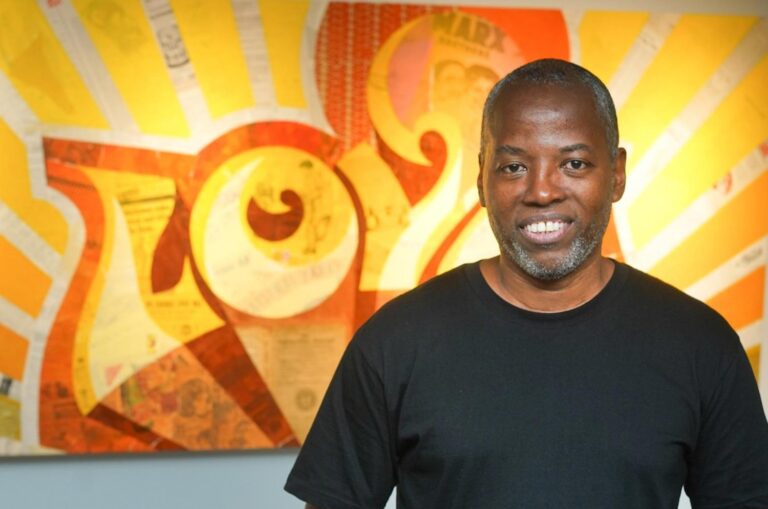
Tristan Walker is one of America’s most influential Black business leaders. He built a consumer brand around a problem that mainstream companies had overlooked for generations. He scaled the brand into national retail, sold it to Procter & Gamble. Tristan then used his platform to elevate culture, capital, and representation in American business. Walker is the founder of Walker & Company Brands, the company behind Bevel. He is also connected to CODE2040, Heirloom Management Co., and leadership at Shake Shack.
His influence is based not just on wealth or visibility. It centers on a critical business idea: underserved consumers are not small markets; they often represent the future of the market.
The 2026 Event That Confirms His Boardroom Relevance
Walker’s influence in corporate America remained strong in 2026. On June 10, 2026, Shake Shack held its annual stockholders’ meeting, where investors voted on three proposals. This includes the election of directors. Walker was re-elected as a Class II director, alongside Robert Lynch, to serve until the company’s annual meeting in the 2029 fiscal year. He received 24,033,118 votes in favor.
This event is significant because Walker’s career has evolved beyond founder mythology. He now plays a role in governance within a publicly traded American consumer company. Shake Shack describes him as a director with deep knowledge of strategic planning, brand, and marketing strategy. This recognition underscores how his work links culture, retail, technology, and consumer behavior.
From Personal Frustration to a National Brand
Walker founded Walker & Company Brands in 2013 after noticing a gap in the health and beauty market. Products for people of color, especially Black men, were often treated as an afterthought. Bevel, his flagship grooming brand, aimed to solve shaving irritation and razor bumps, a common issue for men with coarse or curly hair.
His insight was straightforward but powerful. Black consumers did not need pity marketing. They needed quality products, thoughtful design, and respect in retail. Walker once said the old shopping experience felt like “being treated like a second-class citizen” in retail aisles, and he felt that needed to change.
That change became Bevel’s business model. The company’s mission, in Walker’s words, was to “make health and beauty simple for people of color.” He mentioned that the idea stemmed from his frustration in finding the right products and from the belief that “people of color deserved better.”
Why Bevel Was Bigger Than Grooming
Bevel was more than just a razor company; it was a cultural correction in the personal-care industry. The brand introduced premium design. This is a direct-to-consumer approach, and community engagement in a category where the society underserve the Black men.
By 2022, major retailers including Target, CVS, and Sally Beauty were selling Bevel products, after the brand became part of Procter & Gamble in 2018. In another interview, Walker explained that true entrepreneurship gains strength when it “comes from an authentic place,” capturing why Bevel felt less like a manufactured diversity initiative and more like a genuine solution.
His approach also challenged the word “niche.” Walker has consistently argued that people of color represent a significant consumer force, not a secondary market. This is why his work goes beyond grooming. He has shown that understanding Black consumers can be a business advantage.
The P&G Acquisition and a Historic Breakthrough
In 2018, Procter & Gamble acquired Walker & Company Brands. This deal made Walker the first Black CEO of a subsidiary in P&G’s long history, according to EBSCO’s biography summary and other business sources.
The acquisition gave Walker & Company access to P&G’s scale, technology, and distribution power. Walker aimed to create a company that could address the health and beauty needs of people of color on a global scale. P&G Beauty CEO Alex Keith praised Walker & Company’s deep consumer understanding and genuine connection to its community, indicating that the acquisition was about more than just products—it was about cultural insight.
For Black founders, this milestone has symbolic significance. Walker took a problem rooted in exclusion, built a venture-backed company to address it, and brought it into one of the world’s most powerful consumer goods companies.
Influence Beyond the Beauty Aisle
Walker’s influence also spans technology and talent. Before he started Walker & Company, he worked as the director of business development at Foursquare, where he handled partnerships with major brands and media companies like American Express, The New York Times, CNN, MTV, Starwood Hotels & Resorts, and Starbucks.
He also founded CODE2040, a program focused on linking high-performing Black and Latino engineering students with opportunities in Silicon Valley startups. This is significant because influence is not only about what a leader creates for themselves; it is also about the opportunities they provide for others.
Today, Walker is linked to Heirloom Management Co., an investment fund focused on culturally connected products and services. CapitalG described Heirloom as an Atlanta-based fund founded by Walker, centered on companies that cater to the needs of people of color.
A Leader Who Connects Identity and Strategy
Walker’s leadership is distinctive because he has never separated identity from strategy. During a TIME100 Talks discussion on racial justice, he stated, “I am a Black man before I am a CEO or founder.”
This statement encapsulates much of his career. Walker’s strength lies in viewing Black identity not as a limitation but as an asset. He has demonstrated that lived experience can translate into product insight, that product insight can lead to brand strength, and that brand strength can transform boardrooms.
Why Tristan Walker’s Legacy Matters
Tristan Walker is influential because he changed what American business can take seriously. He made the needs of Black consumers visible in premium grooming. He helped confirm that cultural awareness can be a competitive edge. Tristan infused founder discipline into consumer goods, social missions into venture-backed businesses, and representation into corporate governance.
In a country where Black founders still encounter unequal access to capital, Walker’s story remains inspirational without being overly sentimental. It reflects discipline, market clarity, and the courage to build for people who have been ignored.
That is why Tristan Walker is not just one of America’s most visible Black entrepreneurs. He is one of its most significant business interpreters. He is a leader who recognized the future of consumer America before many established companies were ready to acknowledge it.