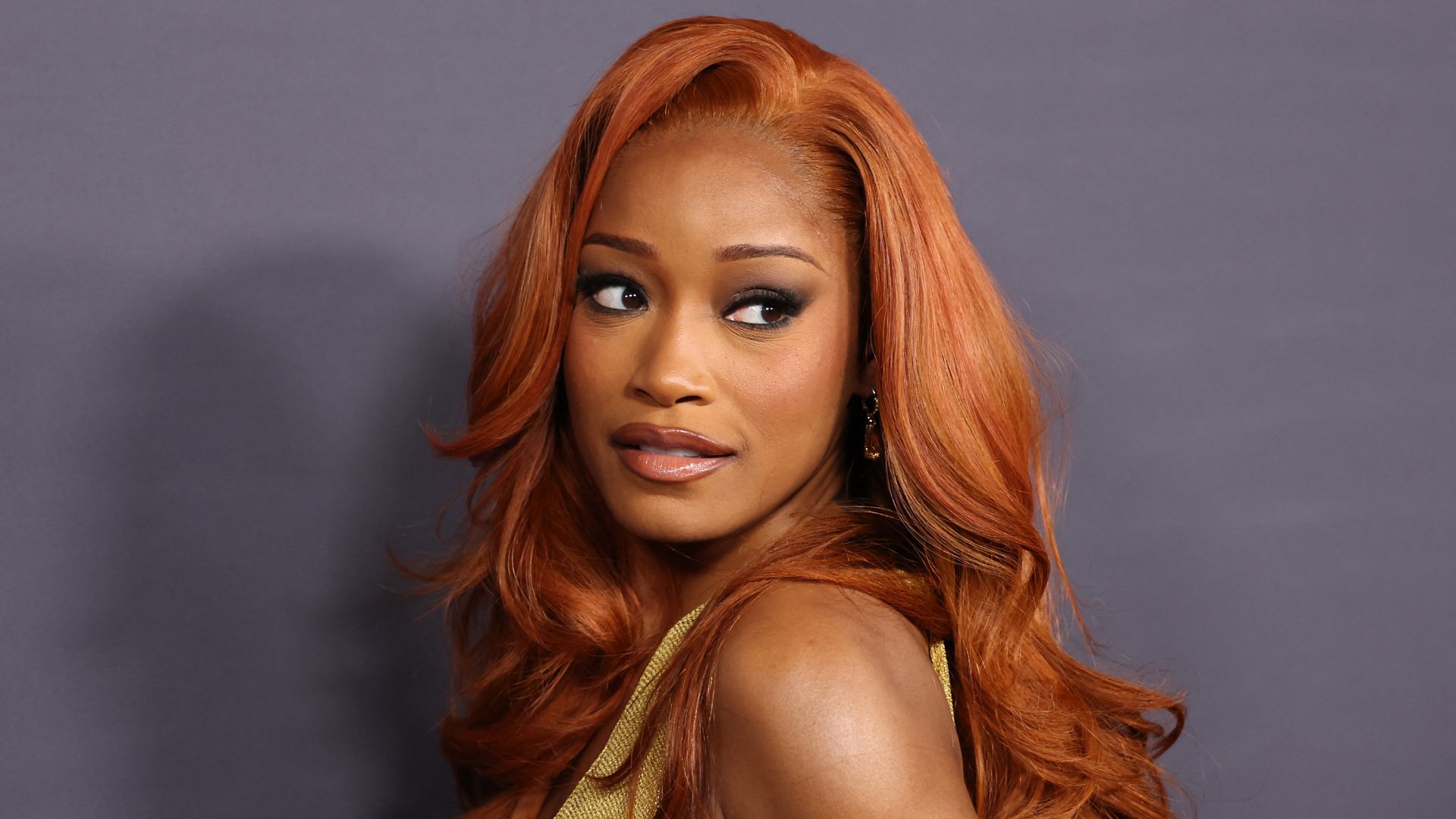
Keke Palmer’s whole career gets flattened into one word all the time: “range.” She acts, she sings, she hosts, she writes, she’s funny on the internet. Fine, sure. But honestly? That explanation is kind of lazy, and it doesn’t actually tell you why a kid who got famous at nine is still commercially relevant twenty-plus years later. Lots of talented child stars fade. Range doesn’t save you. Something else is going on.
Here’s one thing that stood out: Palmer stopped waiting around for Hollywood to decide what she was worth. She didn’t quit the industry, she still takes studio roles, but she started building stuff on the side that didn’t need anyone’s permission to exist. Big Bosses Entertainment. Self-financed projects. And the big one, KeyTV, a digital network she built to develop creators and actually own the pipeline from idea to screen.
That’s a totally different job than “actor.” An actor waits by the phone. An owner picks up the phone and starts making calls.
She Cashed in a Career High; on Infrastructure, not Herself
By 2022, Palmer was in a position most performers would kill for. She was hosting, acting, everywhere online, and had long since escaped the “kid from Akeelah and the Bee” label.And what does she do with that heat?
She doesn’t ask her team to jack up her appearance fee. She told Entertainment Weekly she started asking a much less comfortable question: where should this money and attention actually go, and how do I build something that isn’t just… more me?
That’s how KeyTV happened. She and Lenoria Addison put in a reported $500,000 to get it off the ground, launched with nine projects, and, this part matters, Palmer wasn’t just slapping her name on it like a perfume line. She wrote. She directed. She worked budgets. She was in the room for crew decisions. That’s not a vanity credit; that’s actual labor.
And look, this was risky. Genuinely risky. She had momentum. The safe move, the move basically everyone would’ve made, is to ride the wave, book the roles, take the checks, cash in while you’re hot. Instead she poured money and reputation into a network nobody had heard of yet. That’s a bet that could’ve gone nowhere.
It didn’t, though. By June 2026, UCLA reported KeyTV had put out 29 original projects, all led by BIPOC creators, and UCLA signed on for a five-year partnership where Palmer runs workshops and KeyTV distributes student work every year. Then in July, one of KeyTV’s shows, Glam Through The Ages, landed a Daytime Emmy nomination, and Palmer got nominated too, for the same project.
So the bet paid off. But I think the more interesting point isn’t “it worked,” it’s why she made it in the first place. She used her celebrity as seed money. Not to buy more celebrity, to buy ownership.
There’s a quote from her that kind of sums up the whole philosophy: “Part of working in this industry is not people telling you what to do, but people giving you permission to be autonomous in your decision-making.”
Three Things She actually Does Differently
She turns attention into ownership, not just more attention: She’s name-dropped Tyler Perry, Queen Latifah, and Brian Robbins as people she studies, and what she admires isn’t their fame; it’s that they stopped being “talent” and became people who own the thing. Perry especially, original IP, control over distribution, building opportunities for other people instead of just himself. KeyTV is basically her version of that same move, except she’s doing it mid-career instead of at the tail end of one.
When the industry can’t do something for her, she learn to do it herself: This one came out of a genuinely rough patch. She signed to Atlantic as a literal child, later bounced through Interscope and Island, and, I mean, by her own account, never really got what she needed from any of them. Her quote on this is pretty blunt:
“My experience with labels taught me that I had to figure that out because they weren’t able to really help me with it.”
So instead of chasing a fourth label deal hoping this one would finally get her, she built her own thing, Big Bosses Entertainment, then a self-funded album-and-film combo called Big Boss that she wrote and directed herself. Not “go indie” as a vibe. Actually learning artist development, packaging, storytelling, the stuff labels were supposed to be doing for her.
She doesn’t force partnerships that aren’t right: Building KeyTV apparently came with the usual mess: people who weren’t experienced enough, trust issues, mismatched expectations (anyone who’s tried to build something with other people knows exactly what that sentence is covering for). Her response, from what she’s described, was to get really clear upfront, legal advice, explicit expectations, and the willingness to just say no.
“I never want to convince someone to do something,” she said.
Which, honestly, is a harder discipline than it sounds. Desperation makes people say yes to bad partners. She seems to have decided that’s a trap.
The Music Failure
Her debut album, So Uncool, came out in 2007 and didn’t even chart on the Billboard 200. It hit No. 85 on the R&B/Hip-Hop chart, which, for a kid with her visibility at the time, is not where you want to land. And it’s not like the labels after that fixed it. She spent years bouncing around trying to figure out why the music wasn’t connecting, and eventually landed on the answer: nobody was actually developing her as an artist. Nobody was helping her figure out who she was supposed to be, musically.
So her fix wasn’t “try harder within the system.” It was to start building the pieces the system hadn’t given her. Start her own label, self-finance the work, tie the music into film and digital distribution she controlled. The failure basically became the blueprint, instead of waiting for someone else’s machine to package her, she built her own.
The Network Isn’t Just “Famous Friends”
This part’s underrated. It’s not just star power, it’s structured. Lenoria Addison brought actual production and digital media chops. Her mom, Sharon Palmer, who’s also her longtime manager, brought the career-management side. Then there’s an advisory layer; Latifah, Robbins, Perry. People who’ve already made the leap from performer to owner and can basically save her years of trial and error. Perry reportedly even reviewed her directing work directly. And then there’s the creator pipeline itself — writers and producers like Nakia Stephens and Chelsea Sanders, whose projects were part of KeyTV’s early slate, plus the new UCLA connection feeding in more talent.
Put those three layers together and it’s basically a supply chain: mentors give her pattern recognition, operators turn ideas into actual productions, creators bring the raw material, and KeyTV handles packaging and getting it out into the world.
The Actual Takeaway
Don’t do the “master of many things” reading of Palmer’s career — that’s the boring version. The real move is: take stock of what your visibility or reputation is currently generating for you, then look at what you’re still renting from someone else. Distribution. An audience. A production pipeline. Whatever it is. Pick one. Build a small, owned version of it while you’ve got the leverage to absorb the risk.
That’s the whole lesson, really. Not “do more things.” Use what’s working right now to buy yourself more control later — because the thing generating your leverage today won’t necessarily be the thing generating it tomorrow.
Frequently Asked Questions about Keke Palmer
Why’s she still relevant after being a child star?
Because she didn’t stop at performing. She built ownership on top of it. Big Bosses Entertainment, self-financed projects, KeyTV — she stacked a production-and-distribution business on top of an acting career, so now her relevance doesn’t live or die on whether she books the next role. She’s also generating opportunities for other people, which keeps her tied into the industry in a way that’s harder to age out of.
What actually is KeyTV?
It’s her digital platform for producing and distributing work, with a real focus on creators who don’t usually get the funding or the shot. By her own account, she started it because she was sitting on a pile of attention and money after two decades in the business and didn’t want to just… spend it on herself. UCLA says it had put out 29 original projects by June 2026.
How much did she actually put into it?
According to Entertainment Weekly, the number is $500,000, reportedly split between her and Lenoria Addison to get it off the ground. Worth being honest here — that’s not a “valuation,” it’s not a funding round, it’s just the reported startup capital. People throw those terms around loosely, and it kind of muddies what actually happened.
What’d she learn from the music industry specifically?
That being talented and being positioned are two different things. She went through Atlantic, Interscope, Island. None of it clicked into a real recording identity, and she’s said flat out the labels weren’t developing her as an artist. So she built that function herself instead of waiting for label number four to finally get it right.
Who’s she actually learning from?
Queen Latifah, Tyler Perry, Brian Robbins, and it’s not a starstruck thing. She’s pretty specific that what draws her to them is the ownership move: going from “talent” to someone who owns IP, controls a platform, creates room for other people. She’s gone to them directly for advice while building KeyTV, too, not just admired from afar.
What’s the copyable lesson?
Don’t burn a hot streak just cashing checks. Use it to build something you own, a pipeline, a product, a platform, whatever your version of KeyTV is, while you’ve actually got the leverage and attention to make people pay attention to it.