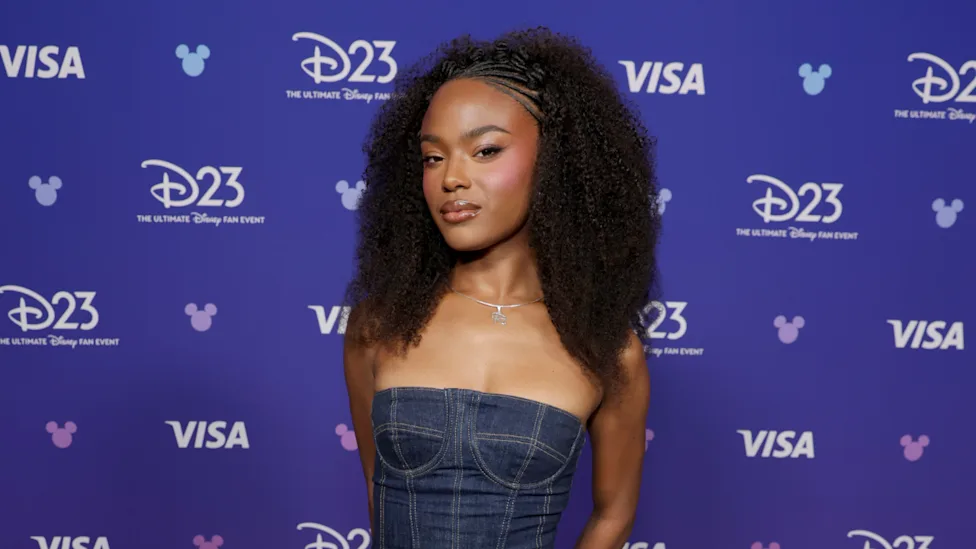
Maya Boyd was a ballet kid. Never done a musical in her life. Then she jumped into musical theatre almost on a dare, landed on Broadway before she even graduated, took over a title role a few months later, and pivoted into an August Wilson play. Now, in August 2026, Marvel has named the 23-year-old as Storm in its new X-Men film, set for May 5, 2028.
The real story is optionality. Boyd kept entering rooms before she had the conventional credentials to be there, then learning fast enough to stay in them. For founders and operators, that’s a more useful lesson than “follow your dreams”: get into promising situations early, then let the opportunity force your next level of capability.
She Changed the Game Before She Was Ready
Senior year of high school, Boyd thought she had two options. Skip college, chase ballet professionally. Or go to college and walk away from performing arts altogether. Then a family connection mentioned the University of Michigan’s musical-theatre program. She’d never done a musical. She had one week to put together pre-screen materials.
The risk was real, even without a dollar figure attached to it. She was stepping into a discipline full of people who’d trained for years, and possibly torching a cleaner path in ballet. She didn’t wait to feel ready. She just auditioned.
Michigan said yes. From there, she kept building in flexibility. Heavy course loads. An agent by junior year. An audition for the Broadway revival of Merrily We Roll Along, still a student the whole time. When the offer landed, she didn’t choose between school and Broadway — she finished her degree remotely instead.
The payoff was a learning curve compressed into a few years. Broadway debut in 2023. Juliet in & Juliet starting May 14, 2024. Then August Wilson’s Joe Turner’s Come and Gone. And now, in August 2026, Marvel announces her as Ororo Munroe — Storm. X-Men will be her first feature film.
This wasn’t risk-taking for its own sake. It was keeping multiple doors open until one of them swung wide open.
“I never said no to an audition.”
Her Strategy Is Structured Curiosity
Treat Auditions as Options, Not Verdicts
Boyd applied to Michigan with zero musical-theatre credits, and kept auditioning even while focused on finishing school. An audition doesn’t cost much if it fails. But if it lands, it can open a whole new branch of your career.
I never said no to an audition.
Source: Broadway.com.
The Merrily audition turned into her first professional musical job and her Broadway debut. The takeaway isn’t “chase everything.” It’s: take the cheap shots that, if they land, blow open your future.
Stay in Student Mode After You Get the Job
During Merrily, Boyd worked as a swing and understudy while still finishing her degree. Tough stretch. But she’s said it kept her in a learning mindset — watching veteran performers, treating the whole run like an apprenticeship.
It allowed me to stay in this student mindset.
Source: Theatrely.
That apprenticeship set her up for the leap into & Juliet, eight shows a week as the lead. Boyd has drawn a straight line from her swing and understudy years to being able to carry a principal role. When your responsibilities outpace your experience, the move is to learn faster — not to fake mastery.
Remove the Skill You Rely on Most
After & Juliet, she chose Joe Turner’s Come and Gone — her first straight play. Musicals let her lean on dance, singing, and acting together. August Wilson stripped two of those away and made the acting do all the work alone.
I really wanted to do a play.
Source: Theatrely.
That choice widened her range ahead of her move into film. There’s no evidence she did it specifically to prep for Marvel — so let’s not invent that connection. But the underlying lesson holds up: once one skill becomes a crutch, go somewhere that skill can’t save you.
What it taught me was that there is no one way to do something.
The Capability Gap She Could Not Hide
Boyd’s biggest capability gap was obvious from the start: she entered Michigan without ever having done a musical. She struggled to sing and act simultaneously and watched classmates make choices she was still too nervous to attempt.
Her response wasn’t to pretend the gap didn’t exist. She got comfortable being uncomfortable, including through a clowning class, then used swing and understudy work as a live training ground. Merrily put her beside veteran performers; & Juliet forced her to turn observation into performance under pressure.
That’s the useful distinction: she didn’t wait to become capable before taking on bigger opportunities. She used each opportunity to become capable.
The Network
Boyd’s network isn’t the usual founder-and-investor web. It’s developmental.
Michigan gave her teachers and mentors who helped her keep progressing when Broadway interrupted the conventional path. Maria Friedman, who directed Merrily, gave her a first professional platform and placed her alongside experienced Broadway performers. Debbie Allen is an even longer thread: Boyd trained at Allen’s dance academy at 13, then a decade later appeared in Allen’s production of Joe Turner’s Come and Gone.
That’s what makes the network valuable. Each relationship didn’t just create access to the next job; it put Boyd around people who could raise her level. By the time Marvel came calling, she had accumulated a very different kind of résumé: not film credits, but increasingly demanding rooms in which she’d already proved she could learn.
Steal This: Build an Opportunity Portfolio
Find three opportunities where you meet roughly 60% to 80% of what’s asked. Apply. Pitch. Ask for the meeting.
If a door opens, separate two things: whether you’re “qualified” and what you need to learn. Write down the missing skills. Build a fast plan to close them. Boyd wasn’t reckless. She kept her credentials intact, found mentors, stayed teachable, and used every role as training for the next, bigger one.
Don’t wait until you’re the obvious pick for the big opportunity. Get in early enough that the opportunity itself helps build the person who can actually handle it.
FAQs
Who is Maya Boyd?
An American stage actress from Ann Arbor, Michigan, and a University of Michigan musical-theatre grad. Broadway debut in Merrily We Roll Along, later led & Juliet as Juliet, then appeared in August Wilson’s Joe Turner’s Come and Gone. Marvel announced her as Storm in August 2026.
Is Maya Boyd officially playing Storm in the MCU?
Yes. Marvel confirmed it during its D23 2026 presentation. She joins a new X-Men cast: Sadie Sink as Jean Grey, Kit Connor as Cyclops, Inde Navarrette as Rogue, Christopher Abbott as Professor X, Samara Weaving as Emma Frost, and Adam Driver as Mister Sinister.
When will Maya Boyd appear as Storm?
The new X-Men film hits theaters May 5, 2028. Marvel’s confirmed Boyd as Storm, but hasn’t said much about how big her role is, or whether Storm shows up anywhere else in the MCU before or after this film.
What movies has Maya Boyd appeared in before X-Men?
None, technically. X-Men will be her first feature film. Everything up to now has been Broadway — Merrily We Roll Along, the lead in & Juliet, then the non-musical Joe Turner’s Come and Gone. Which makes Marvel’s bet on her unusually bold for someone with no film résumé at all.
Why is Maya Boyd’s career strategy notable?
She kept walking into opportunities before she had any conventional proof she belonged there. Applied to musical theatre with no musical experience. Took a Broadway role mid-degree. Went from ensemble and understudy work straight to leading a major production. The repeatable lesson: protect your optionality, get into high-upside situations early, and close the skill gaps through fast learning once you’re in.