January 20, 2021 was cold and mostly empty in DC. The pandemic had everything locked down, but when Michelle Obama walked out in that plum Sergio Hudson suit with the wide belt, the internet broke. Later that night, Kamala Harris switched into a sharp black Hudson outfit for the evening celebration. Just like that, a designer from Columbia, South Carolina—who spent years dressing reality TV stars in Atlanta before breaking into traditional fashion circles—was on front pages everywhere. Google searches for his name shot up immediately.
Hudson’s success was years in the making. He built his eponymous label around heavy 1980s tailoring, strong shoulders, and tight waistlines. By February 2020, Naomi Campbell was closing his Fall show at New York Fashion Week, and Beyoncé was wearing his designs on major red carpets. His coats and suits routinely cost well over $1,000, catering to women who treat high fashion like armor. Then he took a step nobody expected.
“Couture isn’t just fabric—it’s how a woman carries her entire presence, starting with her hair.”
— Sergio Hudson
What Does a Haircare Line Know About Couture?
Janell Stephens started from a completely different place. A mother of five and licensed counselor in Atlanta, she started Camille Rose back in 2011 out of her kitchen. Named after her grandmother, the brand grew into a staple of the natural-hair movement. Today, the green lid on her Curl Maker tub is easy to spot on shelves at Target, Walmart, and Ulta. Stephens built her business on a simple premise: wash day is a priority, and Black women deserve products made specifically for their hair texture instead of afterthought formulations.
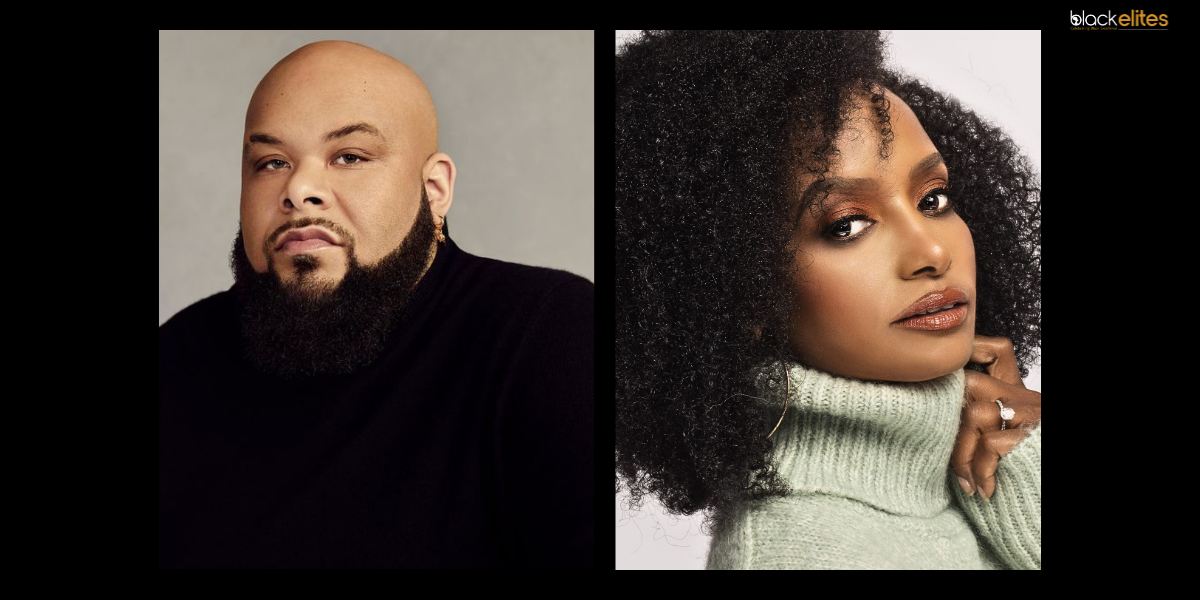
Their paths crossed through industry events rather than corporate pitch meetings. Stephens created the Art of Glam Awards to honor Black professionals working behind the scenes. When she handed Hudson the Fashion Visionary Award, he spoke about the necessity of Black creatives supporting each other: “If we don’t honor each other, who else is going to do it?” That conversation sparked a real relationship, which eventually turned into a business partnership.
The business alignment makes total sense. Hudson has the high-fashion prestige, but Stephens has massive retail distribution. His core customer buys a coat once or twice a year; her customer buys hair products every few weeks at local stores across the country.
In September 2024, they released the Sergio Hudson x Camille Rose Honey Collection. The limited run put Camille Rose’s honey formulas—like the Honey Dew Moisture Refresher ($14.99) and Honey Hydrate Leave-In ($17.99)—into custom jewel-toned packaging featuring Hudson’s signature gold lines.
They’re taking that relationship back to the runway for New York Fashion Week, with Camille Rose running hair and backstage styling for Hudson’s show. It follows a similar move Hudson made with jewelry designer Simone I. Smith, showing a consistent pattern of using his fashion platform to bring independent Black-owned brands into luxury spaces.
Green Tubs, Gold Buttons, and the Grammar of Getting Ready
Ask almost any Black woman planning an outfit for an event: hair comes first. Wash day is scheduled days in advance, and the clothes are chosen to match the hair, not the other way around. Brands that get this sequence understand the buyer. The financial numbers back it up too. McKinsey’s 2022 beauty report
found Black consumers spend around $6.6 billion on beauty annually, while University of Georgia’s Selig Center reported Black buying power hit $1.6 trillion in 2021 and passed $1.7 trillion recently.
“Fashion and beauty are intrinsically linked; your hair is the ultimate crowning accessory.”
— Janell Stephens, Founder & CEO of Camille Rose
This sits on top of a longer retail history. When Aurora James launched the 15 Percent Pledge in June 2020 to get major chains to stock more Black-owned brands, beauty departments responded much faster than luxury fashion houses. Shelf space is the scarcest thing in American retail, and Stephens spent over a decade securing hers.
But Who Owns the Dream Once the Check Clears?
There’s a reason consumers get skeptical about these deals. In April 2017, Unilever bought Sundial Brands (the company behind SheaMoisture). Shortly after, a tone-deaf ad campaign ran that seemed to ignore their core Black audience, causing a massive backlash online. Then in January 2023, Procter & Gamble bought Mielle Organics, leading to widespread concern among customers that formulas would change. People remember those shifts.
Camille Rose stands out here because it remains 100% independently Black-owned. Stephens hasn’t sold off equity to a parent conglomerate, meaning she keeps full control over product formulas and company decisions.
Still, limited-edition drops always carry some trade-offs. They create hype and press coverage, but they disappear quickly. Pairing an $1,800 suit brand with an $18 hair conditioner can look like luxury finally respecting everyday beauty products, or it can look like a quick marketing exercise.
An Aisle at 4:58 on a Thursday
Walk down a beauty aisle at Target late on a Thursday afternoon, and you’ll see women picking up supplies after work, checking boxes under harsh store lighting. Some were looking for the limited Hudson collection in the gold and burgundy packaging, only to find empty display hooks where the stock ran out.
When the special edition is gone, people just grab the standard green tub of Curl Maker off the shelf instead. The gold foil looks nice for a season, but the product inside is what kept the business running long before the fashion week headlines arrived.
Frequently Asked Questions about Sergio Hudson x Camille Rose
What is the Sergio Hudson x Camille Rose collaboration?
It is a partnership between luxury fashion designer Sergio Hudson and natural haircare brand Camille Rose, founded by Janell Stephens. The collaboration spans backstage hair direction for Hudson’s runway shows and limited-edition product releases featuring custom jewel-toned packaging with Hudson’s signature gold lines.
Is Camille Rose still Black-owned and independent?
Yes. Unlike several major textured haircare brands acquired by multinational conglomerates in recent years, Camille Rose remains 100% independently owned and operated by founder Janell Stephens.
Where can you purchase the Honey Collection products?
The limited-edition collection was rolled out across major retail partners, including Target, Walmart, and Ulta, alongside direct availability through Camille Rose’s official storefront.
How did Sergio Hudson and Janell Stephens first meet?
The pair connected through industry events rather than corporate channels. Stephens presented Hudson with the Fashion Visionary Award at her Art of Glam Awards, initiating a professional relationship focused on cross-industry support between Black founders.
What role does Camille Rose play during New York Fashion Week?
Camille Rose directs backstage hair styling for Sergio Hudson’s NYFW runway presentations, aligning high-fashion garment design with textured hair care on the runway.