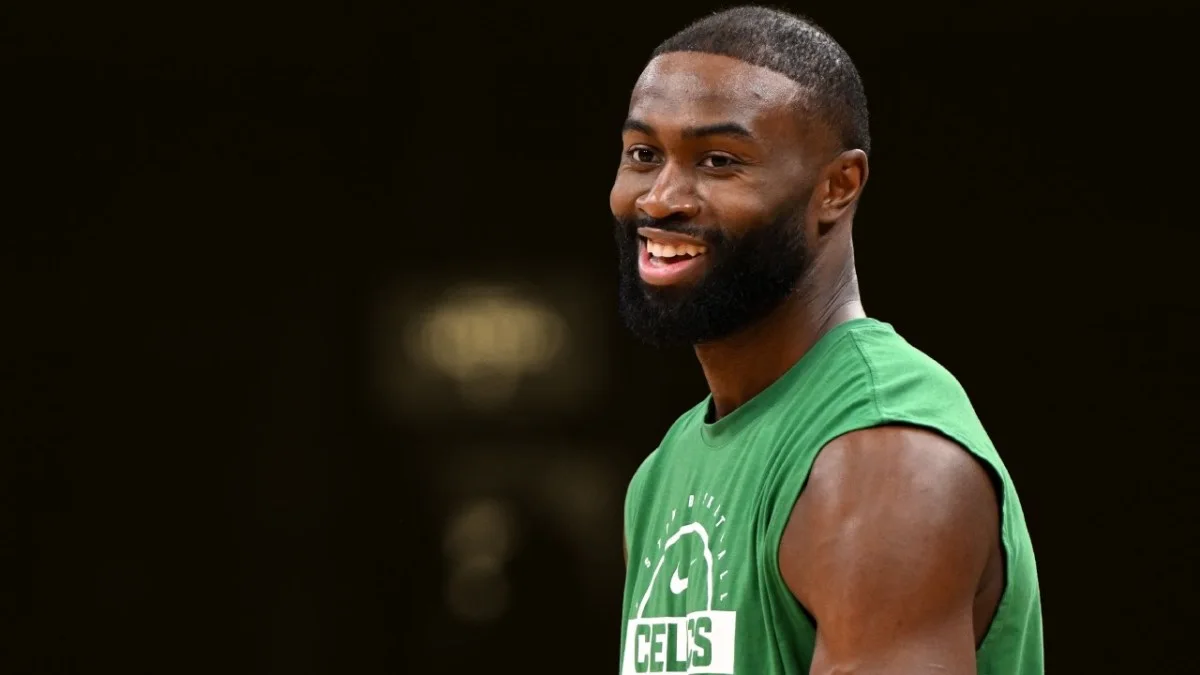
Jaylen Brown agreed to the richest contract in NBA history when somebody asked what he planned to do with the money. The five-year extension, signed with the Boston Celtics in July 2023, was worth $304 million. Brown could have offered the usual answer about family, financial security, and another championship. Instead, he began talking about Boston’s racial wealth gap and the possibility of building a “Black Wall Street” in the city.
It was an unwieldy promise. A Federal Reserve Bank of Boston study, published in 2015 and still cited by the city a decade later, put the median net worth of white households in Greater Boston at $247,500. For US-born Black households in its sample, the figure was $8. The sample was small, and the number gets repeated more often than the caveat that should travel with it. Even so, it captured something about a problem Boston’s growth in technology, education and medicine had not solved.
A year after signing the contract, Brown launched Boston XChange, known as BXC. Its opening programme chose ten entrepreneurs working in food, fashion, childcare, media, chess education and other parts of the creative economy. Each founder became eligible for as much as $100,000 in grants over three years. Workspace and business services brought the stated value of the wider package above $150,000.
BXC says it wants to create $5 billion in new net wealth for underserved communities. It has supported a group of institutional partners and attempts to fund businesses in sectors that conventional accelerators tend to skip past.
Brown returned to the subject in August 2026. During a livestream, he accused advisers around prominent NBA players of steering them away from their old communities, arguing that local involvement offered little upside to the people managing those players’ careers. He wanted other athletes to watch what he was doing and think about their own obligations.. He mentioned, “I want other athletes to see that.”
He has no actual power to force anyone’s hand here — the “radical plan” in this story’s title is a bit of a stretch. What he does have is the ability to make the absence of local investment harder to ignore once one athlete has shown it’s possible.
Jaylen Brown’s Strategies
Brown Keeps Choosing Control
The BXC project makes more sense next to another gamble Brown took in 2024, when he launched his own performance brand, 741, after turning down endorsement proposals reportedly worth more than $50 million. He later said that figure covered several years rather than a single payment. Still substantial money, whichever way it’s counted.
Contract terms bothered him more than the dollar amount, apparently. He said one proposed agreement would have let the company end things if his public comments disrupted its business. “I don’t like compromising my voice for nothing or nobody,” he said.
Walking away meant giving up predictable income and taking on everything that comes with actually owning a brand — design, manufacturing, stocking, distribution, sales. None of that is guaranteed just because a famous person’s name is attached. Brown took it on anyway.
There’s a related instinct running through BXC. A donation pays for a programme and then it’s spent. A company that survives can give its founder an asset, some income, room to hire people. Brown’s accelerator leans toward the second kind of outcome, though obviously it takes longer to know if it worked.
It’s time to create more value for everyone involved—from athletes, to consumers, to employees and the communities that support them. — Jaylen Brown
Worth asking, in any negotiation, what actually leaves the room along with the fee — speech, IP, the customer relationship, future options. Brown has answered that question more aggressively than most people would. Somebody doing the same math on a smaller deal might land somewhere else entirely, and reasonably so.
He Borrowed Other People’s Machinery
Celebrity-fronted projects tend to wobble when the celebrity tries to be everything at once. Brown mostly avoided that. His former teammate Jrue Holiday, along with his wife Lauren, brought the JLH Social Impact Fund into BXC’s first accelerator — another source of both capital and hands-on experience.
MIT and Harvard Business School showed up with teaching, advisers, and networks that would take years and real money to build from scratch. Roxbury Community College sits closer to the neighborhoods BXC says it wants to reach, and probably does more of the actual work of finding founders who’d never come near an elite university on their own.
The city government opened doors to public programmes and local institutions. And then there are the founders, who know things none of those partners can supply — their customers, their block, the specific headache of a thin credit file or a bad lease.
This is arguably the most credible part of the whole setup. Brown pulls attention toward the work; the people around him cover selection, training, local reach. Whether it produces good businesses is a separate question the launch announcement can’t answer on its own.
The Failure that Sharpened Him
Brown’s worst public setback came before BXC existed. In Game 7 of the 2023 Eastern Conference finals, Jayson Tatum injured his ankle on Boston’s first possession, and the Celtics leaned on Brown to carry more of the offense. He scored 19 points, made eight of 23 shots, and turned it over eight times. Boston lost at home.
My team turned to me to make plays and I came up short, I failed -Brown
Miami had crowded his dribble all night and forced rushed decisions, turning an old knock on his left hand into the story of the loss. There wasn’t much room to hide behind talk about effort — the tape showed exactly where things fell apart.
Boston came back the next season and won it all. Brown averaged 20.8 points, 5.4 rebounds and five assists across the Finals while guarding the other team’s best player most nights, and took home Finals MVP. His ball-handling had gotten better, but the bigger shift was patience — fewer drives into traffic with no way out.
BXC hasn’t been tested that way yet. It’s announced a $5 billion goal without publishing a baseline, without saying exactly what counts as newly created wealth, without showing the math for how a handful of ten-founder cohorts gets anywhere near that number. Whether Brown holds the organization to the same standard he applied to himself after that Game 7 remains to be seen.
From One Contract to a Wider Argument
None of this unfolded as a tidy master plan. The 2023 contract gave Brown both the occasion and the money to talk about a Black Wall Street. BXC followed in August 2024 with a small first cohort. Then came 741 a month later, putting his own endorsement income on the line and making his talk about ownership harder to write off as advice meant for somebody else.
His comments about NBA advisers arrived two years after that, by which point he had an actual institution behind him, real founders, and another athlete family working alongside him — no longer a hypothetical.
The questions that matter haven’t gone away, though; they’ve just moved. Grants can keep a business alive without making its founder any wealthier. A company can hire people while leaving its owner broke and exhausted. An accelerator can point to activity — applications processed, workshops held, mentoring hours logged — while dodging the numbers that actually count: revenue, survival, wages, who owns what when it’s over.
Brown’s name can get somebody a meeting. It doesn’t fix a shaky business model.
What this Suggests, Loosely, for Anyone Else
Whatever’s transferable here starts before the money shows up, not after. Someone with a windfall coming — an athlete, an executive, whoever — could decide in advance which community they actually understand and how much of it they’re willing to commit before other demands start pulling at the same pot.
What comes next depends on the place. Sometimes it’s grants, sometimes patient capital, sometimes just steering contracts toward local suppliers. Brown’s approach suggests leaning on people who already know how to pick and support recipients, rather than trying to learn it from scratch. And then, eventually, actually looking at what happened — did the businesses survive, grow, hire, leave their founders with something real?
There’s no formula here, tidy or otherwise. BXC might end up proving the model works, or it might end up showing where it breaks down. What Brown’s done so far is narrower than the $5 billion headline suggests: put his own money and reputation behind something, and make it harder for his peers to change the subject.
Frequently Asked Questions
What is Boston XChange? Boston XChange is a nonprofit Brown started to support entrepreneurs from underserved communities, with its first accelerator selecting ten Greater Boston ventures in the creative economy.
How much did founders receive? Each founder in that first group could receive up to $100,000 in grants over three years, plus workspace and business services worth more than $150,000 — though that’s what was available, not a confirmed payout every founder actually received.
Has BXC hit $5B? “Nobody has shown publicly that BXC has come close to its $5 billion goal; that number describes where the organization says it wants to end up, not where it currently is.
Can Brown force other players? Brown has no way to make other NBA players invest in their old neighborhoods — what he’s got is a working example and a willingness to say, loudly, that other athletes should be asked why they haven’t done something similar.
What should BXC disclose next? If BXC wants that argument to hold up, it probably needs to say plainly how it’s calculating ‘new net wealth,’ and then report, cohort by cohort, what actually happened to the businesses it funded.