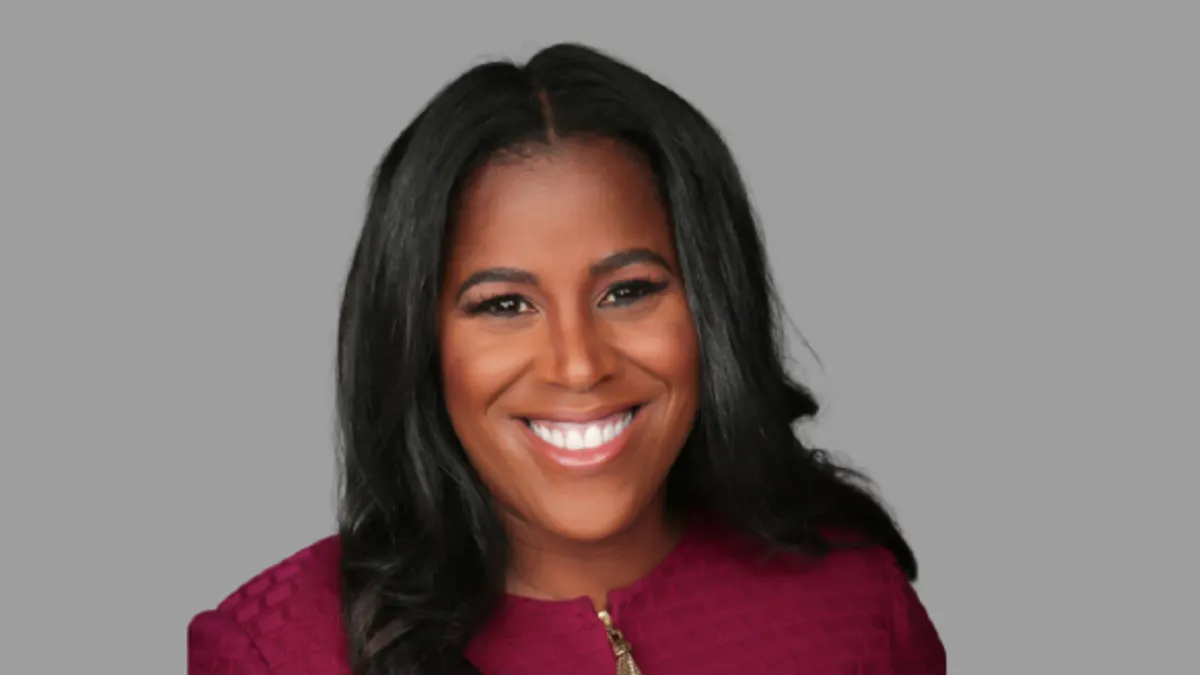
Thasunda Brown Duckett’s ascent to the top of TIAA is more than just a corporate success story. It highlights issues like money, access, retirement insecurity, and what happens when someone who grew up facing financial uncertainty leads one of America’s key retirement institutions.
Duckett is the president and CEO of TIAA, a Fortune 500 financial services company that focuses on retirement, investment solutions, and lifetime income. In 2026, TIAA ranked No. 94 on the Fortune 100 with reported revenue of $51 billion for 2025. Fortune also noted that Duckett was one of only two Black women leading a Fortune 500 company at that time.
Her background is significant because it connects two critical discussions: Black leadership in corporate America and the growing retirement crisis affecting millions of Americans. At TIAA, Duckett heads a firm with nearly $1.5 trillion in assets under management, working to help employees turn their savings into reliable retirement income.
Early Life: A Texas Story Built on Faith, Discipline, and Financial Reality
Thasunda Brown Duckett was born in Rochester, New York. However, her family moved through New Jersey before settling in Texas. Her father was a warehouse driver for Xerox, and her mother was a teacher. Duckett has shared her experiences of growing up in a household where money was often tight, but where faith, values, hard work, and discipline shaped her outlook on life.
Duckett did not inherit a direct path into the corporate world. She has mentioned that she did not grow up knowing what “corporate America” was. This disconnect from elite networks later became part of her advantage. She understood financial insecurity not just as numbers but as something families experience at their kitchen tables.
Her years in Texas also contributed to the public persona often tied to her story. She graduated from Sam Houston High School in Arlington, Texas, then earned degrees in finance and marketing from the University of Houston. She later pursued an MBA at Baylor University’s Hankamer School of Business while working at Fannie Mae.
From Fannie Mae to JPMorgan Chase
Duckett began her career at Fannie Mae, focusing on affordable housing projects, especially those aimed at improving homeownership access for communities of color. This early role exposed her to one of the most crucial wealth-building tools in America: housing. It also immersed her in the push for financial inclusion before that term gained traction in boardrooms.
She later moved to JPMorgan Chase, where she spent 17 years and advanced through significant executive roles. Before she transitioned to TIAA, she served as CEO of Chase Consumer Banking. In that position, she oversaw a vast retail banking network with over $600 billion in deposits, 4,900 branches, and more than 40,000 employees.
Her time at JPMorgan was vital because it demonstrated her ability to lead on a large scale. She was not just a diversity benchmark; she managed intricate operations, branch growth, digital banking, customer satisfaction, consumer finance, and talent development. Nike’s 2019 board announcement highlighted that she handled more than $800 billion in deposits and investments and led 50,000 employees as CEO of Chase Consumer Banking.
The TIAA Appointment That Made History
In February 2021, TIAA announced that Duckett would succeed Roger W. Ferguson Jr. as president and CEO. She officially joined the company on May 1, 2021, coming from JPMorgan Chase.

This appointment was historic. Duckett became the first woman to lead TIAA in its over 100-year history and one of the few Black women to lead a Fortune 500 company. Fortune later pointed out that she remained one of only two Black women in such positions in 2026.
However, the bigger story lies in what she inherited. TIAA is not a trendy tech firm. It is a retirement institution founded in 1918, closely linked to teachers, universities, healthcare workers, nonprofits, researchers, cultural institutions, and public employees. Duckett’s role involves building trust, ensuring longevity, and promoting financial dignity rather than chasing quarterly hype.
Why Her Leadership at TIAA Matters
Duckett’s leadership revolves around a serious issue: too many Americans may outlive their savings. Fortune described her as one of Washington’s strongest advocates for addressing the $4 trillion retirement savings gap, especially as lawmakers discuss how to improve retirement access for caregivers, low-income workers, and others left out of traditional savings plans.
This is where Duckett’s personal history becomes vital. Her background with financial insecurity connects directly to TIAA’s mission. She leads a company where the main product is retirement confidence. In 2025, TIAA paid over $6.17 billion in lifetime income to retired clients, based on data from its 2026 reports.
For Black Americans, the stakes are even greater. AARP highlights that Black workers aged 51 to 64 are the least likely among racial and ethnic groups to have a retirement account, and those who do often have much lower balances than white workers.
A TIAA Institute data brief also revealed that Black workers are less likely than white workers to have workplace retirement plans. The brief noted coverage rates of 58% for white workers, 47% for Black workers, and 36% for Hispanic workers based on cited data.
These facts elevate Duckett’s work beyond mere corporate tasks. It becomes a wealth discussion. Issues like retirement access, plan design, financial literacy, annuity income, and employer involvement are not just abstract policies; they directly affect whether families transition into stability or struggle in their later years.
Financial Inclusion as a Career Pattern
A consistent theme in Duckett’s career is her commitment to financial inclusion. At Fannie Mae, she focused on affordable housing. At JPMorgan Chase, she advanced consumer banking and was an executive sponsor of Advancing Black Pathways, a program aimed at improving wealth, education, and job success for Black Americans.
TIME acknowledged her role in launching Advancing Black Pathways and recognized her as a leader dedicated to financial inclusion and economic resilience for underserved communities.
At TIAA, that same mission has shifted to retirement. Her message is not merely that people should save more. It’s that America’s retirement system needs to function better for those who lack access, information, employer support, or inherited wealth.
This distinction is crucial. Many financial leaders view wealth purely as a matter of personal discipline. Duckett’s career suggests a broader perspective: personal discipline is important, but systems determine who can access the tools that make that discipline effective.
Boardroom Influence Beyond TIAA
Duckett’s reach goes beyond TIAA. Nike appointed her to its board of directors in November 2019, citing her background in retail banking, financial inclusion, digital innovation, and consumer relationships.
This appointment placed her in another global brand during a time when consumer companies were reassessing loyalty, inclusion, and digital strategies. It demonstrated how her skills apply across different sectors: banking, retirement, consumer behavior, technology, brand trust, and community impact.
Leadership Lessons From Thasunda Brown Duckett
Duckett’s career provides valuable lessons for entrepreneurs, executives, and investors.
First, close experience with a problem can lead to a strategic advantage. Duckett’s background with financial insecurity did not limit her ambitions; it enhanced her understanding of what average families need from financial institutions.
Second, scale is essential. She did not progress from small leadership roles directly into a symbolic position. She managed large operations, oversaw thousands of employees, and proved she could navigate complex financial systems before taking on the CEO role at TIAA.
Third, purpose is most powerful when tied to action. Duckett’s public identity focuses on inclusion, but her credibility stems from her operational leadership: deposits, branches, digital banking, retirement products, client trust, and institutional growth.
Fourth, representation is important, but it’s not enough. Her role as a Black woman CEO in the Fortune 100 is historic. Her greater challenge is whether her leadership expands retirement access for individuals historically left out of wealth-building systems.
The Bigger Meaning of Her Rise
Thasunda Brown Duckett’s story is not a fairy tale about overcoming adversity. It is a real-world business case about preparation, values, and institutional influence.
She progressed from a humble background to a career in finance, moving from Fannie Mae to JPMorgan Chase, then from consumer banking to TIAA, and transitioning from personal experiences with financial insecurity to a national leadership role on retirement access. Her journey speaks directly to Black professionals navigating careers in fields where representation is still limited.
For BlackElites.com readers, the lesson is clear: Duckett’s rise illustrates that leadership involves more than entering powerful spaces. It’s about understanding the problems you aim to solve once you get there.