
While most venture capitalists were chasing the next app for twenty-somethings, Monique Woodard was asking a different question: what happens when the fastest-growing market isn’t young at all? The answer was Cake Ventures, an early-stage venture capital firm investing in startups serving ageing consumers.
The venture helped her raise a $17 million debut fund and build a portfolio beyond Silicon Valley’s traditional networks. This cemented Woodard’s reputation as a venture capitalist with a distinctive investment approach.
Her main point is clear: as the population that uses technology changes, so must the business models that cater to them.
Turning Demographic Change Into an Investment Category
Silicon Valley typically organized investment opportunities by technology and sector, such as mobile, social media, software-as-a-service, artificial intelligence, and other emerging areas.
Woodard organized Cake Ventures differently. She viewed changes in technology consumers as the main signal for investment. Her theory recognized aging consumers, women, and multicultural groups as growing economic segments. Cake identified these demographic shifts as forces generating unmet demand in various sectors.
Woodard worked to establish this category while raising her first fund as a solo general partner.
A February 16, 2021, SEC filing revealed a total offering of $25 million for Cake Ventures Fund I. Ultimately, Cake Ventures later announced the fund closed at $17 million, falling $8 million short of its original goal.
The risk was significant. Woodard spent nearly two years building a firm that institutional investors might have seen as too small or too specialized.
Woodard simplified her thesis into three main investment layers:
- Aging and longevity: technology for healthcare, work, financial management, and independent living for an aging population.
- The female economy: products and infrastructure shaped by women’s buying and household decision-making power.
- The new majority: technology addressing the unmet needs and behaviors of Black, Latino, Asian, and other multicultural consumers.
Cake targeted pre-seed and seed-stage companies in the United States and Canada. The initial plan was to invest in about 20 companies, typically writing checks between $250,000 and $500,000. Woodard also intentionally looked beyond the usual network of Silicon Valley founders.
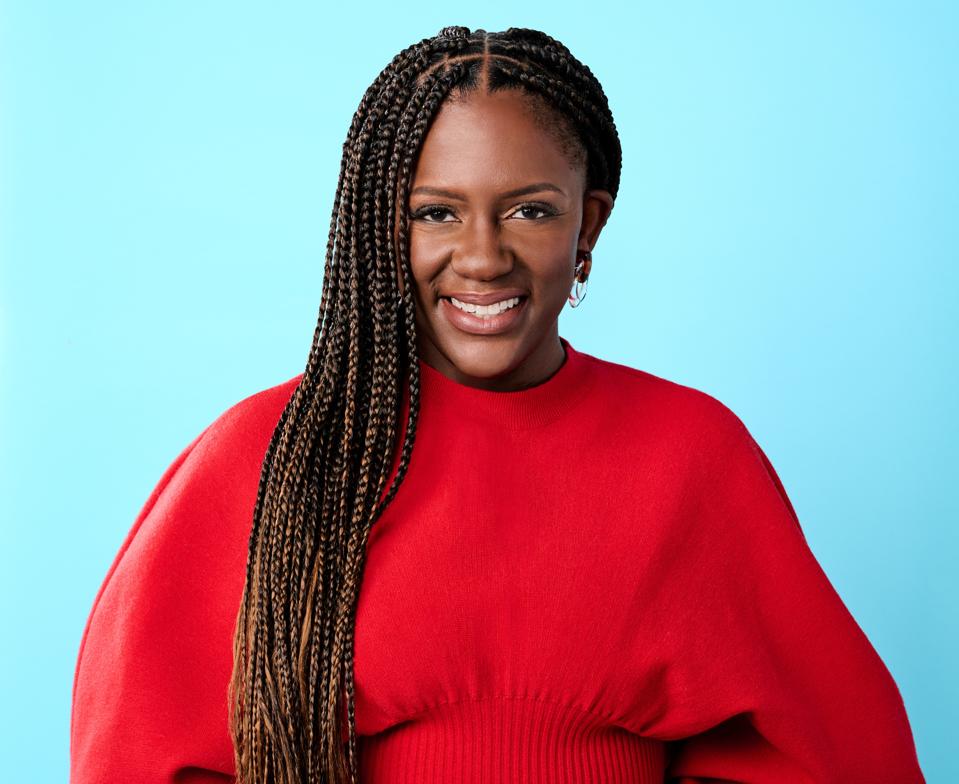
Cake announced its $17 million Fund I on January 12, 2023. By that time, it had already invested in 12 companies, with 66% of those investments located outside Silicon Valley.
The firm currently invests between $200,000 and $750,000, and Cake reports that over half of its portfolio is outside San Francisco and Silicon Valley.
This outcome demonstrates Woodard’s capacity to raise and deploy a unique fund; however, it has yet to show superior financial performance. Cake has not publicly revealed Fund I’s internal rate of return, total value to paid-in capital, distributions, or full exit performance.
The Strategy
Follow Population Movements, Not Investment Trends
Look for irreversible changes in the customer base before seeking trendy technologies. A demographic shift can enlarge the total addressable market across multiple industries. On her website, Monique.VC, she says, “Demographic changes are the ultimate TAM-expansion events.”
Applying this means realizing that Cake did not limit its aging thesis to a single healthcare product. It invested in areas like:
- End-of-life care: Guaranteed
- Fertility support: Frame Fertility
- Nutrition: Culina Health
- Mental health: Sol Health
- Longevity services: Death Clock
This rule allows Woodard to enter various sectors through one fundamental market change.
Invest in Behavior, Not Demographic Labels
A company shouldn’t succeed just because its marketing mentions a specific group of people. The product must address a recurring behavior or unmet need that can lead to growth in adjacent markets. According to her on Medium, “The companies I look for are ones that tap into a deep-seated user need or behavior.”
Guaranteed was not funded just because its founder, Jessica McGlory, targeted families or underrepresented communities. McGlory founded the company after facing significant challenges while her father received hospice care. The business targeted a specific behavioral and operational need: helping families coordinate responsive end-of-life care. Cake invested in Guaranteed’s $6.5 million seed round, raising the company’s reported funding at that point to $9.25 million.
Woodard calls the opposite approach “artificial gating,” which limits a product to a specific identity group without uncovering the deeper behavior that could enable broad growth.
Start Investing Before the Fundraising Picture Is Perfect
A first-time fund manager shouldn’t wait for a prestigious anchor investor or for a nearly completed fundraising. Secure a credible first close, start investing, and use real portfolio evidence to decrease uncertainty for later investors. According to Woodard on her website, she says, “Do a close and get to work.”
Woodard gathered smaller commitments from Cendana Capital and Kapor for her first close instead of waiting for one investor to cover the fund. She began building the portfolio while continuing the fundraising, turning what she described as a blind pool into a “not-so-blind pool.”
This decision transformed investment activity into evidence for fundraising.
The Fundraise That Did Not Reach Its Original Target
Cake Ventures Fund I’s SEC filing stated a $25 million offering, but the final fund closed at $17 million. This represents a 32% difference between the filed amount and the capital ultimately raised.
The larger issue was procedural. Structurally, most debut managers believe that they: needed a large anchor investor, should avoid institutions that rarely support first funds, required the whole capital before completing a first close.
Woodard’s adjusted approach dismissed those assumptions.
She began: treating multiple smaller commitments as a functional anchor, maintaining relationships with institutions interested in future funds, and began deploying capital before the entire fundraise concluded.
Woodard noted that 49% of Fund I’s capital came from funds of funds, while only 9% came from high-net-worth individual investors.
The takeaway was not just to be more persistent. It was to change how capital formation works.
The Power Network
Cake’s known institutional supporters include Cendana Capital, Foundry Group, First Close Partners, Bank of America, Plexo Capital, Insight Partners, Screendoor, and Pivotal Ventures.
More than 25% of Fund I’s limited-partner capital reportedly came from female investors, including several women of color.
This network offered validation for a first-time solo manager and connections to organizations engaged in emerging-manager funds and women’s economic empowerment.
Founders Invested In
Public records verify that these founders were part of Woodard’s portfolio, not merely her protégés
Jessica McGlory (Guaranteed): Launched a technology-enabled hospice firm based on her family’s experience with end-of-life care. Cake participated in its seed financing.
Robert Wright (Bright Software): Developed immersive training technology after working in corporate learning and development. Cake joined Bright’s $2.7 million seed round. Bright was later acquired by Zenarate; however, the transaction price and Cake’s return were not disclosed.
Strategic Access
The network gives Cake Ventures access to three valuable resources:
- Capital access: connections with funds of funds and institutions that finance emerging managers.
- Unique deal flow: founders working in hospice care, fertility, workforce training, multicultural commerce, and other markets that may not follow mainstream venture trends.
- Pattern recognition: insights from companies in different sectors responding to the same demographic changes.
The strategic advantage is not only the diversity of contacts. It allows Cake to spot the same population change across various business models before the broader market recognizes the trend.
Tracking Cake Ventures Funding
Cake Ventures Fund I: Capital Formation and Deployment Timeline
| Period | Verified event | Key figure | Strategic meaning |
| February 2021 | Cake Ventures Fund I files its SEC offering | $25 million offering amount | Establishes the original capital ceiling |
| November 2022 | Final close completed | $17 million | Functional fund created despite closing below the filed offering |
| January 2023 | Fund formally announced | 12 investments | Portfolio evidence existed before the public announcement |
| Current disclosed model | Pre-seed and seed first checks | $200,000–$750,000 | Gives Cake flexibility across early-stage rounds |
Cake Ventures turned a below-target fundraise into an operating advantage by investing after its first close. This strategy helped build portfolio evidence and allowed the firm to find most of its original investments outside Silicon Valley.
Strategic Insight
Woodard’s key insight is that Silicon Valley often mistakes the behaviour of its immediate network for the behaviour of the future market. Cake Ventures was created to take advantage of that mistake. Its model seeks consumers whose economic importance is growing faster than the tech industry understands.
Woodard then checks if those population changes lead to consistent behavior, genuine product demand, and a path to move beyond a limited identity-based market.
Writing a User Memo from Insight
Before launching a product, write a one-page Future-User Memo containing the following five elements:
- The irreversible shift: What population change will continue even if your company does not exist?
- The existing behavior: What are people currently doing because of that change?
- The unmet need: Where are existing products letting them down?
- The expansion path: Which adjacent customers could use the product in the future?
- The gating test: Is the opportunity based on real behavior, or have you simply added an identity label to a standard product?
Do not proceed until you can explain the opportunity without using terms like “underserved,” “inclusive,” or “community.” The commercial behavior must remain clear, even without those descriptions.