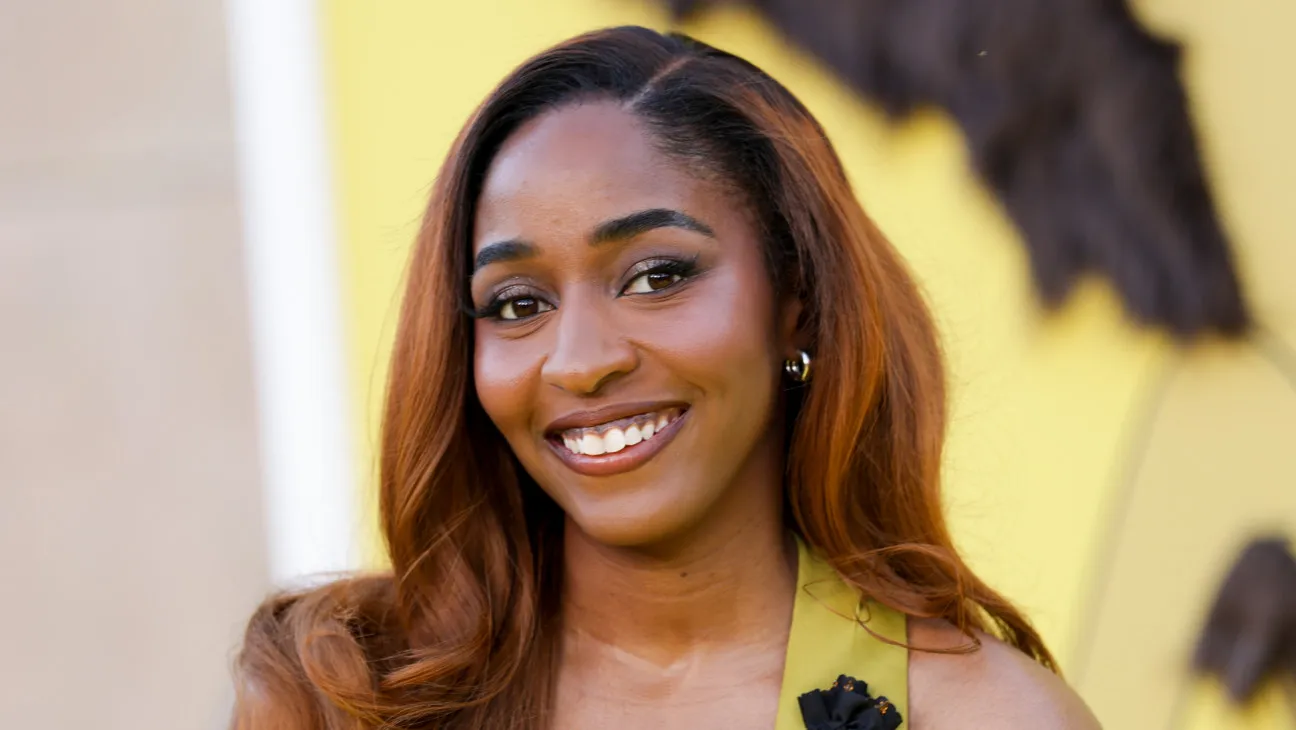
Ayo Edebiri’s most revealing career move didn’t happen in front of a camera. During “Fishes” — the season two episode of The Bear where Sydney Adamu doesn’t even show up — Edebiri kept coming to set anyway. She was already a breakout star on one of TV’s hottest shows at that point. Most people take the win and relax a little. She didn’t.
She wanted to direct. And she knew exactly where the hole in her knowledge was.
I realized that I just didn’t have that much knowledge in working with crew. — Ayo Edebiri
So “Fishes” became her classroom. She met people from every department, watched how a director actually moves information around a set day to day. Later she signed up for the Directors Guild of America’s first-time directors class — a room full of actors, editors, producers, assistant directors, all comparing notes on what directing looks like from wherever they happen to sit.
It paid off. She directed “Napkins,” the Tina-focused episode in season three. Got a DGA nomination for it. Got an Emmy nomination too, at the 2025 ceremony. By 2026 her tally stood at five Emmy nominations across acting and directing, one win.
The mechanism is the whole point here. She didn’t get a title and then scramble to earn it afterward. She built the skill first, quietly, before anyone was paying her to have it. That’s basically her whole career on repeat — write before you’re a star, learn production before you direct, don’t stop writing just because acting got louder.
Ayo Edebiri Playbook
Close the Gap before You Take the Authority
Christopher Storer, who created The Bear, told Edebiri years before any of this that he thought she had a director in her. She didn’t rush to cash that in. When he eventually invited her to just come observe on set, she kept showing up long after she technically needed to. She mentioned,
And I was like, ‘Oh, okay. Yeah. I think I want to do this. — Ayo Edebiri
She never mistook the instinct for readiness, though. She found the one piece of directing she understood least — managing a crew — and went and learned it while somebody else still owned the consequences if it went wrong.
By the time “Napkins” came around, she already knew the characters, the tone, the whole production culture. One risk handled before she took on the next one.
Don’t let the Older Skill Go Stale
People mostly know Edebiri as an actor now. But writing came first, and it’s arguably still the load-bearing skill.
I really thought I was going to be a writer, though I’ve always loved performing. — Ayo Edebiri
Before Sydney existed, she’d already written for Sunnyside, Big Mouth, Dickinson, What We Do in the Shadows. Big Mouth ended up mattering the most, oddly enough — when Jenny Slate stepped away from voicing Missy, Edebiri auditioned and got the part. A writing job turned into an acting credit almost by accident.
And she kept writing even after acting became the shinier path. She and Lionel Boyce co-wrote “Worms” for season four of The Bear. Then in February 2025, Mattel, A24, and Daniel Kaluuya’s 59% Productions announced she’d write their live-action Barney movie, with talks underway for her to star in it too.
The logic is simple. Writing gets her in the room before casting’s even finished. Acting keeps her visible. Directing gives her more say over how things actually get made. Each one raises the value of the other two.
Know Your Downside before You Take the Risk
Her earliest career decision was more calculated than the usual “follow your passion” story lets on. At NYU she leaned toward teaching, at least partly because it was legible — a real profession, insurance, some stability. When comedy started feeling serious, she still didn’t hand herself a blank check of time.
I’ll just work really hard for two years and if it doesn’t work out then I’ll just go back and get my master’s. — Ayo Edebiri
That deadline did two jobs at once. It kept an exit open, and it forced her to actually try hard instead of drifting. She took gigs while working day jobs and writing on the side. By the time the two years were up, she was already in television writers’ rooms.
She didn’t get rid of the risk. She just decided in advance how much of it she was willing to eat.
The Plan that Didn’t Fit
Here’s where the miscalculation actually happened — before any of the breakout stuff. For a while, Edebiri treated safety and fit as basically interchangeable.
Two and a half years drifting toward teaching before she switched over to dramatic writing. Time in an actual classroom is what exposed the mismatch. But the real change wasn’t some dramatic leap toward “the dream.” It was that she changed how she tested her own decisions going forward.
Instead of picking once, forever, between safe and risky — she started gathering evidence instead. Stand-up gave her real-time feedback. Writing got her paid and got her in the industry. Working as a production assistant, then a writers’ assistant, showed her firsthand how the whole machine actually runs.
She’s said the people she met on those jobs are who taught her the ladder — internship turns into PA work, PA work turns into a writers’ assistant gig. She wasn’t just collecting contacts. She was studying how access actually flows through this industry, who controls it, how it moves.
That evidence-gathering became a hedge later on, against how unstable acting careers usually are. By the time acting showed up for real, she already understood scripts, writers’ rooms, the production hierarchy, comedy structure — none of it was new to her.
Her strategy is what she quietly walked away from: chasing security before she’d actually collected enough evidence about where her real edge was.
Her Network
Her network works because every piece of it does something.
Christopher Storer is the sponsor. He met her years before The Bear, read a pilot she’d written, told her they’d work together eventually. He cast her as Sydney, pushed her toward directing, made room for her to move across acting, directing, and writing inside one shared world.
Nick Kroll was the early bridge — he heard her comedy and brought her into the Big Mouth writers’ room. That relationship is what put her close enough to the Missy role to even audition for it later.
Then there’s Rachel Sennott and Lionel Boyce, her peers. Sennott put her on an early stand-up lineup and later worked with her on Ayo and Rachel Are Single and on Bottoms. Boyce became her writing partner on “Worms” once she decided the episode needed him specifically.
FX gave her infrastructure. The DGA gave her actual training. A24, Mattel, and 59% Productions gave her access to real IP from the writing side — not just as talent hired to show up and perform.
Add it up and that’s creative capital: trust, information, skill, infrastructure, a seat at the table earlier than most people get one.
Steal This
Stop asking “what title do I want next.” Ask instead what that title is going to expose about you — what you don’t know yet that you’ll suddenly be responsible for. Then go learn it now, before the promotion or the funding or the visibility makes that learning expensive. Shadow the department. Take the class nobody’s making you take. Do the smaller version of the job first. And whatever skill got you into the room in the first place — don’t let it go idle just because something shinier walks by.
Figure out your downside ahead of time too. Her two-year comedy window worked because failure had an exit built into it already. Her directing prep worked because she learned the machinery before she was ever on the hook for it.
That’s really the whole strategy: build options before you need them.
Questions People Ask about Ayo Edebiri
What makes her path unusual? It isn’t talent, really — it’s that she never dropped a skill once she picked up the next one. Writer, performer, director, all still active at once. More ways into a project, more say over how it turns out.
What was her biggest career break? The Big Mouth thing is easy to overlook, but it’s arguably the first real proof of the whole pattern — a writing gig that turned into a meaningful acting job almost sideways. The Bear is obviously the bigger, louder version of the same idea.
What has Edebiri directed? As for directing, “Napkins” is still the credit that counts. She’s said she expects to direct a feature eventually but isn’t in any hurry to get there.
What are the receipts? Five Emmy nominations, one win, through the 2026 cycle — including the 2025 directing nod for “Napkins,” which also picked up a DGA nomination.
What is one thing to take from all of it? Treat skills like options you’re buying early, while they’re still cheap. The best time to learn your next job is before anyone’s paying you, watching you, or trusting you to already know it.