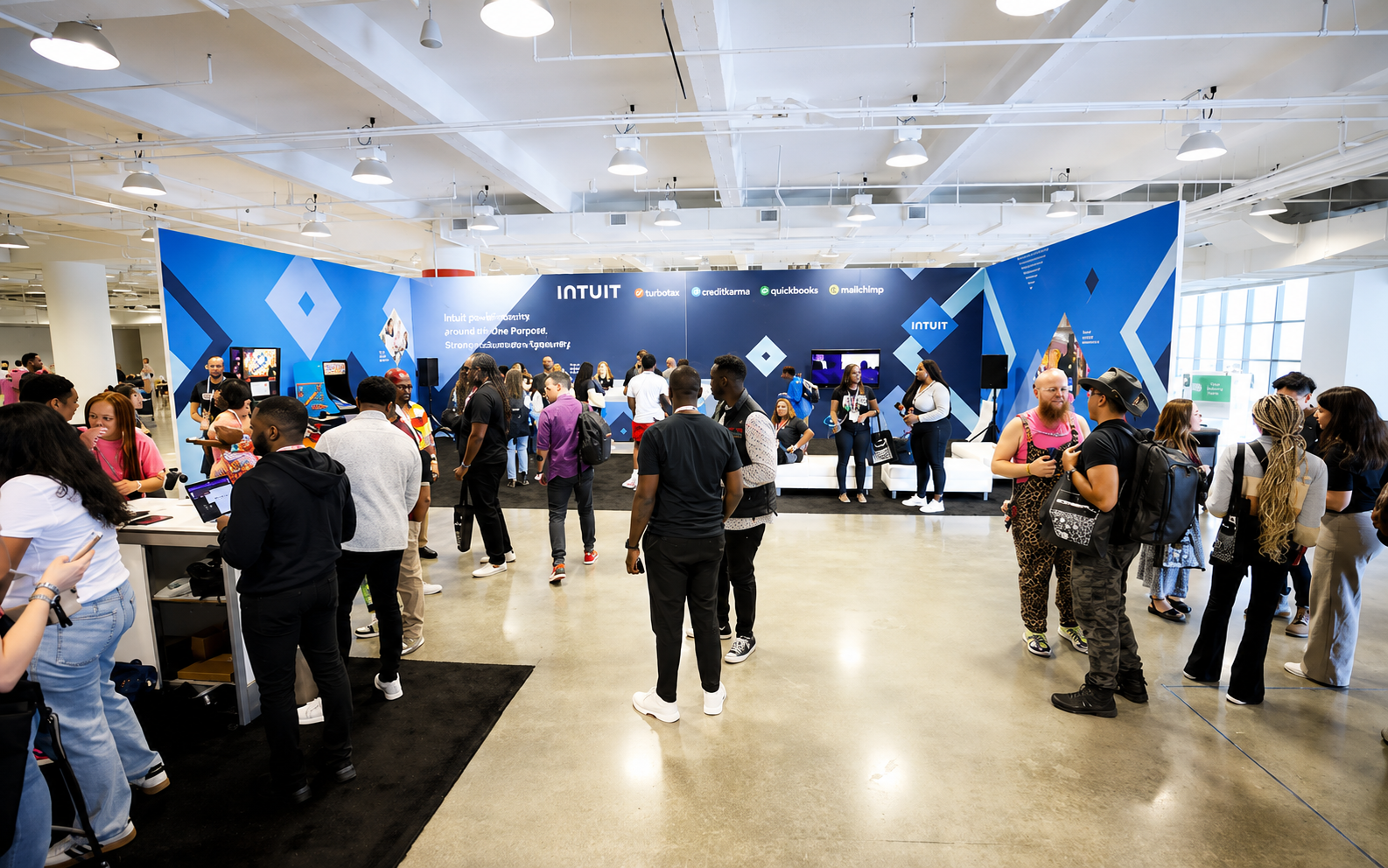
Most people would have built a major tech conference where the money already was.Justin Samuels didn’t buy it. He bet on Atlanta instead.
When Samuels launched RenderATL in 2019, he wanted something bigger than another regional meetup. He wanted a world-class event that actually reflected the diversity of modern tech, one that proved Atlanta could go toe-to-toe with the industry’s biggest hubs. It was a genuine risk. If it failed, RenderATL would have struggled to stand out in an already crowded conference market.
It worked. RenderATL is now one of the most recognizable tech gatherings in the country, pulling in thousands of professionals every year. Atlanta has become a real destination. Some of the biggest companies in the world show up for it annually.
How Samuels Built One of the Largest Tech Conferences in the US
The idea came to him on the road. Traveling to other conferences, he kept asking the same question: why do Atlanta engineers have to fly west every time something big happens? He also noticed something else, something harder to ignore. Barely any Black engineers in the room.
His first instinct was to keep it narrow, focused on React. Then he made a call most conference organizers wouldn’t. Food, entertainment, career access, Atlanta culture itself, all of it would sit right next to the technical programming, not off to the side.
Risky. Venues, speakers, production, marketing, it all costs money, and RenderATL had none of the institutional venture backing that usually covers it. So Samuels bootstrapped the whole thing. He personally committed to flights, hotels, and local transportation for speakers, while folding meals and networking into the price of a ticket.
People showed up anyway. Tickets went on sale August 1, 2019. The early-bird batch sold out in under 20 hours.
Then the pandemic brought everything to a halt. RenderATL finally launched in September 2021, with around 350 attendees and 20-plus brands. By 2022, that number jumped past 1,400. In 2023, it hit roughly 2,800, with about 10% traveling in from outside the US. Netlify later put the 2024 number above 5,000. In 2025, the conference reported 8,000 badge holders.
The bet, at its core, was about turning cultural relevance into a real product edge, and using that edge to pull in talent, sponsors, and eventually a global audience, all funneled straight into Atlanta.
Three Rules Behind Samuels’s Decisions
Differentiate the Product, not the Marketing.
Samuels didn’t hold back when talking to the Atlanta Journal-Constitution about typical tech conferences. His complaint: they all blurred together, indistinguishable from one another. His answer wasn’t a slicker ad campaign. It was making RenderATL genuinely different, mixing workshops with DJs, live performances, food rooted in local culture, unconventional design choices throughout.
Take the 2023 badge. A floppy disk on a Cuban-link-style lanyard. Small detail, big statement. It turned the brand from something you pitch into something you actually experience.
Prioritize Relationships with the Right People.
Samuels doesn’t talk about networking the way most people do. For him it’s about timing and proximity, being in the right place with the right people. He lived that by joining The Gathering Spot, which put him directly in rooms with the people who actually run Atlanta’s tech ecosystem. Those connections cleared early roadblocks and brought in support from Etsy and Amazon Amplify. Later on, Netflix, Delta, Intuit, Zillow, and AWS came aboard too. Eventually his network wasn’t just helpful, it became the actual infrastructure behind sponsorship, recruiting, speakers, everything.
Automate the Bottleneck before You Add more People.
As RenderATL scaled, the operational grind started catching up with it. Website updates. Ticket marketing. Attendee acquisition. Samuels approached it like an engineer solving a systems problem. He connected Airtable, Netlify, and Mailchimp to automate the repetitive stuff, updating conference info, running referral codes, chasing down abandoned tickets.
And it worked. Samuels reported to Netlify a jump of more than 200% in ticket purchases for the 2023 conference year after putting the system in place. His rule is simple: before you hire someone to handle repetitive work, ask if that work can just disappear.
The Conference That Sold Out Before COVID Killed It
2020 was brutal. RenderATL had real momentum, sponsors lining up, tickets moving fast, before it even happened once. Then the pandemic shut it all down. No inaugural event.
Samuels didn’t pivot to permanent virtual. He waited.
When RenderATL finally opened in September 2021, it came with clear COVID protocols in place. Samuels also spread the experience across four different locations in Atlanta instead of cramming everyone into one venue.
That delay was basically a stress test. Was the demand tied to a date, or to the community itself? RenderATL survived the missing year because the product had already earned buyers, sponsors, and collaborators well before anyone walked through the door.
The Network Behind the Scale
The Gathering Spot gave RenderATL its early foothold in the ecosystem. Etsy and Amazon Amplify signed on as sponsors and helped validate the whole concept before it had much of a track record. From there, Shopify, Netflix, Microsoft, Delta, Intuit, Zillow, and AWS all came in as partners.
Looking ahead to 2026, Atlanta Tech Week announced a Google Cloud Startup Showcase, aiming to select 50 early-stage companies for investor exposure, cloud credits, and partner access. As of July 28, 2026, that’s still just an announcement. Nothing more.
This network hands RenderATL three things that are genuinely hard to come by: engineers companies want to hire, companies with the money to fund real experiences, and operators influential enough to pull in more attendees on their own. That builds a loop that feeds itself. Better talent draws better brands. Better brands land stronger speakers. Stronger speakers make the tickets sell themselves.
Turn Your Audience into a Marketing Team
Here’s the part of Samuels’s playbook that’s easiest to copy. Give every customer a real, measurable reason to bring the next one. RenderATL auto-generated referral codes the moment someone bought a ticket. Attendees shared them. New buyers got a discount, and the person who referred them earned points toward tickets and experiences at the conference.
The audience didn’t just consume the product anymore. It became part of how the product got sold. Building something similar? Start here: find one thing customers already recommend without being asked, give every customer a trackable way to share it, and reward the behavior that actually drives revenue, not just reach.
The goal isn’t to ask customers to spread the word. It’s to make sharing part of the product itself.