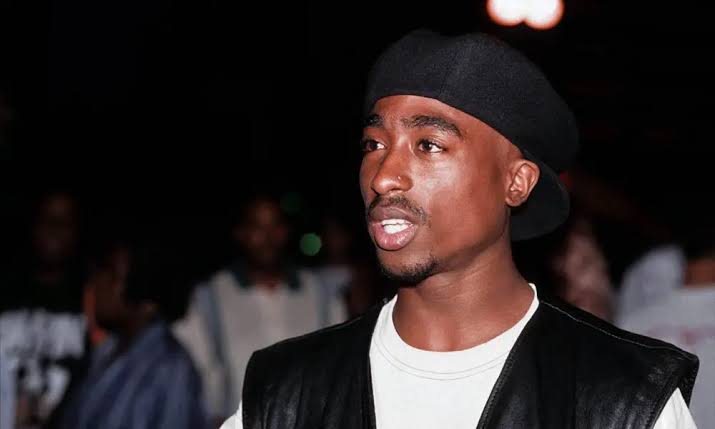
For 27 years, the basic fact of Tupac Shakur’s murder did not move: he was shot in Las Vegas on September 7, 1996, died six days later, and nobody was charged. Then, in September 2023, a Nevada grand jury indicted Duane “Keffe D” Davis. On August 17, 2026, his murder trial opened in Clark County. Davis has pleaded not guilty.
The easy explanation is that police discovered a hidden piece of evidence. Authorities say something different. Investigators believed they understood much of the sequence early, but lacked evidence they considered admissible and sufficient to prosecute. The case moved when Davis publicly described his alleged role, first in media appearances and later in a memoir.
Tupac’s case did not suddenly become solvable because science caught up with 1996. It became prosecutable because the evidentiary landscape changed. The gap between suspicion and prosecutable proof is the real story here today.
Why the case stalled
A white Cadillac pulled beside the BMW carrying Shakur and Marion “Suge” Knight near the Las Vegas Strip. Gunfire followed. Investigators soon had a retaliation theory tied to a fight hours earlier inside the MGM Grand, where surveillance footage showed Shakur, Knight and others attacking Orlando Anderson, Davis’s nephew.
What police lacked was a case they believed could survive in court. Las Vegas police later said they knew the broad circumstances and likely participants but “never had the necessary evidence” to charge anyone. Witness cooperation was also a problem. Knight survived the attack but has long resisted helping authorities identify a killer and again rejected testifying in 2026.
We never had the necessary evidence to bring this case forward. — Lt. Jason Johansson, LVMPD
Time made matters worse. Anderson died in 1998. Terrence Brown and DeAndre Smith, the other men authorities place in the Cadillac, also died. Physical evidence did not improve with age, and neither did witness memory.
So why did the case get stronger?
The break came from Davis himself
Davis spoke to law enforcement years before his arrest. In 2008, he gave an interview under what his lawyers describe as a proffer agreement limiting how his statements could be used. That created a crucial legal problem: investigators can know something without being allowed to use it against a defendant at trial.
Then Davis went public.
Police say the case was “reinvigorated” in 2018 after Davis discussed his involvement with media outlets. In 2019, he co-published Compton Street Legend, describing himself as an eyewitness and recounting how the group in the Cadillac pursued Shakur and Knight after the MGM Grand fight. He wrote that he passed a handgun toward the rear of the car.
That was the hinge. Public statements made voluntarily to sell a book or appear in media are different from protected cooperation. Prosecutors could argue that Davis had independently adopted the same essential narrative.
In June 2026, District Judge Carli Kierny ruled that prosecutors could use the memoir. In July, she also allowed the 2008 recorded interview. The defense argued that the book was embellished for entertainment and that the earlier interview was protected. Davis denies criminal responsibility.
Had he decided to never write the book, he would not probably have ever been prosecuted for the crime. — prosecutor Marc DiGiacomo
That is perhaps the clearest answer to “Why now?”
What prosecutors say connects Davis to the killing
The state does not have to prove Davis fired the shots. Prosecutors allege he organized the retaliation: after Anderson was beaten, Davis obtained a gun, joined Anderson, Brown and Smith in the Cadillac, helped search for Shakur and Knight, and passed the weapon toward the back seat.
Under Nevada law, a person who aids, abets, encourages or otherwise helps procure a felony can be prosecuted as a principal. If prosecutors prove intentional participation beyond a reasonable doubt, they do not necessarily need to prove Davis pulled the trigger.
The MGM Grand footage supports the alleged motive. Grand-jury testimony adds corroboration but also exposes an unresolved issue: one witness said DeAndre Smith, not Anderson, was the gunman. Davis’s accounts have not definitively identified who fired.
A 2023 search of Davis’s Henderson home recovered electronic devices, documents, his memoir and .40-calibre ammunition. Police said the search corroborated parts of the investigation, but they have not publicly established that the seized ammunition was forensically linked to the 1996 shooting.
What remains unproven
An indictment is not a conviction. Davis is presumed innocent. Prosecutors still face an old-case problem: no publicly identified murder weapon, dead alleged co-participants, disputed witness credibility and conflicting accounts of who fired.
The defense says Davis monetized a notorious story and exaggerated his role. If jurors accept that explanation, the statements that revived the case could lose force. If prosecutors show those statements contain details independently corroborated by other evidence, Davis’s own words may become the strongest bridge between 1996 and the present.
Elite Take
The breakthrough was not a new suspect. Davis had been known for years. It was the conversion of intelligence into evidence.
Cold cases can contain suspicions and informant accounts that cannot survive courtroom rules. Prosecutors say Davis changed that equation by repeatedly placing his alleged role in public, commercial and recorded settings. Police then spent years corroborating those accounts and presented the result to a grand jury.
That does not mean every mystery has been solved. It means the state believes it can prove legal responsibility without proving who fired the fatal rounds. The trial will decide whether 27 years of accumulated information, anchored by Davis’s own words, amounts to proof beyond a reasonable doubt.
FAQs
Why did it take 27 years to arrest someone for Tupac Shakur’s murder?
Police say they understood much of the suspected sequence early but lacked sufficient admissible evidence to charge anyone. The case changed after Duane Davis publicly discussed his alleged involvement, including in media appearances and a 2019 memoir. Investigators then sought corroboration and presented the case to a Nevada grand jury.
What exactly is Duane “Keffe D” Davis accused of doing?
Prosecutors accuse Davis of organising a retaliatory attack after his nephew Orlando Anderson was beaten at the MGM Grand, obtaining the gun and passing it toward the rear of the Cadillac carrying the alleged attackers. They do not need to prove he fired the shots if they prove he intentionally aided the murder.
What evidence does the prosecution have against Keffe D?
The case relies heavily on Davis’s own statements, including his memoir, media interviews and a 2008 recorded police interview now ruled admissible. Prosecutors also point to MGM surveillance footage, witness testimony and evidence gathered during the renewed investigation. The defense disputes the truth and reliability of Davis’s earlier accounts.
Did police recover the gun used to kill Tupac?
Authorities have not publicly produced a murder weapon tied to the 1996 shooting. Police seized .40-calibre ammunition and electronic material during the 2023 search of Davis’s home, but investigators have not publicly linked those rounds forensically to the murder. The case therefore depends heavily on statements, circumstantial evidence and corroborating testimony.
Do prosecutors know who actually shot Tupac?
Not conclusively. Authorities have focused on the men in the Cadillac’s back seat, including Orlando Anderson and DeAndre Smith. Grand-jury testimony identified Smith as the gunman, while other accounts have pointed toward Anderson. Prosecutors can still pursue Davis as an alleged participant even if the jury is not asked to settle that dispute.
Why can Davis still be prosecuted after nearly 30 years?
Nevada places no statute of limitations on murder, so prosecution can begin regardless of how much time has passed. The real difficulty is evidentiary: witnesses die, memories fade and physical evidence disappears. Prosecutors argue Davis’s later public statements supplied usable evidence that investigators did not have in that form in 1996.