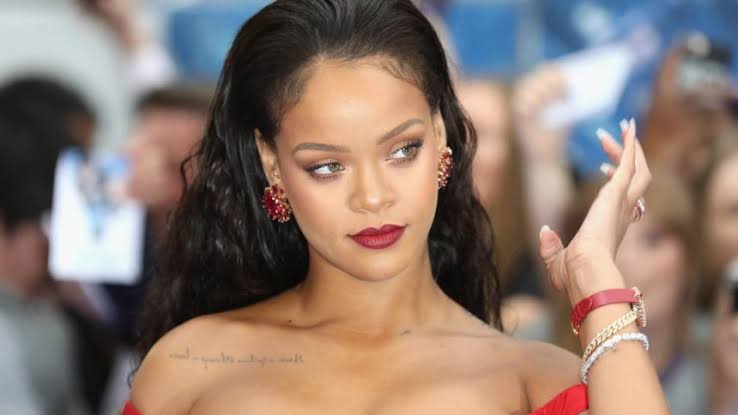
Here’s the thing about Fenty Beauty: it’s not really a celebrity-brand story, even though everyone wants to file it under that. Sure, celebrity got people to look. But looking doesn’t explain why customers who’d spent years settling for the wrong foundation shade suddenly felt like a brand new label understood their skin better than companies that had been in business for decades.
What made Fenty different was that it treated an industry blind spot as an opportunity. She took a problem that had been sitting there, ignored, for years. She built it directly into the product. Then she launched it everywhere, all at once, before any of the big players could catch up and adjust. Forty shades wasn’t a marketing gimmick. It was a statement. What every other brand treated as a bonus line, Fenty made the whole point.
By the end of 2018, Reuters reported, Fenty Beauty had pulled in nearly €500 million — about $550 million at the time. By 2024, Reuters put net sales closer to $450 million.
The 40-Shade Bet
When Fenty Beauty launched in 2017, Rihanna didn’t play it safe. No narrow hero product, no “we’ll get to inclusivity eventually.” She opened with 40 shades of Pro Filt’r foundation, full stop. According to LVMH, the brand spent two years in development before hitting 1,660 points of sale across 17 countries.
That’s a huge bet. Forty shades meant a much bigger formulation, testing, forecasting and inventory headache from day one. Rolling all of that into a massive international retail launch raises the stakes even higher — especially for shade ranges the industry had quietly treated as an afterthought for years.
Most brands would’ve trimmed the range down to manage the risk. Rihanna did the opposite. She turned the range itself into the pitch.
Fenty built the whole launch around complexion — different formulas for different skin types and tones, diverse models everywhere, and a serious one-two punch from Kendo’s product development muscle and Sephora’s distribution network. The message and the shelf actually lined up.
Vogue later reported Fenty pulled in around $100 million in its first 40 days. By the close of 2018, that number had ballooned to nearly €500 million — roughly $550 million. LVMH called the growth “exceptional.”
But here’s the bigger story. Fenty didn’t invent the idea of a wide shade range. What it did was put 40 shades on a stage big enough that nobody could ignore it. Suddenly it was the benchmark. Beauty writers started talking about a “Fenty Effect” as competitor after competitor scrambled to widen their own ranges. Rihanna took a gap the industry had been coasting past for years and turned it into a baseline expectation.
We are all so different, with our own unique skin tones, so we started with the 40 foundation shades out the gate. — Rihanna, TIME interview, November 2017
Build for the Missing Customer
Put the excluded customer into the product spec. Rihanna’s rule goes further than “know your customer.” Find where the market is quietly forcing people to compromise. Then make that failure something you can actually measure — and fix — in the product itself.
“It was also important that every woman felt included in this brand,” she told TIME, tying that directly to the decision to launch with 40 shades from day one.
Inclusion here wasn’t a slogan. It meant more products to develop, more inventory to stock, more complexity to sell through. That’s a much heavier lift than a standard range with a diverse ad campaign slapped on top. And once Fenty owned that problem, competitors could copy the number 40 all they wanted — the ownership was already gone.
Don’t let speed water down the core promise. Rihanna told Harper’s Bazaar that matching shades across skin tones was the hardest part of the whole process.
I didn’t care how long it took, I was going to make sure that we covered most skin tones. — Rihanna, Harper’s Bazaar, September 2017
Two years. That’s how long development took, and it matters. Rihanna chose to absorb the complexity before launch rather than let early customers discover the gaps for her. If you’re building something, that’s a useful split to keep in mind: move fast where it doesn’t matter, but protect whatever part of the product actually carries your brand’s promise. LVMH backs up the two-year timeline.
Founder attention should guard the thing that makes you different. “I have 100 percent involvement in this process,” Rihanna told TIME, explaining why she needed creative control over everything from formulas to packaging.
That wasn’t about micromanaging for the sake of it. Fenty’s edge depended on a huge number of small decisions — shade, undertone, texture, packaging, imagery, tone of voice — all staying in sync. Rihanna specifically called out texture as a top priority. Her involvement functioned less like control and more like quality assurance around the one thing that actually set the brand apart.
When Fenty Fashion Hit the Wall
If you want proof that Rihanna’s name alone wasn’t magic, look at fashion.
Rihanna and LVMH launched the luxury Fenty fashion house in May 2019. Less than two years later, they paused ready-to-wear operations entirely. Reuters called it a rare stumble for LVMH. Even the group’s own finance chief admitted they hadn’t nailed down the right offer yet.
Vogue Business, citing public filings, reported LVMH had put €30 million behind the launch. Yes, the pandemic crushed luxury demand across the board. But fashion also faced a much tougher equation than beauty ever did: higher prices, tighter distribution, and none of the obvious, relatable customer pain point that foundation-shade exclusion gave Fenty Beauty.
The portfolio decision speaks for itself, really: beauty and lingerie kept growing while the fashion house went on pause.
The lesson wasn’t that Rihanna’s fame stopped mattering; it was that fame couldn’t substitute for a compelling product.
The Network Behind the Fenty Machine
None of this worked on Rihanna alone. Fenty Beauty’s success came from a network where every partner brought something different to the table.
LVMH brought capital and luxury infrastructure. Kendo, LVMH’s in-house beauty incubator, brought the product-development know-how and brand-building muscle. Sephora brought the shelf space — prestige distribution that got Fenty into 17 countries and 1,660 points of sale right out of the gate.
Reuters reported in October 2025 that Rihanna and LVMH each held a 50% stake in Fenty Beauty.
Audit the Customer You’re Still Forcing to Compromise
Take your best-selling product. Now find the customer group that struggles most with the standard version of it. Don’t start by asking what feature they want tacked on. Ask something simpler:
Where are they still being forced to settle?
Pick one measurable point of exclusion. Build the whole offer around fixing it.
Rihanna’s real lesson isn’t “add more options” — it’s that 40 shades worked because that number pointed at a real, widespread market failure. Your version of that gap might not be about color at all. It could be delivery speed, payment terms, pack size, language support, onboarding friction, minimum order sizes, or how you handle things when something goes wrong.
The opening is wherever a customer problem has been ignored long enough that fixing it could become the new standard.
FAQs
Why was Fenty Beauty’s launch considered revolutionary? Fenty launched in 2017 with 40 foundation shades, built around customers who’d struggled for years to find the right complexion match. The number wasn’t the whole story — it was inclusive product development, diverse marketing, and a massive simultaneous global rollout that together made shade breadth the new industry benchmark.
Did Fenty Beauty make $550 million? Close, with some context needed. Reuters reported Fenty Beauty hit nearly €500 million — about $550 million at the time — in revenue by the end of 2018. Fast forward to 2024, and Reuters put net sales at around $450 million.
How much of Fenty Beauty does Rihanna own? As of Reuters’ October 2025 reporting, Rihanna and LVMH each owned 50%. LVMH was reportedly weighing a sale of its stake around that time. The Financial Times reported in May 2026 that a sale was still on the table, so the ownership split could still shift.
What was Rihanna’s biggest strategic decision with Fenty Beauty? Making underserved skin tones part of the launch itself, not something added later. Fenty opened with 40 foundation shades after roughly two years of development, distributed through 1,660 points of sale in 17 countries. Inclusion wasn’t a talking point — it was baked into product development, inventory, and distribution from day one.
What is the “Fenty Effect”? It’s the term for how the beauty industry reacted once Fenty set the 40-shade bar. That number became the standard everyone else got measured against, pushing competitors to widen their own ranges and raising customer expectations that big beauty brands should actually serve darker and harder-to-match skin tones.
What can entrepreneurs learn from Rihanna’s Fenty Beauty strategy? Find a customer compromise the industry has quietly normalized. Build the fix into the actual product, not just the marketing around it. Then find partners who can cover what you can’t do alone — Fenty paired Rihanna’s brand power and consumer insight with Kendo’s product expertise and Sephora’s reach. Celebrity got people’s attention. Product-market fit and execution are what turned that attention into an actual business.