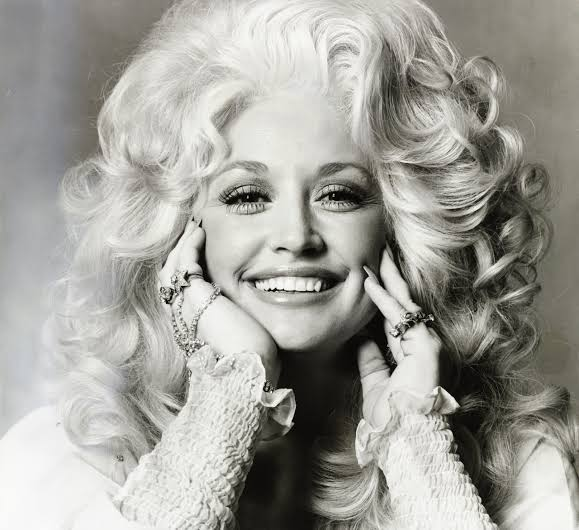
Dolly Parton grew up in a one-room cabin in the Smoky Mountains and spent six decades as one of country music’s most visible ambassadors, a genre with a well-documented history of sidelining Black artists and Black audiences. Over that same span, Parton’s own catalogue kept intersecting with Black music in ways worth examining on their own terms, separate from the sentiment of the week.
Parton died Tuesday, August 25, 2026, in Nashville, at 80, after what her publicist described as a brief battle with cancer. Tributes arrived quickly, from Paul McCartney to the staff of Dollywood. Among them was a statement from Beyoncé, whose 2024 album Cowboy Carter featured a reworked cover of Parton’s “Jolene.”
“Dolly, you were the barometer. The north star. Bold and brilliant. Talented and tenacious.” – Beyoncé
That statement was the latest, and now final, entry in a decades-long pattern connecting Parton’s work to Black artists and Black audiences — a hit song, a theme-park name change, a literacy program’s reach into the Mississippi Delta, and a collaboration she rarely spoke about in political terms but never shied away from either.
She Wrote the Song. Whitney Houston Turned It Into a Phenomenon.
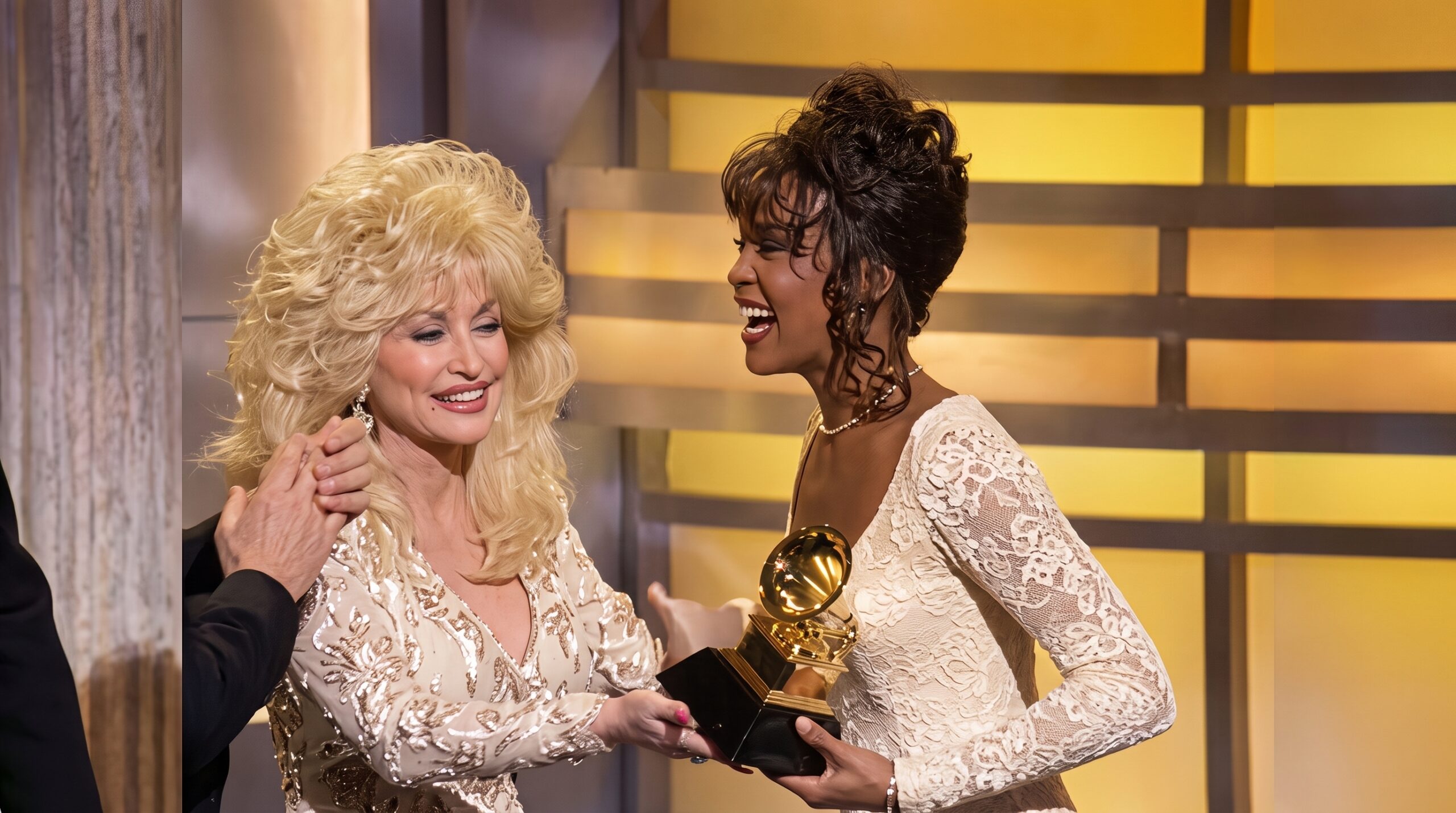
In 1973, Parton wrote “I Will Always Love You” as a farewell to her mentor and singing partner, Porter Wagoner. It was a modest country hit twice over, in 1974 and again in 1982. Then in 1992, Whitney Houston recorded it for The Bodyguard, and the song stopped belonging to country music at all. Houston’s version spent fourteen weeks at No. 1, became the best-selling single by a woman in U.S. chart history, and won a Grammy for Album of the Year.
Parton earned roughly $10 million in royalties off that one recording. What she did with the money is the part most people don’t know.
She used it to buy an office complex in what was, at the time, a majority-Black neighborhood of Nashville. Years later, on Andy Cohen’s talk show, she explained the decision.
“I bought a property down in what was the Black area of town, and it was mostly just Black families and people that lived around there… I’m just gonna be down here with her people, who are my people as well.” – Dolly Parton
She had a name for the building: the house that Whitney built.
Dropping “Dixie” Before It Was Fashionable
In 2018, two years ahead of Lady Antebellum’s rebrand to Lady A and the Chicks dropping “Dixie” from their own name, Parton quietly renamed her dinner-theater attraction from Dixie Stampede to simply Dolly Parton’s Stampede. The show had leaned on a sanitized, Confederate-adjacent version of the Civil War South for its entire run, and critics, including a widely shared Slate essay by a Black writer, had called it out for it.
Parton didn’t frame the decision as activism. She framed it as common sense.
“As soon as you realize that something is a problem, you should fix it. Don’t be a dumbass.” – Dolly Parton
It’s a strange kind of consistency, coming from an entertainer who spent decades carefully avoiding political statements of any kind. She rarely marched, rarely tweeted, rarely weighed in on the news cycle. But when a reporter later asked her directly about Black Lives Matter, she didn’t equivocate.
“And of course Black lives matter,” she said.
A Book-Gifting Program That Followed the Data, Not the Headlines
Parton’s highest-profile philanthropic effort, the Imagination Library, mails a free book each month to enrolled children from birth to age five, “regardless of family income,” in her own long-standing phrasing. The framing was always about income rather than race specifically. But the program’s actual footprint tells a more specific story: local affiliates now operate across counties in the Mississippi Delta and eastern Arkansas, including Sunflower County, Mississippi — a majority-Black county with deep roots in the civil rights movement — and Lowndes County, Mississippi, where the program has delivered more than 160,000 books since 2014.
Parton started the program in 1995 in memory of her father, Robert Lee Parton, who never learned to read. By the time of her death, the Imagination Library had distributed more than 300 million books across five countries, with independent research crediting it with measurable gains in early literacy for enrolled children.
None of the public record shows Parton framing the program explicitly around race. What the record does show is where the affiliates ended up: some of the poorest, most historically Black counties in the American South, alongside every other kind of community the program reached.
“Jolene,” Reworked and Handed Back
Fifty years after Parton wrote “Jolene,” Beyoncé put her own version of it on Cowboy Carter, an album explicitly built around reclaiming country music’s Black roots. Beyoncé swapped Parton’s pleading “I’m begging of you, please don’t take my man” for something with teeth: “I’m warning you, don’t come for my man.” Parton herself appears on the album, voicing a spoken interlude that winks at Beyoncé’s own back catalogue.
Parton had wanted this pairing for years before it happened. Back in 2022, she told a late-night audience that hearing Beyoncé take on “Jolene” would be, in her word, “killer” — the same kind of transformation Whitney Houston had once worked on “I Will Always Love You.”
When the cover finally arrived, Parton didn’t try to reclaim the original.
“I was very honored that she wanted to do her version of ‘Jolene.’ That’s all a great compliment to me.” – Dolly Parton
Cowboy Carter went on to win Album of the Year at the Grammys. Parton, by her own account, would have joined Beyoncé on that stage in a heartbeat.
A Record Worth Assessing on Its Own Terms
None of this makes Parton a civil rights figure, and nothing here is offered as though it does. She was a white country star who benefited enormously, commercially and culturally, from Black artists reinterpreting her work — Whitney Houston’s cover alone generated far more revenue than Parton’s original recording ever did. That imbalance is part of the record, not a footnote to it.
At the same time, the specific choices are documented: the royalty investment, the name change made two years ahead of comparable moves by other country acts, a literacy program whose local affiliates reached majority-Black counties across the South, and the on-record support for Cowboy Carter. Taken individually, none of them amounts to a grand statement. Taken together, they form a consistent pattern across five decades in an industry where that consistency was optional.
How that pattern is weighed against the commercial asymmetry underneath it is a matter of interpretation. What isn’t in dispute is that both things were true of the same career.
FAQ About Dolly Parton
When did Dolly Parton die? August 25, 2026, in Nashville, at age 80, following a brief battle with cancer.
What is Dolly Parton’s connection to Whitney Houston? Parton wrote “I Will Always Love You” in 1973. Whitney Houston’s 1992 cover for The Bodyguard became one of the best-selling singles by a woman in chart history. Parton later said she used royalties from that cover to invest in a majority-Black Nashville neighborhood.
Why did Dolly Parton rename Dixie Stampede? In 2018, Parton dropped “Dixie” from her dinner-theater attraction’s name, citing the word’s association with the Confederacy, years before similar moves by Lady Antebellum and the Chicks.
Does the Imagination Library reach Black communities specifically? Parton framed the program around income rather than race, but its affiliates include majority-Black counties in the Mississippi Delta and eastern Arkansas, among thousands of communities worldwide.
What was Dolly Parton’s involvement in Beyoncé’s Cowboy Carter? Parton appeared on a spoken interlude on the album and gave her blessing to Beyoncé’s reworked cover of “Jolene,” which became part of the Grammy-winning Album of the Year.
![Box Office Breakdown: Did [Black-Led Films] Dominate Summer 2026?](https://blackelites.com/wp-content/uploads/2026/10/Box-Office-768x432.png)