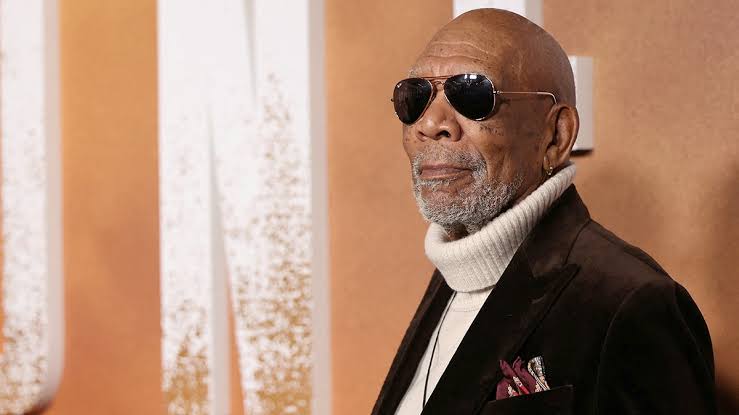
Morgan Freeman turned 89 in June. Three months later, he walked onto ESPN’s College GameDay set in Oxford, Mississippi, to predict the outcome of the Ole Miss–LSU game. The appearance did what public sightings of Freeman increasingly do: people started talking about his age again. Some were surprised that he was still working. Others seemed struck by the fact that an actor who has been famous for decades was showing up for something as ordinary as a Saturday football program.
There was something else worth noticing. The College GameDay appearance came during the weekend of the third-season finale of Lioness, the Paramount+ series in which Freeman plays U.S. Secretary of State Edwin Mullins. The finale aired September 20, one day after Freeman appeared on the ESPN program.
At the same time, Freeman has been involved in a blues project rooted in the Mississippi Delta. Morgan Freeman’s Symphonic Blues Experience grew out of his long-running connection to Ground Zero Blues Club and combines blues performances, orchestral arrangements and Freeman’s narration. The project has 2026 tour dates, including a Memphis performance scheduled for September 26.
That is a fairly busy stretch for someone who is 89. Freeman’s career has reached a point where his age is almost impossible to separate from the conversation around his work. Yet the more interesting part of the story is what he is still doing with the reputation he built over several decades.
The jobs have changed. So have the settings. His usefulness to an audience has remained remarkably clear.
Morgan Freeman Was Never a Conventional Young Star
Freeman’s career is easy to misremember because so many of his best-known performances have become part of the standard American film canon.
His rise was actually quite late. He had spent years working in theatre and television, including his years on the children’s programme The Electric Company, before Hollywood began treating him as a major film actor. His breakthrough in Street Smart came in 1987, when he was nearly 50. Driving Miss Daisy and Glory followed in 1989.
Freeman talked about that timeline during an August 2026 interview with Rolling Stone.
My career started around my age of 50 — that’s when it took off. Before that, I was working different venues a lot. — Morgan Freeman
There is a useful detail hidden inside that history. Freeman did not arrive at 50 as a completely new performer. He had already spent decades learning the profession.
That experience did not make a breakthrough inevitable. Plenty of talented actors work for years without getting the part that changes how the industry sees them. In Freeman’s case, the opportunity eventually arrived, and he had enough experience behind him to take advantage of it. Street Smart was followed by Driving Miss Daisy, Glory, Unforgiven, The Shawshank Redemption, Se7en and a long list of other roles.
Over time, certain qualities became attached to Freeman’s presence: authority, steadiness, intelligence, a voice people could recognize almost immediately. There was no need to announce any of this as a personal brand at the beginning. Audiences and producers worked it out over time.
His Voice Became More Than a Physical Trait
Freeman’s voice is one of the most recognisable in entertainment. That alone would not have made it such a valuable professional asset.
People have heard it in documentaries about history, nature and space. They have heard it coming from presidents, mentors and characters who seem to know something the rest of the room has not figured out yet. After enough years, those associations start doing some of the work themselves.
A producer does not have to explain why Freeman’s voice might suit a particular documentary. An audience already knows what that sound suggests. The same thing happens with his screen presence.
He has played criminals, assassins, military officers, presidents and comic characters, so his range is broader than the familiar Freeman image might suggest. Still, the qualities attached to him remain remarkably stable. That has commercial value.
It also has a downside. The same characteristics that made Freeman easy to recognize could make certain kinds of roles harder to get. In his Rolling Stone interview, he spoke about wishing he had gotten more opportunities to lead action films and specifically pointed to Denzel Washington as someone doing the kind of action work he had wanted to do. Freeman said that physical limitations had made those roles less realistic for him at his current age.
Career longevity is sometimes discussed as though a durable reputation automatically gives someone complete freedom. It does not. A person can become highly valuable for a particular kind of work and still find the market reluctant to imagine them differently. Freeman’s career has contained both sides of that equation.
The Blues Project Is Personal, Not a Celebrity Diversion
Freeman’s connection to the blues could easily be treated as another celebrity side project. It has been around too long for that explanation to be especially convincing.
In May 2001, Freeman, Bill Luckett and Howard Stovall opened Ground Zero Blues Club in Clarksdale, Mississippi. Eric Meier later joined the ownership group in 2018. Luckett, one of the original owners, died in 2021. Freeman remains part of the ownership group alongside Stovall and Meier.
The Mississippi connection is important. Freeman spent part of his childhood in the state and has spoken about hearing blues music there as a young child. The official Symphonic Blues Experience project describes the Mississippi Delta as central to his relationship with the music and presents the concert as a tribute to the region’s musical history.
He is therefore not simply attaching his name to a music project after becoming famous.
The same connection appears in Morgan Freeman’s Symphonic Blues Experience, a production that combines Freeman’s narration with blues performances and orchestral arrangements. The album features artists including Taj Mahal, Keb’ Mo’, Shemekia Copeland and others, with orchestral work recorded with the Chineke! Orchestra and production involving Grammy-winning producer Boo Mitchell.
The project works because several pieces of Freeman’s public identity happen to overlap. His voice is useful. His history with Mississippi is relevant. His fame brings an audience that might otherwise have little reason to encounter the production. That is a more specific form of diversification than simply putting a famous name on a collection of unrelated businesses.
Freeman has spent decades around stories, music, history and performance. His work outside acting still sits close to those things.
He No Longer Has to Compete as the Man He Was at 50
A career can change shape without ending. Freeman does not have to carry every production. He can take supporting roles. Narration gives him a way to work without asking him to perform the same physical demands as a leading film role.
His role in Lioness also gives his age a natural fit within the character. Edwin Mullins is a senior government official, so Freeman’s accumulated presence fits the role rather than needing to be disguised. There are other pieces to his career now, too.
Ground Zero has its own operation. The musicians involved in the symphonic project bring their own expertise. Freeman’s name is important, but he is not required to do every part of the work. That distinction is difficult to separate from his circumstances.
Freeman is wealthy and famous. He has spent decades building relationships and professional credibility. He has the ability to decide which opportunities are worth his time.
Someone working a physically demanding job for modest pay does not have those choices available simply because they have become more adaptable. The useful question is narrower. What parts of a career can continue to create value after the original form of the job becomes less practical? A founder might eventually spend less time dealing with daily operations and more time on acquisitions, board decisions or investments.
An executive with decades of industry knowledge might move toward advisory work. A journalist who has spent years reporting could put more energy into investigations, books, editing or specialist research. None of those transitions happens automatically. They usually depend on what someone has built beforehand.
Freeman had already developed the voice, reputation, relationships and business interests that made those later forms of work possible.
Remaining Visible Still Requires Current Work
A famous back catalogue can keep someone’s name alive for a long time. It cannot create every new opportunity.
Freeman’s College GameDay appearance worked because it placed him inside something happening that weekend. ESPN announced him as its celebrity guest picker for its September 19 broadcast in Oxford, where No. 8 Ole Miss hosted No. 7 LSU. Freeman has a longstanding connection to Ole Miss and regularly attends the university’s sporting events, although he did not attend the school.
His appearance on The Pat McAfee Show before the game had the same casual quality. Asked about the upcoming appearance, Freeman said:
I’m looking forward to being there on Saturday, and I’m looking forward to this game. I promise you. — Morgan Freeman
That kind of visibility matters. Someone who is famous only because of work from 30 or 40 years ago eventually becomes associated with a particular period. Freeman keeps giving audiences new points of entry. A younger viewer might encounter him through Lioness. Someone else might hear his voice in a documentary. Another person might see the football appearance without knowing much about the films that made him famous.
Then the older work becomes relevant again. That cycle has helped Freeman remain part of contemporary culture rather than simply being remembered as someone who once was.
What His Longevity Does—and Does Not—Prove
Morgan Freeman’s career does not make age irrelevant. Getting older changes what many people can physically do. It can affect working hours, insurance, hiring decisions and the kinds of roles employers are willing to offer.
It also matters that Freeman has accumulated financial security and professional leverage that most workers will never have. His late breakthrough should not be turned into a promise that everyone who waits long enough will eventually receive the opportunity they deserve. Careers do not work that neatly.
There are, however, a few things worth noticing. Freeman spent decades developing his craft before the wider public began treating him as a major film star. When the larger opportunities came, he had plenty of experience behind him.
His reputation also became unusually clear. People know what a Morgan Freeman performance can bring to a project. That recognition has value because producers do not have to start from zero each time. Over time, he also found other ways to use what he had built.
Acting remained central, but narration, music, business interests and public appearances gave him additional places to work. The Black professional experience adds another layer. Freeman came through an American film industry in which Black actors historically faced fewer opportunities for leading roles and narrower access to certain kinds of parts. His late rise therefore cannot be explained entirely by individual patience or preparation.
Opportunity mattered. So did the fact that Freeman was eventually given roles that allowed audiences to see the abilities he had been developing for years. That is why his story is more useful as a career example than as a motivational slogan.
Preparation can leave someone ready for an opportunity, but it cannot manufacture the opportunity itself. The renewed fascination with Freeman’s age says something about the audience, too. There is still an expectation that people eventually step away from public life and become part of the past. Freeman keeps appearing in the present.
At 89, the work looks different from what it did when he was 50. He has less reason to prove that he can reproduce the career he had then. His advantage now comes partly from everything he accumulated along the way. He is still working. That may be the simplest part of the story.
FAQs About Morgan Freeman
How old is Morgan Freeman?
Morgan Freeman is 89 years old. He was born on June 1, 1937, in Memphis, Tennessee.
When did Morgan Freeman become famous?
Freeman worked professionally for decades before his major film breakthrough. His performance in Street Smart in 1987, followed by Driving Miss Daisy and Glory in 1989, established him as a major film actor around the age of 50.
Is Morgan Freeman retiring?
Freeman has not announced a retirement. In his August 2026 Rolling Stone interview, he discussed his current work and described his approach as continuing to move forward rather than focusing on retirement.
What business does Morgan Freeman own?
Freeman is a co-owner of Ground Zero Blues Club in Clarksdale, Mississippi. He opened the club with Bill Luckett and Howard Stovall in May 2001, and Eric Meier joined the ownership group in 2018. Luckett died in 2021.