In 1996, Warner Bros. paid Arnold Schwarzenegger $25 million upfront for Batman & Robin—a film that became an industry punchline, yet paid him roughly $1,000 per second of screen time. Around that same window, Denzel Washington, coming off an Oscar win for Glory and back-to-back box office wins in The Pelican Brief and Crimson Tide, was commanding closer to $10 million or $12 million a picture.
Both fees sound massive. In practice, they operated in two entirely different financial tiers.
Celebrity net-worth estimates are inherently imprecise—un-audited, largely speculative, and often conflating paper wealth with actual liquid assets. Yet across three decades of trade reporting, a persistent pattern remains visible. The highest-earning Black stars who built their fortunes strictly through acting salaries—men like Washington, Eddie Murphy, and Will Smith—generally hover around public net-worth estimates of $300 million to $400 million. Meanwhile, white peers from the same era, most notably Tom Cruise and Keanu Reeves, frequently cross the $600 million to $800 million mark.
The Math of the Flat Fee
When an actor signs a $20 million flat-fee deal, trade outlets publish the headlining sum. Standard industry friction takes its bite before that check ever clears: 10% to talent agencies like Creative Artists Agency, 10% to personal management, 5% to legal counsel, and roughly 40% to 50% in combined federal and state taxes.
That headline $20 million fee yields under $8 million in usable cash. Building a half-billion-dollar net worth on salary alone requires repeating that cycle dozens of times without taking a single commercial hit.
The First-Dollar Gross Divide
In studio filmmaking, the largest paydays were negotiated through the backend.
During the late 1990s and 2000s, an elite group of stars negotiated first-dollar gross terms. Under a first-dollar deal, an actor acts as a co-producer and collects a percentage—sometimes up to 20%—of every dollar the studio receives from theaters starting on opening night. They get paid before production budgets are recouped, before marketing bills are settled, and before studio accounting can inflate overhead to wipe out paper profits.
When Cruise made Top Gun: Maverick, his upfront salary was a relatively modest $12.5 million. But industry reporting confirmed that his first-dollar gross participation pushed his total payout past $100 million.
“You can be the biggest star in the world, but if you don’t own the masters, you’re still just working for someone else.” – Denzel Washington
Black leading men were rarely granted those terms. Will Smith’s reported $100 million payout for Men in Black 3 stands out precisely because it was an anomaly—a rare moment where a Black star held enough leverage on a massive global franchise to command a top-tier gross percentage. More routinely, Black stars were offered “cash break” or “net profit” points—backend percentages that paid out only after the studio declared the movie profitable on paper.
The Myth of International Reach
Studio decision-makers often justified those contract terms with an unwritten rule: the assumption that Black-led films didn’t “travel” in international markets.
A landmark McKinsey & Company study on Black representation in film and TV documented how Black-led projects were systematically allocated smaller production and marketing budgets overseas compared to white-led counterparts. International distribution was under-funded from the start, so foreign box office returns came in lower—giving studios a convenient dataset to justify withholding first-dollar gross deals.
Longevity, Assets, and Genre Dynamics
Contract mechanics don’t fully explain the wealth gap.
Career longevity plays a substantial role. Cruise has carried $100-million studio vehicles virtually uninterrupted since 1986. Net-worth figures also include private real estate holdings, venture investments, divorce settlements, and endorsement campaigns—which often generate more personal wealth than film sets ever do.
Genre distribution complicates the math. Big-budget sci-fi, fantasy, and action franchises historically yield the highest backend returns, and studio casting calls for those specific genres leaned overwhelmingly white for decades. Zoe Saldaña starred in four of the highest-grossing films in cinema history across Avatar, Avengers, and Guardians of the Galaxy. Joined as an ensemble performer rather than an equity partner, her personal earnings reflected traditional acting scale rather than franchise equity.
Bypassing Burbank for True Infrastructure
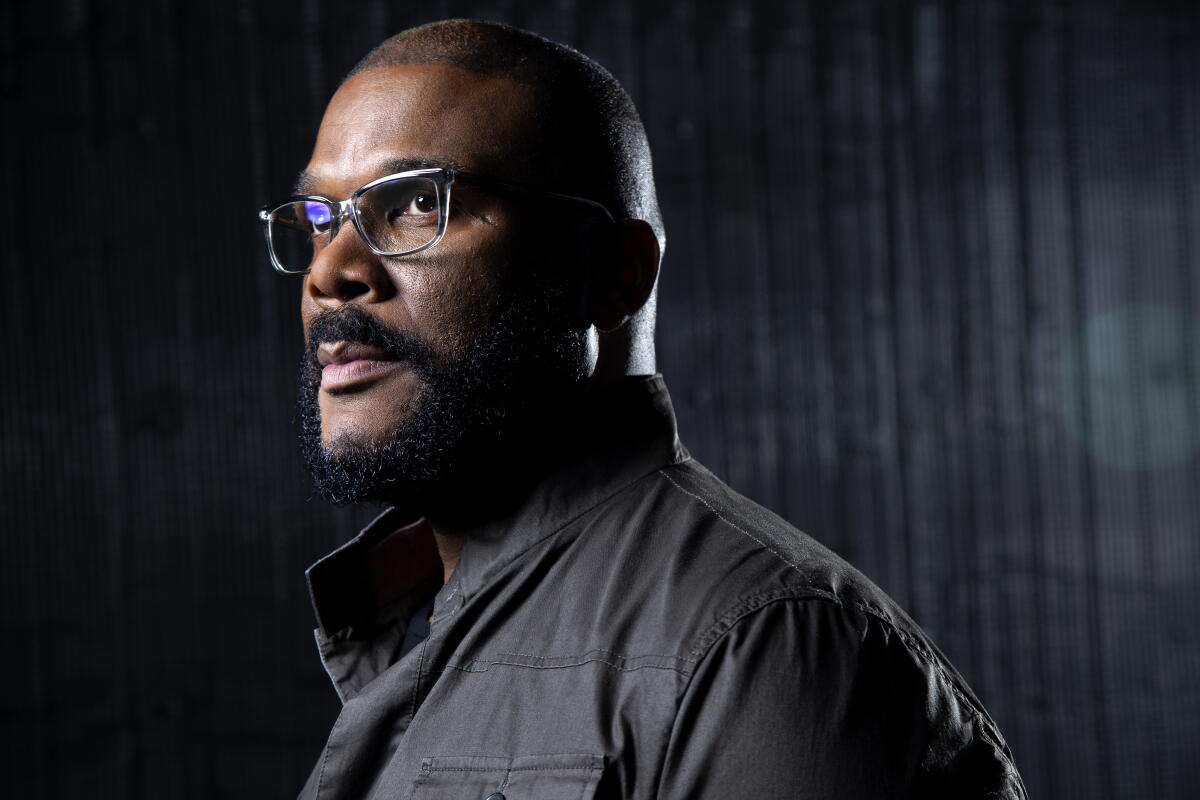
Instead of fighting for backend points on studio lots in Burbank, Tyler Perry spent the mid-2000s touring urban theater circuits, collecting his own audience data, and retaining the rights to his stage plays. When he eventually partnered with Lionsgate, he didn’t take a standard director’s fee. He financed his early films himself, delivered finished prints, and kept ownership of the master tapes.
“I wanted to own the land that I was standing on. When you own the infrastructure, you don’t have to ask for permission to tell your stories.” – Tyler Perry
By 2015, Perry acquired a 330-acre former Army base in Atlanta, converting it into Tyler Perry Studios—a twelve-stage production facility that he owns outright. When major networks or streaming platforms want his content, they license finished shows from his studio rather than hiring him as an in-house producer.
Byron Allen took a distinct path, shifting from stand-up comedy into media buying, eventually acquiring weather channels and local broadcast affiliates to expand his privately held empire, Allen Media Group.
The Shift in the Streaming Era
Whether that path remains open in the streaming era is an open question. Streamers have largely replaced traditional first-dollar gross backend deals with massive upfront buyouts that cap an actor’s upside while guaranteeing their fee. The contract mechanics that built $800 million acting fortunes may no longer exist for anyone starting out today.