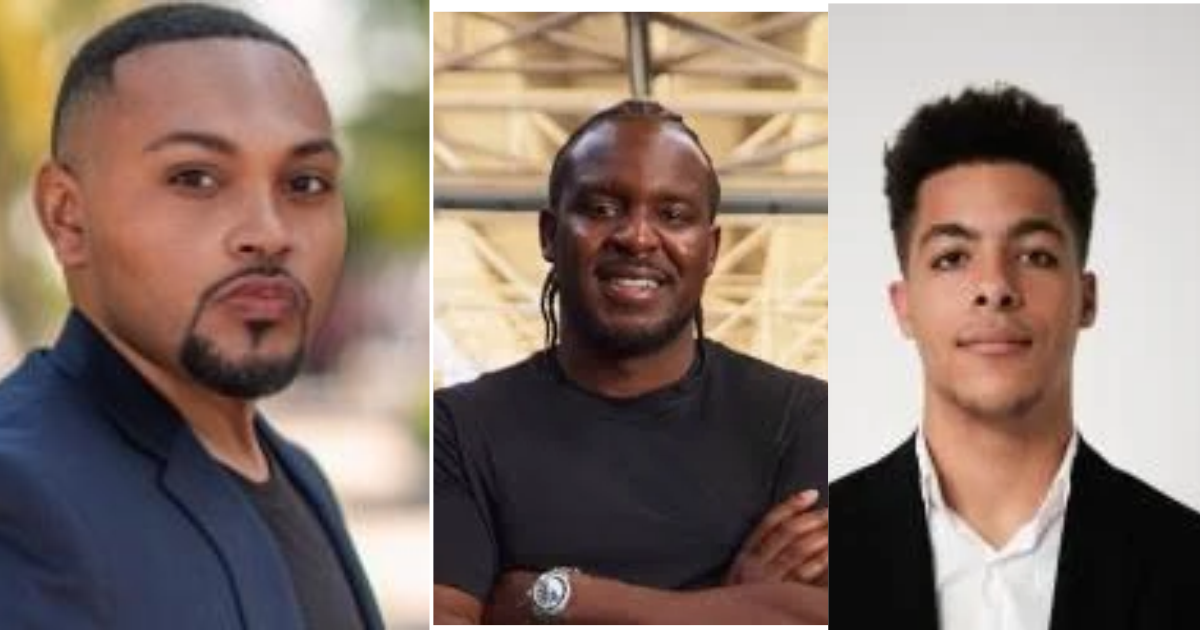
The ten founders below represent eight companies. Avante Price and Eli Taylor-Lemire share POSH’s $37 million Series B; Nathan Nwachuku and Maxwell Maduka share Terra Industries’ $52 million seed round. Harper’s $46.8 million announcement combined seed and Series A financing. Across the eight companies, that makes nine financing stages.
The companies range from an insurance brokerage and a nuclear energy startup to an event platform, a hair-care brand and a Nigerian defense technology firm. Their funding announcements show where investors have committed capital. They don’t show whether the companies are profitable, how much ownership the founders kept or whether customers will stay.
Insurance, Energy and Live Events
1. Dakotah Rice, Harper
Harper announced $46.8 million in combined seed and Series A financing in February. Emergence Capital led the Series A, with Y Combinator, Peak XV, Antler and other investors participating. Harper is building an AI-enabled commercial insurance brokerage for businesses seeking coverage and insurers assessing risk.
The company said it had served more than 5,000 businesses in its first 13 months. That figure comes from Harper, but it offers a sense of the early customer base Rice says the company has reached. He has linked the idea for Harper to his family’s experience trying to secure insurance for a trucking business.
The financing and insurance costs crushed him before he had a chance. — Dakotah Rice
Harper works as a brokerage rather than selling software to existing brokers. That puts the company closer to the customer, but it also means building carrier relationships and handling complex risks. Rice’s family experience may explain the problem he set out to address; the company’s service will determine whether customers find a better way to get covered.
2. Kofi Asante, Bluecore Energy
Bluecore Energy announced $50 million in seed financing in September to develop floating nuclear power systems for ports and other infrastructure. Its first target is the Port of Long Beach. The company has reported progress on fuel supply, regulatory engagement and maritime classification. It has not announced an operating reactor.
The funding figure needs a qualification. TechCrunch described a new $50 million seed round after a $10 million pre-seed. Axios said the $50 million figure includes the earlier money. Bluecore’s newsroom calls it a $50 million seed financing. This article uses the announced figure without adding the pre-seed to it.
Asante told Axios that Long Beach is the company’s priority.
The financing backs a project that still has to clear technical and regulatory hurdles, and win cooperation from port authorities, before it can supply power. Investor interest is established; a working system is not.
3. Avante Price, POSH
POSH raised $37 million in a Series B led by FirstMark Capital in March. Price co-founded the event platform with Eli Taylor-Lemire. The company gives organisers tools to create and promote gatherings, and helps users discover events.
POSH is expanding from event management into consumer discovery. Its business now depends on two groups finding value in the same platform: organizers who use its tools and attendees who want to find something worth doing. A larger product budget may help, but the company still needs enough events to keep users browsing and enough users to make the service useful to organizers.
4. Eli Taylor-Lemire, POSH
Taylor-Lemire co-founded POSH with Price. The company says the two met while working at events in New York: Price was a DJ and Taylor-Lemire a photographer. They started building tools for organizers after finding the systems available to them inadequate.
Taylor-Lemire is included as a founder whose company raised venture capital. His financing is POSH’s $37 million Series B, the same round listed for Price. The founders count separately in a ten-person list; the investment does not.
POSH is competing with other event and social discovery services for people’s time. Organizers and attendees have to keep using it for the platform to work as intended.
5. Cameron Carter, Rosarium Health
Rosarium Health raised $6 million in seed funding in May, led by Kalos Ventures. It coordinates home-based care, including clinical assessments and home modifications for older adults and people with disabilities. Rock Health Capital, Symphonic Capital and the American Family Insurance Institute for Corporate and Social Impact also participated, according to reports.
Rosarium says its network includes more than 800 clinicians and 3,000 contractors across 34 states. Those are company-reported figures. They don’t show how many providers are active or whether every patient can access the service.
The work involves coordinating providers, home modifications and payment systems. Rosarium is trying to bring those pieces together so health plans can arrange more care at home. Its seed round will fund that operating network, not just software development.
Computing, Beauty and Defense
6. Kunle Olukotun, SambaNova Systems
SambaNova announced the first close of a $1 billion strategic financing as part of a Series F in July. The company reported a post-money valuation of $11 billion; General Atlantic led the financing. Olukotun is a co-founder and chief technologist, and a Stanford engineering professor.
The phrase “first close” matters: SambaNova announced that portion of the financing as completed, not that the entire Series F was finished. Reuters reported the company had also raised $350 million in a Series E earlier in the year. SambaNova makes AI chips and systems for inference, when a trained model generates responses.
AI hardware is expensive to develop and deploy. The size of SambaNova’s financing also shifts the broader funding picture: Crunchbase reported that the company’s earlier 2026 round made up a large share of first-quarter venture funding to US startups with Black founders. One large deal can move an aggregate total sharply.
7. Tendai Moyo, Ruka
Ruka, a UK-based textured-hair brand co-founded by Moyo, closed a $4.5 million round in May. Henkel Ventures and Freedom Trail Capital co-led the financing; Big Issue Invest and Backed VC also participated. Ruka makes textured-hair products and is developing synthetic fibers for extensions and braiding hair.
Ruka said it would put the money toward fiber innovation, production, US retail expansion and education initiatives. Henkel brings consumer-products experience to the round, alongside Freedom Trail Capital’s venture backing. For Ruka, moving into more stores will mean keeping production and inventory in step with demand. Repeat purchases will be a clearer sign of traction than initial interest.
8. Nathan Nwachuku, Terra Industries
Terra Industries added $18 million in August, bringing its seed round to $52 million. The Nigerian defense technology company builds autonomous systems for security and infrastructure monitoring. It said the new funding would support manufacturing, deployments and a London office.
Nwachuku is the company’s co-founder and chief executive. Terra says its systems help governments and infrastructure operators monitor and protect critical assets. In its funding announcement, Nwachuku described what the additional capital would support:
This funding lets us scale that work and deepen our manufacturing base. — Nathan Nwachuku
Terra argues that security systems should be designed for the conditions in the markets they serve. The company will have to turn that case into contracts, deliveries and maintenance work.
9. Maxwell Maduka, Terra Industries
Maduka co-founded Terra Industries with Nwachuku. He shares the company’s $52 million seed round; it was not a separate financing. Terra says its systems cover land, air and maritime environments and are designed for governments and infrastructure operators.
The company has also announced plans for a 34,000-square-foot facility in Ghana, which it says is due to open in the fourth quarter of 2026. The facility is planned, not yet completed production. Terra says the seed funding will support manufacturing and deployments.
For Maduka and Nwachuku, the round gives Terra money to build capacity. The Ghana facility and the company’s deployments will show how quickly it can turn that capital into operating infrastructure.
10. Ryan Williams, Ellis
Ellis emerged from stealth in July with more than $10 million in seed funding, led by First Round Capital. Williams, a former co-founder of real estate investment company Cadre, is building software for private credit managers. Ellis says its platform connects information held in documents, spreadsheets and accounting systems, with AI agents handling recurring tasks.
Private credit firms work with loan, portfolio and investor records spread across different systems. Ellis is targeting the administrative work behind those investments. Williams has experience in private markets from Cadre, but managers will need to trust Ellis with sensitive financial information and see enough value to keep paying for it.
First Round and the other investors are funding product development and early customer work. Ellis is entering a market where the case for AI will rest on whether it can make those tasks more accurate or less costly.
What the funding reveals
The companies won’t use capital in the same way. POSH needs organizers and attendees to keep returning. Rosarium is coordinating providers and health plans. Bluecore, SambaNova and Terra face substantial engineering, manufacturing or regulatory demands.
SambaNova’s first close is much larger than the other rounds. POSH and Terra each have two founders represented by one company financing.
Venture capital can pay for hiring, product development and expansion. It can also dilute founders’ stakes and bring investor expectations. Because the terms of these rounds have not all been made public, the amounts alone can’t show who controls each business today. The companies’ operations, customer relationships and products will tell more about what the funding achieved.
Frequently Asked Questions
Are these ten separate venture rounds?
No. The article profiles ten founders across eight companies. Price and Taylor-Lemire share POSH’s Series B; Nwachuku and Maduka share Terra Industries’ seed round.
Why does the article mention nine financing stages?
Harper’s $46.8 million announcement combined a seed round and a Series A. The other seven company announcements each describe one stage, giving nine stages across eight company announcements.
Was SambaNova’s $1 billion Series F fully completed?
The company announced a first close of $1 billion in strategic financing as part of its Series F. The article describes it as a first close and does not claim the entire fundraising process was complete.
Does the Bluecore figure include its pre-seed?
Reports differ. TechCrunch describes a $50 million seed round after a $10 million pre-seed; Axios says the $50 million financing figure includes the pre-seed. The article notes the difference and does not add the amounts together.
Does raising venture capital mean a company is profitable?
No. A funding announcement shows that investors provided capital. It does not establish profitability, customer retention, long-term growth or how much of the company the founders still own.