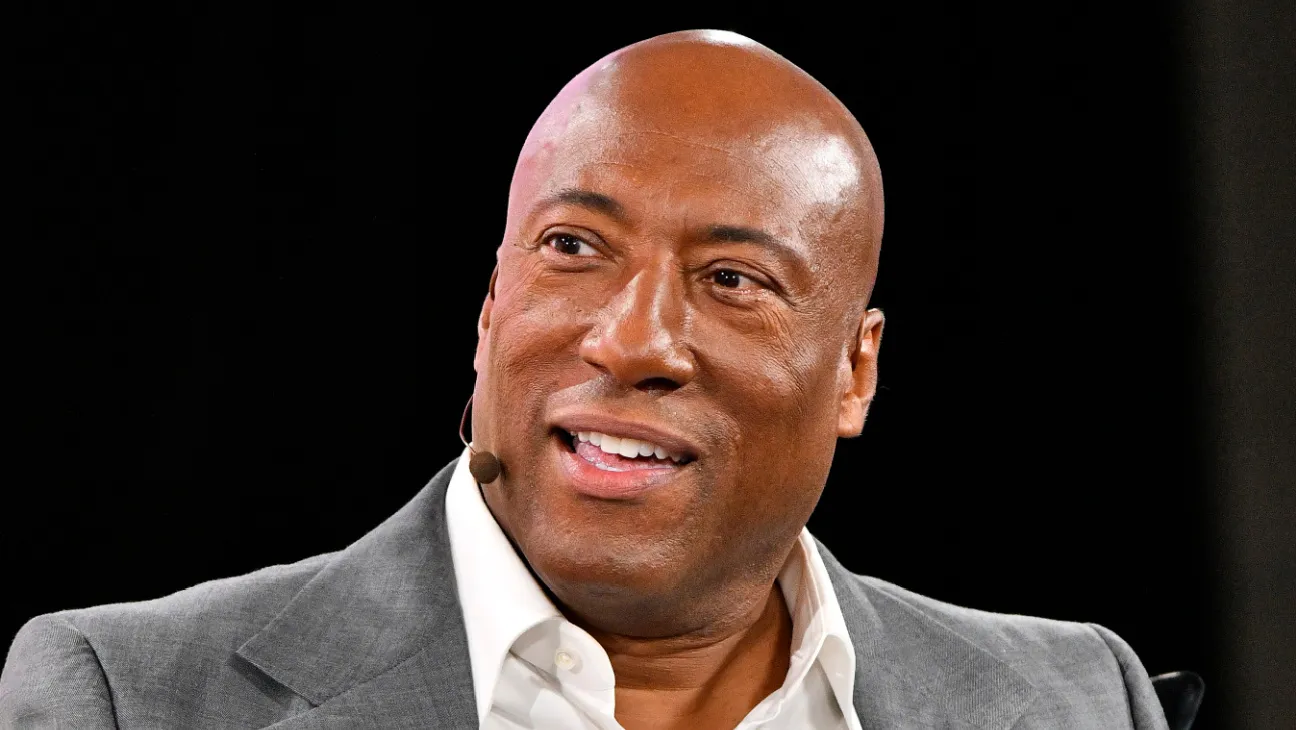
Back in the 1990s, Byron Allen was just a comedian trying to get TV stations to air his shows. His first attempt at building a company ended in bankruptcy. His house nearly went into foreclosure. More than once.
So he stopped waiting for an invitation. In 1993, Allen launched Entertainment Studios out of his dining room. Cheap syndicated programming first, then networks, then film distribution, then acquisitions. By 2018, he’d bought The Weather Channel’s TV assets for around $300 million.
Buying Linear TV When Everyone Else Was Looking Elsewhere
That Weather Channel deal was the big swing. In 2018, Entertainment Studios paid roughly $300 million for the network, the largest acquisition Allen had made up to that point.
Here’s the thing that made it risky: everyone was already getting their forecasts from apps. The Weather Channel’s digital business had even been sold off separately to IBM already. So Allen was putting hundreds of millions into linear television, a business a lot of people had written off as fading.
He wasn’t just buying a channel, though. He was buying distribution, brand recognition, and leverage for whatever came next.
And it worked as a springboard. By May 2026, an SEC filing showed Allen owning 13 network-affiliate stations across 11 markets, 10 round-the-clock TV networks, and several streaming platforms, plus 74 TV programs in production or distribution. His family office also closed a $120 million deal for about 51% of BuzzFeed, not long after picking up a 10.7% stake in Starz for $25 million.
The Allen Strategy
Never give up the customer relationship.
Cut out the middlemen who control access to your buyer. “Don’t let anybody come between you and the customer,” Allen has said in an interview with Black Enterprise.
Early on, he cold-called about 1,300 TV stations, offering them programming with no upfront license fee. In exchange, stations kept 14 minutes of ad inventory; Allen held onto 7 minutes to sell himself nationally. Rather than sit around hoping a network would pick up his show, he just built his own network.
Treat cash like a weapon.
Growth doesn’t mean much if it burns through the money you need to survive. “Don’t run out of money,” he told The James Altucher Show.
This shows up everywhere in how he built the business. His earliest interviews were shot at movie press junkets, with free production infrastructure courtesy of the studios. Later on, Entertainment Studios lined up $500 million in credit facilities through Deutsche Bank Securities, Jefferies, Brightwood Capital, and Comerica to fund expansion.
Even the BuzzFeed deal in 2026 kept upfront cash low: of the $120 million, only $20 million was cash. The rest was a five-year promissory note at 5% interest.
The Bankruptcy That Changed Everything
Allen’s real origin story isn’t the success. It’s the collapse that came first.
In 1993, BYCA, his earlier venture, ran into legal and financial trouble and filed for Chapter 7 bankruptcy. Former employees claimed they were owed at least $76,000 in unpaid wages, commissions, and expenses. Allen has said his house went in and out of foreclosure while he scrambled to keep programming funded.
What came out the other side wasn’t just grit. It was a completely different cost structure: cheap non-fiction content, barter deals for distribution, squeezing every bit of value out of existing production resources, and selling ads directly instead of going through a middleman.
The failure is basically what built the model.
The Network Behind the Empire
Allen’s advantage isn’t a typical mentor network; it’s distribution relationships, institutional money, and specialists. Al Masini, the guy who created Entertainment Tonight, taught him how syndication economics actually work.
The capital access grew a lot over time. In 2021, a bid to buy Tegna pulled in a group that included Ares Management, Fortress, Oaktree, and Michael Milken’s family office. That deal never closed, but it showed Allen could mobilize serious institutional financing when he needed to.
There isn’t much evidence he’s built a typical roster of founder protégés the way some moguls do. His edge is really in deal financing, advertisers, broadcasters, talent, and distribution, not venture-style mentorship.
Copy This Strategy: Remove One Gatekeeper
Figure out who controls the most access to your customer. A marketplace. A distributor. A social platform. A retailer. An agency.
Then build one channel that bypasses them entirely.
That’s really the whole lesson from Allen’s career. Don’t just try to negotiate a better deal with the gatekeeper. Build your business so their permission matters less and less over time.