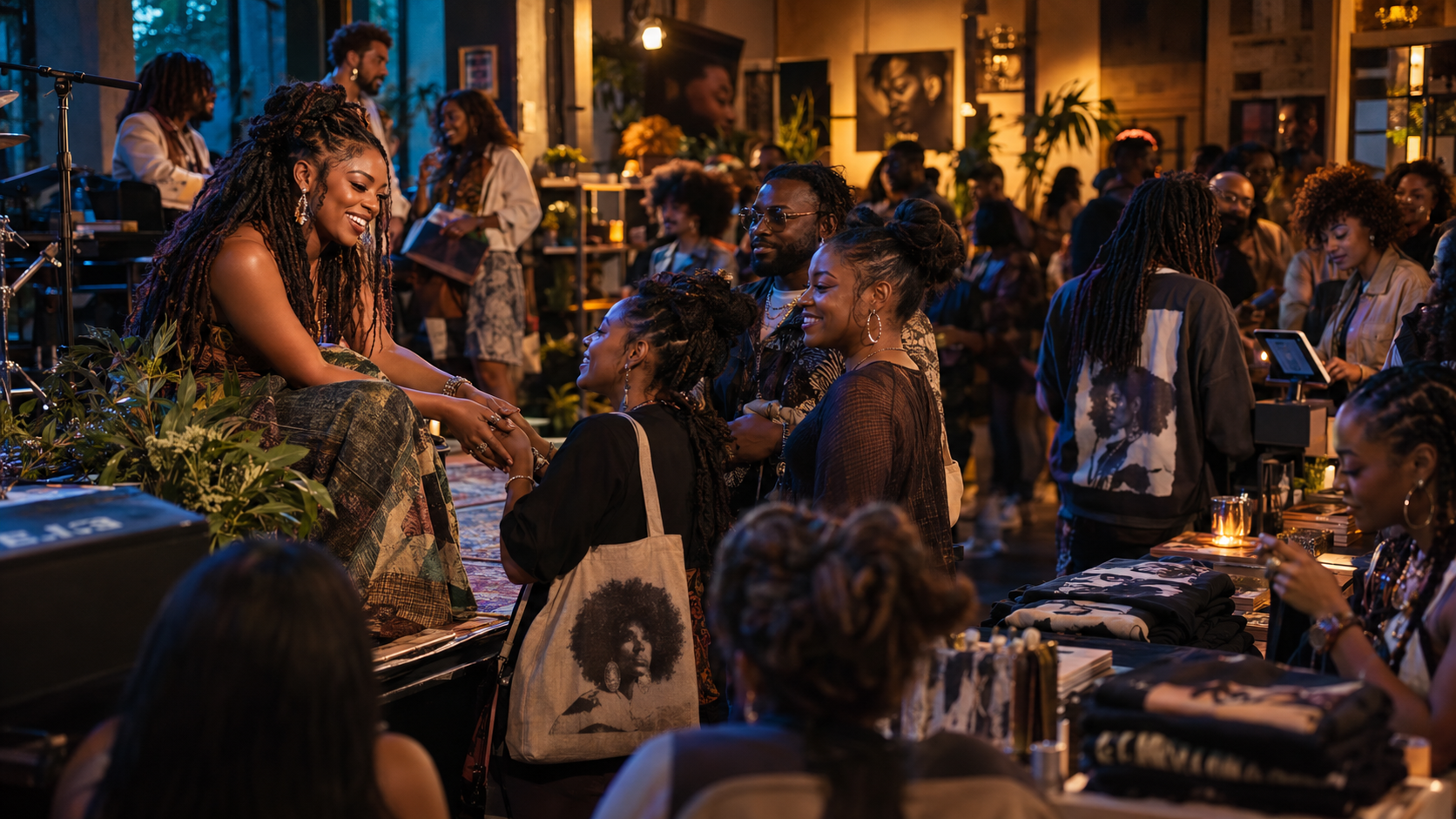
At Dream Con in Houston this July, 45,000 people filled the George R. Brown Convention Center for anime, gaming, film, sports and pop culture. The Texas Tribune called it a record crowd. A year earlier, RDCWorld’s Dream Con page listed $19.2 million in impact to Houston for its 2025 event. The figures raise a business question: who owns the relationship with fans after they leave?
For Black founders, the answer can determine whether a cultural moment becomes an annual event, a customer list, a licensing deal or a durable company. Fandom already moves money through merchandise and sponsorships. The opportunity is building something fans return to, and retaining a stake in the infrastructure behind those returns.
Black Fandom Can Become More Than a Crowd
Dream Con began with creators who had already built a following. RDCWorld, a Texas-based collective founded by Mark Phillips and Affiong Harris with several collaborators, grew on comedy sketches about anime, sports, gaming and pop culture. They wanted to make a manga and, eventually, an anime. YouTube was how they found an audience.
Then came the limits of being a guest. RDCWorld’s official account says anime and comic conventions often ignored or turned the group away, saying they would not fit. In 2018, the creators launched Dream Con in Waco. By 2026, it filled a major Houston venue and had become a marketplace for fans, artists, brands and local businesses.
Dream Con CFO Kendale King described the challenge of securing local support in a July interview with The Texas Tribune:
It’s crazy because it’s not like we are trying to stay a secret. We just haven’t been tapping the right levers until this year. — Kendale King,
A follower can watch a sketch. An attendee can buy a badge, book a hotel, meet an artist, purchase a print, enter a tournament or attend a panel. Dream Con’s 2026 programme included an artist alley, cosplay contests, gaming tournaments, concerts and panels. Sponsors including YouTube, Twitch and Red Bull backed the event.
Community Is the Product, but the Business Needs More
Turning Community into Paid Business Services
Black Girl Gamers offers a route from audience to commerce. Jay-Ann Lopez founded it in 2015 after looking for other Black women who played games and finding few spaces where they felt represented. It began as an online group and developed into events, media, talent and consulting for brands and game companies.
Spotify reported 7,000 women in the group globally in 2020. Black Girl Gamers’ current website describes a global community and lists cultural consultation, sponsored campaigns, livestreams, event integration, education and talent among its services. Its membership is not a count of paying customers. Its business model draws on work that the community makes possible: a publisher can hire expertise, a brand can sponsor an event, and a studio can find talent with knowledge it may not have in-house.
Lopez described the need:
It wasn’t a need that I saw. It was a need that I experienced. — Jay-Ann Lopez
Black Enterprise reported that clients have included Square Enix, Google and Samsung. That is a business-to-business model built from fan knowledge. It does not require every member to pay a monthly fee. Trust and expertise are packaged into services companies can buy, while events and online activity give members reasons to participate.
Founders should be precise about “membership.” A large group is not automatically a paid membership business. Recurring revenue requires an offer fans value enough to pay for: early access, workshops, live gatherings, creator interaction, useful resources or a dependable place to connect. A paywall added to a social group does not create loyalty by itself.
Rights Matter as Much as Reach
A crowd can create demand for characters and stories without owning the rights behind them. The licensing market makes that gap visible. For Black Panther: Wakanda Forever, Black-owned athleticwear company Actively Black partnered with Marvel to co-produce and sell official merchandise. The collaboration placed a Black-owned brand in a global franchise’s product chain. Marvel retained control of its characters and approvals; Actively Black brought cultural positioning and a sales channel.
A license can bring official products and customers to a Black-owned business. Its terms determine what the licensee can make, where it can sell, how long the rights last and what happens when the agreement ends. A collection can produce income and introduce a brand to new buyers, but it does not give the licensee ownership of the character or a continuing right to sell.
Founders should treat intellectual property as an asset from the start. Trademarks protect names and logos. Contracts clarify who owns artwork, music, characters and event formats. Licensing can let a creator earn from a property repeatedly without making every product alone, provided the rights are documented and enforceable. Black Elites has examined a related issue in its report on who keeps the margin after Black consumers create demand.
Dream Con’s Growth Brings a Governance Test
RDCWorld reports a $19.2 million economic impact for Dream Con’s 2025 Houston event. The Texas Tribune says the convention drew out-of-town spending for hotels, restaurants and other hospitality businesses; this is local impact, not Dream Con’s revenue or profit. The Texas Tribune reported that 45,000 people attended in 2026. That scale gives hotels and restaurants reason to welcome the convention, but organisers still need favourable venue terms, support and a plan for rising costs.
In July, Dream Con CFO and partnerships director Kendale King said he could not guarantee the event would remain in Texas. He told the Tribune the company was seeking local or state funding and had not previously known which public programmes to pursue. The convention generated visitor spending, yet its organisers were still learning how to negotiate for the infrastructure that larger events may take for granted.
A record crowd does not prove financial health. More attendees can raise expenses for security, production, insurance, venue space and staff. Organisers need to know whether ticket tiers cover those costs, how much sponsor income is contracted and whether vendor space is priced sustainably. An estimate of local impact may support a case for public assistance; it does not show the company’s margins or cash flow.
RDCWorld member Benjamin Skinner described the meaning of the growth this way:
It’s not just about the number; it’s about what the number represents. — Benjamin Skinner
Fans gain a gathering place. Vendors gain customers. Sponsors gain visibility. Houston gains hospitality spending. Dream Con has to retain enough value to produce the next event and invest in what follows. The Tribune reported that local collaborations included a limited-time menu with Trill Burgers and a film festival with Black Cinema Club HTX, extending participation beyond the convention floor.
Build a Relationship That Can Survive the Feed
Each revenue stream carries a different burden. A live event can sell tickets and vendor space, but demands capital before opening day. A license can add royalties and reach, but gives the rights holder approval power. A paid community can make income more predictable, though retention depends on consistent value. Sponsorship can cover production without necessarily building a business that survives when a sponsor exits.
The strongest fandom companies will know which revenue repeats, which assets they own, and which customer relationships sit with a platform. They will negotiate rights, sponsor terms and venue contracts as carefully as they develop creative work. Their fans will not be a number on a pitch deck. They will be participants in a business whose value grows when people return.
The opportunity begins when a creator gives fans somewhere to go next, then has the ownership, governance and working capital to keep it open on their terms.
FAQs
How Can Fandom Become a Business?
A fan community can support events, merchandise, licensing, subscriptions, sponsorships, consulting or talent services. The model works when customers receive a clear benefit and the business can deliver it repeatedly at a sustainable cost.
Does a Large Following Guarantee Recurring Revenue?
No. Followers indicate potential reach, not purchases or repeat use. A business must offer something people value, make participation easy and measure how many customers return after the first event or sale.
What Can Black Founders Own Beyond Merchandise?
Founders can build trademarks, original characters, event formats, customer lists, media libraries, membership programmes and licensing rights. Contracts should state who owns creative work and what happens when a partnership or licence ends.
Why Does Dream Con Matter to Black Businesses?
Dream Con shows how a creator audience can support a Black-owned event, vendors, sponsors and local businesses. Its attendance and reported economic impact also show why stable venues, capital and public support matter as events grow.
What Makes a Paid Fan Community Worth Joining?
Members need recurring value, such as useful programming, creator access, early releases, live meetups or a well-run space to connect. Clear pricing, moderation and a reliable schedule help build trust and retention.
How Should Founders Judge a Fandom Venture’s Health?
Look beyond followers and attendance. Track repeat purchases, renewals, event margins, inventory, sponsor concentration, customer acquisition costs and cash before the next launch. Those measures show whether attention is becoming a durable business.