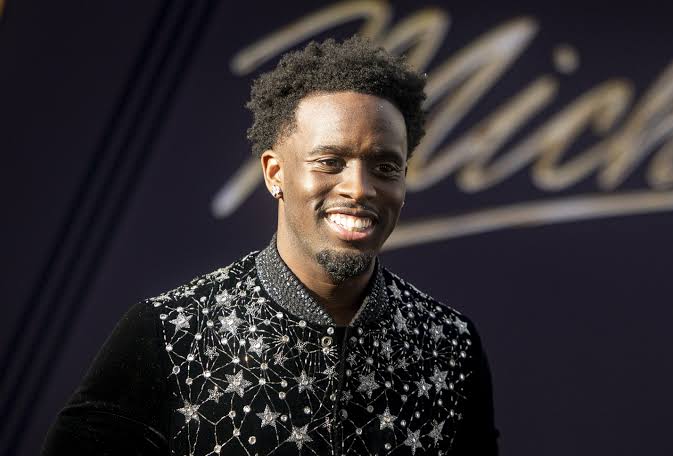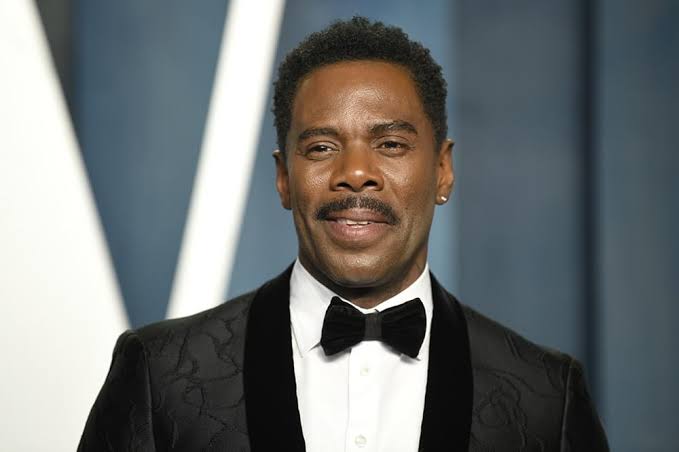
By July 2026, Michael, the biopic in which Colman Domingo plays Joe Jackson, had passed $1 billion at the worldwide box office. That same year, Domingo appeared in Steven Spielberg’s Disclosure Day and earned two Emmy nominations for two very different television roles: Ali in Euphoria and Danny in The Four Seasons.
The box-office figure belongs to the film, not to Domingo. Still, the year puts him in front of audiences across a striking range of projects: a music biopic, a Spielberg science-fiction film, a returning HBO drama and a Netflix comedy. On October 1, ELLE also described him as the face of Valentino’s Born in Roma Ruby fragrance campaign.
The headline fits because several kinds of visibility converged in one year. The more useful story is how Domingo built a career that could carry him into these rooms.
The Breakout Year Was Decades in the Making
Domingo’s 2026 run did not begin with one lucky casting call. By his own account, he had worked for decades across theatre, television, film, writing and directing. In 2025, he told The New Yorker that he had been working for about 34 years and had spent much of that time building his own path.
The parts he played this year made that range visible. As Joe Jackson in Michael, he was part of a film whose story ends in 1988, before later controversies around Michael Jackson’s life. Critics challenged that choice, arguing that it produced a narrow and sanitized portrait. Domingo’s performance was therefore attached to a film whose commercial success and editorial choices were both under public scrutiny.
He also joined the cast of Disclosure Day, Spielberg’s original science-fiction film. The two Emmy nominations added a different kind of recognition: the Television Academy nominated him for both supporting actor in a comedy, for The Four Seasons, and guest actor in a drama, for Euphoria. Those roles extended his reach across genres; the nominations do not, on their own, measure his bargaining power or compensation.
He’s got this 360-degree awareness of who everybody on the crew is. — Tina Fey
Three Decisions Behind the Range
He Moves Toward Work That Makes Him Nervous
Domingo has described a simple instinct: when a role makes him nervous, he may be more interested, not less. He said that if he feels he could “mess it up,” that is where he will “run toward.”
He applied that instinct to Sing Sing, which he shot in an 18-day gap between The Color Purple and Rustin pickups. The project was still being developed, and Domingo helped shape it with director Greg Kwedar, co-writer Clint Bentley and Clarence Maclin, a former participant in the prison arts program depicted in the film. He took on a leading role while working with performers who had never been on a film set.
He Helps Build the Work He Wants to Lead
In the same interview, Domingo said he had helped build Rustin over four years and had also helped develop Sing Sing. His involvement in the latter began before there was a finished script. He read the article that inspired the project, raised questions and offered suggestions as the writers revised it.
That work matters to his career story because it shows him contributing before the casting stage. His own account suggests that building a project has repeatedly given him a route to leading roles.
He Changed the Route When the Old One Stalled
After a difficult stretch of auditions, Domingo met new managers through his Passing Strange colleague Daniel Breaker. Domingo proposed a six-month trial to see what they could build together. Later, he booked The Get Down and Fear the Walking Dead from self-tapes on the same day. He chose Fear the Walking Dead, a genre he had not worked in before, and said the series gave him new footing.
The lesson is not simply to persevere. Domingo’s account shows him changing his representation and taking a chance on work outside his usual lane when the existing process was not producing access.
The Audition Rejection That Nearly Made Him Quit
Domingo recalled auditioning eight times in one week while bartending. One audition was for a cabaret master of ceremonies on Boardwalk Empire. He said the casting director liked his performance, but his agent later relayed that a researcher objected on the grounds that men in the role would have been fair-skinned. Domingo said he broke down at the gym and went home to ask his husband whether he would be disappointed if Domingo stopped acting.
He was preparing to leave the industry when Breaker urged him to meet a new management team. The six-month trial gave both sides a clear period to see if the relationship worked. Soon after, Domingo said his self-tapes led to two bookings on the same day. His career did not turn on a single inspirational moment. It changed when he addressed the access problem and accepted an unfamiliar role with a longer runway.
The Relationships That Opened Different Doors
Breaker’s role was to make an introduction at a moment when Domingo was ready to leave. That referral led to a new management relationship. It is a specific example of a colleague creating access; the available evidence does not show that Breaker shaped the choices Domingo made afterward.
Sam Levinson, the creator of Euphoria, wrote Ali with Domingo in mind. The continuing role has let Domingo work in a series built around challenging, often emotionally demanding characters. Levinson has praised Domingo’s understanding of story across acting, writing, producing and directing.
He understands story from every angle. — Sam Levinson,
Tina Fey and her The Four Seasons co-creators chose Domingo for Danny despite his better-known dramatic work. He later directed the first episode of the show’s second season. That relationship gave him a comedy role and a chance to take on more responsibility behind the camera.
Spielberg’s part in the story is more limited but still consequential: Universal lists Domingo in the cast of Disclosure Day.
How to Change Course When the Usual Route Fails
Domingo’s six-month trial with new management offers a practical model. He identified a problem—his work was not reaching the right people—then tested a different arrangement over a defined period. Self-tapes opened another route, and he used that access to choose a role outside his experience.
For an operator or founder, the transferable idea is to name the bottleneck, test a new channel on a clear timeline, and judge it by whether it changes the opportunities available. That business application is an editorial inference from Domingo’s account.
Frequently Asked Questions
What makes 2026 a standout year for Colman Domingo?
He appeared in Michael and Disclosure Day, earned two Emmy nominations for The Four Seasons and Euphoria, and became the face of a Valentino fragrance campaign. Michael passed $1 billion worldwide, though that is a film result, not a measure of Domingo’s personal earnings.
Who does Domingo play in Michael?
He plays Joseph “Joe” Jackson, Michael Jackson’s father.
What rejection nearly made him quit acting?
Domingo said he nearly left the industry after Boardwalk Empire passed on him for a role. He attributed the decision to a researcher’s view about skin tone; that remains his account of the casting explanation.
What changed after the rejection?
He met new managers through Daniel Breaker and proposed a six-month trial. He later booked The Get Down and Fear the Walking Dead from self-tapes on the same day, then chose the unfamiliar genre series.
Does Michael’s box-office success show how much Domingo earned?
No. The film’s reported gross and budget do not disclose Domingo’s salary, bonuses or share of revenue. Those terms were not found in the sources reviewed.