A restaurant receives an order through DoorDash. Before the food reaches the customer, the menu has to be accurate, the payment has to clear and a courier has to arrive at roughly the right time. If the meal turns up late or incomplete, someone must decide who gets refunded and who absorbs the loss.
The app made ordering easier. It also inherited work that once sat with several people.
Much the same happened elsewhere. Shopify enabled merchants to sell without securing space in a department store. Airbnb gave homeowners access to travellers. Uber reduced the need to call a taxi dispatcher. These companies opened markets, then found themselves responsible for making millions of unfamiliar transactions function well enough that customers would return.
That responsibility has proved extremely valuable. Payments and customer behaviour now pass through a small number of digital systems. The companies running them can see demand forming in real time and influence where it goes next.
Calling this the death of the middleman misses a large part of what happened. Technology removed some intermediaries and greatly enlarged the ones that took their place.
Shopify
A traditional retailer seeking national distribution once needed relationships with department stores, wholesalers or both. Those intermediaries supplied more than access to customers. They screened products, managed payments and carried some of the risk of unsold inventory.
An independent merchant can now reach customers through a website within days. Then the practical problems begin. The store needs a reliable checkout. Suspicious payments must be identified before goods leave the warehouse. Orders need to reach buyers, including those living outside the merchant’s home market.
Shopify has moved steadily into this work. Its merchants can accept online payments and run physical checkouts through the same company. Working-capital products have brought Shopify into financing, while its tools for international selling deal with some of the complications that appear at borders.
“2026 will be the year of the builders, and we’ll be powering them—from first sale to full scale.” — Harley Finkelstein
Merchants using Shopify generated $378.4 billion in gross merchandise volume in 2025, up 29 percent. The company’s own revenue increased 30 percent to $11.6 billion, according to its full-year results.
Website subscriptions explain only part of those figures. Shopify has become involved whenever money changes hands on a merchant’s store. It can also remain involved when that merchant opens a physical location or seeks financing.
The retailer has more freedom than it would under a department-store buyer. Even so, its independence rests on infrastructure supplied by another company. That arrangement can work well for both sides. It also gives Shopify a close view of what merchants sell, where demand is growing and how money moves through their businesses.
Airbnb and Uber
Booking a hotel involves a familiar institution with staff, a physical address and established procedures. A private home listed online offers fewer immediate assurances. The traveller has to decide whether the property exists and whether the host can be trusted.
Airbnb gradually built layers around that uncertainty. Listings carry reviews from previous guests. Payments run through the platform. There is a record of the booking if a dispute arises. The company generated $12.2 billion in revenue in 2025, its full-year financial results show.
None of this guarantees a good stay. Complaints about misleading listings, cancellations and poor customer support have followed Airbnb throughout its growth. The relevant point for its business model is that enough travellers consider the safeguards adequate to book.
Uber handles a more immediate version of the same calculation. A passenger sees a driver’s name, vehicle details, rating and estimated arrival time before the ride begins. The fare is processed through the app, which also records the journey.
Gross bookings at Uber increased by $30.7 billion in 2025, a rise of 19 percent, according to its annual report.
“Uber accelerated into another record-breaking quarter, with more than 200 million monthly users completing more than 40 million trips every day.” — Dara Khosrowshahi
Airbnb does not need to construct a new hotel for every group of travellers it adds. Uber relies on vehicles supplied largely by drivers. That gives both businesses room to expand quickly, though the description “asset-light” can be misleading when read as “inexpensive.”
Insurance is one recurring cost. Safety incidents produce legal and regulatory consequences that differ across cities and countries. Fraud changes as controls improve. Drivers and hosts can move between competing services, so keeping enough supply available requires continued attention and, at times, financial incentives.
Some of those costs rise with the network. Others arrive unexpectedly. A platform may spend years building confidence and see it damaged by a single incident that is handled badly.
DoorDash
DoorDash benefits from being present before a customer chooses a restaurant. That position is worth more than the delivery fee attached to one meal.
The company’s marketplace gross order value rose 27 percent in 2025. Revenue increased by approximately $3 billion, or 28 percent, according to its SEC filing.
Restaurant delivery supplied the initial network. DoorDash has since entered grocery and retail delivery. It also sells software to merchants. The expansion does not require an entirely new operating model each time; much of the local delivery capacity already exists.
Advertising adds another layer. A restaurant can pay for better placement when customers search for dinner. A consumer brand can buy visibility inside the grocery section. In both cases, DoorDash is selling access to people who arrived intending to spend money.
The position creates an uncomfortable calculation for merchants. A restaurant may gain orders it would never have received on its own, making the commission worthwhile. As more sales come through the app, leaving becomes harder. DoorDash holds the customer relationship and much of the information produced by it, while the restaurant remains responsible for preparing the meal.
Creators encounter a related dependency. Social platforms have made publishers, television networks and record labels less necessary for reaching an audience. The platform still controls the account and the algorithm deciding how widely each post travels. Kai Cenat’s move into an owned fashion company can be read in that context. Income earned through rented distribution is being used to build an asset outside it.
Wholesale and cross-border trade
Brokers continue to earn fees in many industries that already use email, smartphones and digital payments. Their survival usually points to a problem that basic software has not resolved.
Consider wholesale trade. An experienced representative may know that one retailer settles invoices promptly while another needs repeated calls. The same person may have a working sense of which products sell in particular neighbourhoods.
Putting suppliers into a searchable directory helps with discovery. A buyer placing a large order still wants to know whether the goods will arrive as promised. The supplier, meanwhile, has to judge whether offering credit will end in payment.
Freight has its own complications. Construction procurement has others. In both, prices can vary sharply, and relationships often fill gaps left by poor records or weak enforcement. A platform entering such a market has to choose where it can carry responsibility without taking on risks it cannot price.
Sometimes the opening lies in verifying goods before shipment. A credit product may matter more elsewhere. Escrow becomes useful when neither party has enough reason to trust the other.
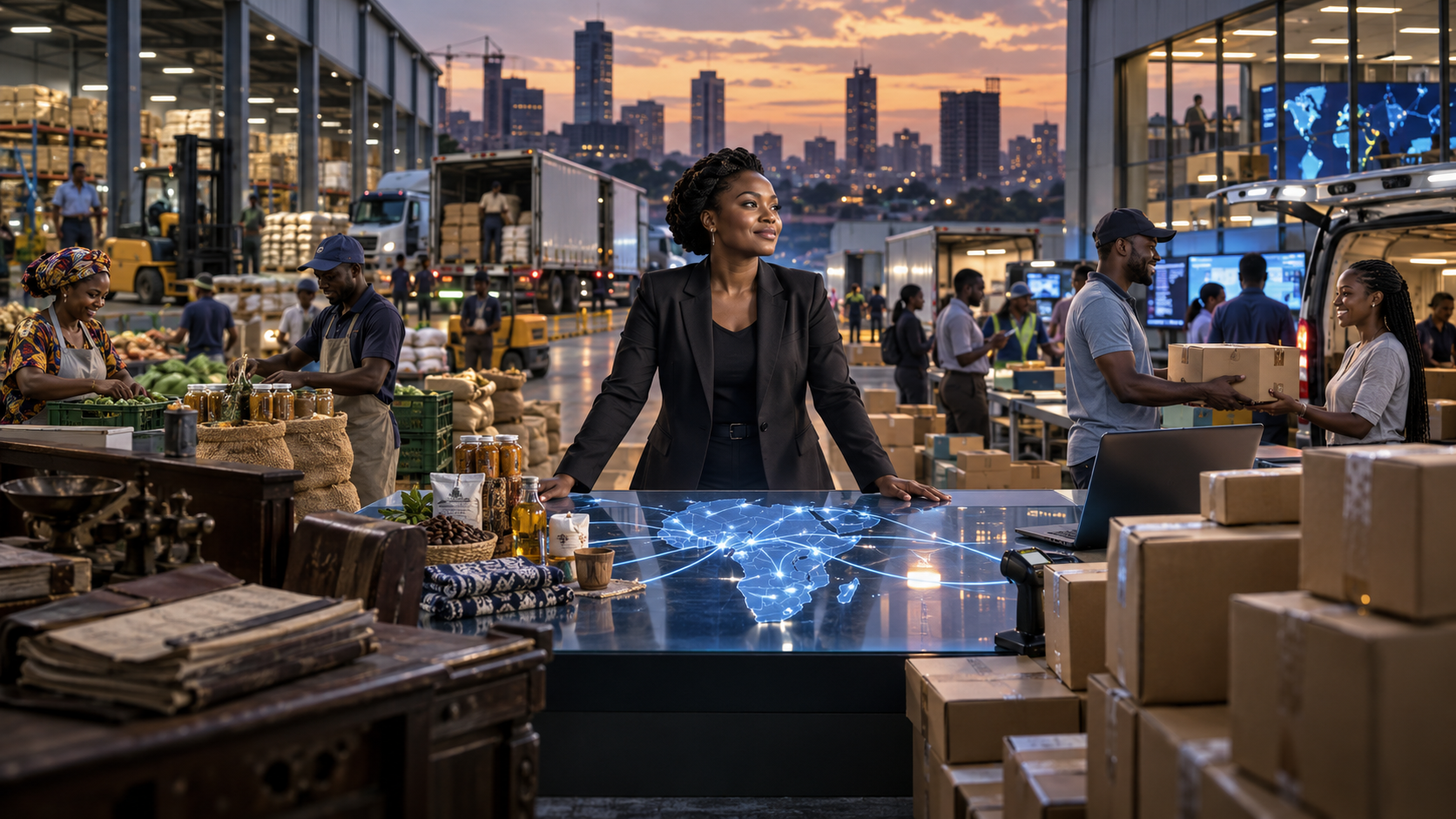
Cross-border commerce in African markets contains many of these conditions. Deals frequently move through telephone calls and personal contacts. That process looks inefficient on paper, yet the broker may know that a particular route is unreliable this week or that a buyer has begun delaying payments. Software does not arrive with that knowledge installed.
African and Black entrepreneurs have built significant companies around logistics, staffing and technology integration, areas that receive less public attention than consumer products. Their experience matters here because many emerging platform opportunities sit inside other businesses’ operations. The work is often specific to an industry and difficult to explain in a short pitch. It can also be difficult for competitors to reproduce once a company has accumulated years of transaction records.
Marketplace economics
Gross merchandise value tells investors how much activity passed through a platform. It does not reveal whether that activity produced an attractive business.
A customer who orders twice a week gives a company many chances to recover the cost of acquiring that account. A customer who returns every three years offers far fewer. Frequency therefore matters, although repeated use loses some of its value when discounts are required every time.
Transactions can also leave the platform. A homeowner may find a contractor through an app, pay the platform once and arrange every later job privately. The company funded the introduction. The continuing relationship produces no further revenue.
Platforms try to prevent that leakage by making their payment protection or workflow software useful after the first transaction. The fee has to feel justified. Otherwise, buyer and seller exchange telephone numbers and leave.
Supplier growth can be equally deceptive. Adding thousands of vendors may increase selection while making reliable sellers harder to identify. Investors need to examine what customers receive, how often orders fail and what happens after a complaint. Those details are usually scattered across operating data rather than displayed in the headline transaction figure.
One actual transaction can expose weaknesses that an investor presentation hides. Follow the customer from search to payment and delivery. Note where the platform becomes essential. Then look at the failures: the refund, the undelivered order, the supplier who was paid late. The company carrying those problems may be building valuable infrastructure. It may also be accumulating costs that its headline growth figures barely acknowledge.
Frequently Asked Questions
What does “the death of the middleman” mean?
It describes the use of technology to connect buyers and sellers directly. In many markets, a digital platform now performs work once handled by an individual broker.
Why can a platform become larger than a traditional intermediary?
Software allows the company to handle transactions across many locations at once. Each transaction also produces information about demand, payment behaviour and service quality. A local broker operates with a much smaller pool of relationships.
Which figure matters most when assessing a marketplace?
No single figure settles the question. Gross transaction value shows scale, while revenue retention indicates what the platform keeps. Repeat use without heavy discounts is especially important because it shows whether customers return for the service itself.
Do the best opportunities exist in industries that still use brokers?
Sometimes. A broker may survive because the market depends on judgement, credit or local knowledge that software has not captured. Founders need to understand that work before deciding which part can be digitised.
Which sectors remain open to new platforms?
Wholesale commerce and freight still contain significant gaps. Construction procurement and African cross-border trade also depend heavily on fragmented suppliers and informal payment arrangements. Each market presents different risks, so the same marketplace model will not travel cleanly across all of them.