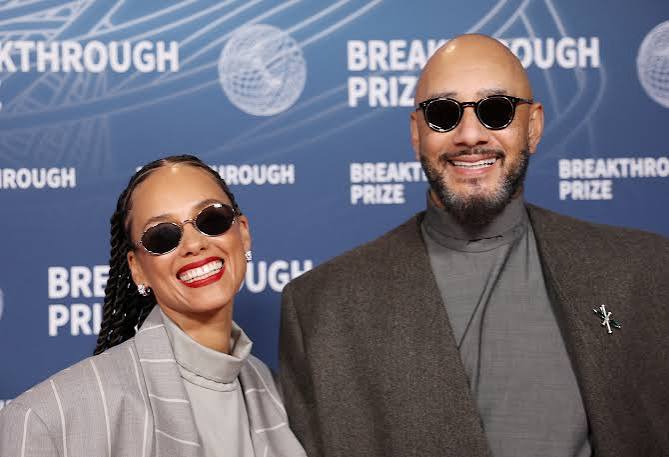
At two Bonhams auctions in New York this November, some owners will see a new option on the paperwork. They may send at least 1% of the hammer price—or $500, when that is higher—to the living artist who made the work. Bonhams has promised to match the percentage.
An owner who declines will face no penalty and breach no federal rule. The sale will proceed in the usual way, with the artist receiving nothing from it. The Deans’ Choice, created by Bonhams with Kasseem “Swizz Beatz” Dean and Alicia Keys through their Dean Collection, puts that familiar outcome in front of the seller as a choice.
Its debut during Bonhams’ 20th- and 21st-century art sales will be closely watched, in part because of the couple behind it. Celebrity, though, is not the hard part. The hard part comes when a collector who speaks warmly about supporting artists sees the cost of that support written in dollars.
Take a work that reaches a hammer price of $100,000. A consignor selecting the minimum would give $1,000, and Bonhams would add the same amount. The artist would receive $2,000 before any applicable taxes or deductions. A $200,000 result would yield $4,000 under the same arrangement.
Those sums are modest beside the value of the sale. They are also more than the artist is generally entitled to receive under US law.
The inspiration behind The Deans’ Choice came when we realized that living visual artists weren’t participating in the re-sale of their works at auction or secondary market. — Kasseem “Swizz Beatz” Dean and Alicia Keys
“Participating” is a revealing choice of word. A painting bought early in a career can return to auction after years of exhibitions and critical attention. Perhaps a museum has acquired another work. Perhaps the artist has kept producing and found a larger audience. The buyer who owns the earlier painting is in a position to collect the increased value. The artist may have done much of the work that made the increase possible.
Copyright offers little help with this particular transaction. It may allow the painter to control certain reproductions or licences involving the image. Once the canvas has been sold, the first-sale doctrine generally permits its lawful owner to sell that object without reopening negotiations with the copyright holder.
A recording can earn through streams, performances and licensing. Books continue to sell in multiple copies. The economics of a unique painting are less forgiving: the first sale may be the artist’s only payment for the object, however many times it changes hands or however high its price later climbs.
Dean and Keys have approached the problem from a music background, where recurring payments are part of the business. An auction does not function like a stream or a licence, and the legal rights are different. Still, a musician would recognise the frustration at the centre of the proposal. Somebody else can go on earning from the value attached to your name after your own payment has stopped.
The American Exception Is Worth Billions
California tried to give artists a legal stake in resales. Its Resale Royalty Act generally required a 5% payment on covered transactions, but litigation involving Christie’s, Sotheby’s and eBay eventually reduced the law to a narrow historical remnant. The Ninth Circuit held that the federal Copyright Act pre-empted claims involving sales after 1978.
Congress has taken up federal proposals and let them lapse. In 2013, the US Copyright Office reconsidered its earlier opposition to resale royalties and said Congress could consider legislation. American visual artists are still waiting for a general droit de suite, the “right to follow” a work through later sales.
They are waiting in the world’s largest art market. US sales totalled $26 billion in 2025 and accounted for 44% of the global trade, according to the Art Basel and UBS Global Art Market Report 2026. Worldwide public-auction sales rose 9% to $20.7 billion, driven by activity at the expensive end.
The United Kingdom takes another approach. Its Artist’s Resale Right covers qualifying transactions involving art-market professionals and uses a sliding scale that begins at 4% for the first band of the sale price. An eligible British artist does not depend on the seller feeling generous that day.
Bonhams is proposing a combined minimum of 2%, divided between itself and the consignor. The programme is smaller in scope and softer in force than the British system. It can nevertheless answer a question that has hovered over the American debate: how difficult is it, in practice, to include the artist in an auction settlement?
The house already identifies the consignor, records the hammer price and distributes the proceeds. It will now confirm the artist’s participation and arrange another payment. Bonhams has not said how many consignors it expects to join or what it has budgeted for matching contributions. Those omissions matter because a programme can be easy to administer and still reach very few artists.
Black artists have a particular reason to care about the answer. Many entered the market at prices shaped by their exclusion from powerful galleries, museums and collections. Later recognition can lift demand for older works with startling speed. By then, some of the people holding those works acquired them before institutions caught up.
The auction price does not appear from nowhere when the paddles rise. It has been forming through exhibitions, scholarship, conversations among collectors and the artist’s continuing practice. Sometimes a community sustained interest in the work long before major institutions considered it important. The final bid turns all of that activity into a number, then sends the proceeds to the current owner.
For centuries the saleroom has been where value is recognized. The Deans’ Choice with Bonhams extends that recognition to the artists themselves—not as a gesture, but as a working part of how we sell. — Seth Johnson
Johnson’s claim will become tangible on the settlement statement. Collectors often present themselves as patrons, a description that can include genuine support for studios, exhibitions, and careers. Resale introduces a less comfortable calculation. Giving money to the artist reduces what the owner takes home unless a higher bid makes up the difference.
The owners with the largest gains may prove the least predictable. They can afford a contribution, certainly. They also have the most to protect. A rush of participation among lower-priced lots would send money to working artists and deserve recognition, but it would leave the most contentious part of the market largely undisturbed.
Bonhams is taking a financial risk of its own. Every match comes from the auction house, and no public projection shows how large the bill might become. The initiative may help Bonhams win consignments from artists, estates and collectors who care about resale payments. Auction houses compete intensely for desirable works; a moral distinction becomes commercially important when it influences where those works go.
One practical problem remains even after a successful sale. A painting may generate a payment at Bonhams and none when it next appears at a rival house. Another artist in the same auction might miss out because the owner refused. No entitlement travels with the work, which leaves coverage dependent on the venue and the consignor.
The Evidence Will Be in the Settlements
Bonhams can help the market judge the experiment by releasing figures after the November auctions. How many eligible sellers opted in? How much did artists receive? Were the payments confined to less expensive lots, or did owners share proceeds when the gains became substantial? The percentages selected by consignors would reveal whether the 1% floor became the norm or merely a starting point.
Even a disappointing result would be informative, though perhaps not flattering. Years of broad agreement about supporting artists would have met a simple payment request. The distance between what collectors endorse and what they fund would be there in the numbers.
A strong take-up would give Bonhams’ rivals something harder to dismiss than a campaign announcement. They could see the administrative cost, the effect on consignments and the amounts accepted by sellers. Congress would have current American transactions to examine the next time a federal resale right is proposed.
For artists, legislation remains a long route with an uncertain destination. Those who already have bargaining power may negotiate resale clauses into private contracts. Detailed ownership and exhibition records make later transactions easier to trace. Artist-led organisations could assist with collecting payments under agreements. None of these tools is evenly available, especially to artists at the early stage when collectors can acquire work cheaply.
That early sale is the source of the problem. It occurs before anyone knows how far the artist’s career will travel. Years later, a large auction result can look like a reward for the owner’s foresight. It can also reveal how much value accumulated after the artist left the transaction.
The Deans’ Choice will not reach backwards into those earlier resales. It gives sellers no obligation to say yes in November. For once, however, the artist’s absence from the payout will not pass unnoticed in the paperwork.
Questions the November Auctions Should Answer
Will every living artist whose work is sold receive money?
Only sales chosen by the consignor will qualify, and the artist must agree to participate. An artist cannot use the programme to demand a percentage from an unwilling seller or carry that claim to another auction house.
Does the payment change who owns the copyright?
No copyright transfer is required. The payment relates to the sale of the physical artwork, while reproduction and licensing rights remain governed by copyright law and any separate agreements.
What would meaningful participation look like?
Bonhams has announced no benchmark. A headline count of participating sellers will reveal little without the prices of the works and the amounts passed to artists. Uptake among consignors realising substantial gains would provide the clearest indication that the idea can survive beyond sympathetic, low-cost cases.