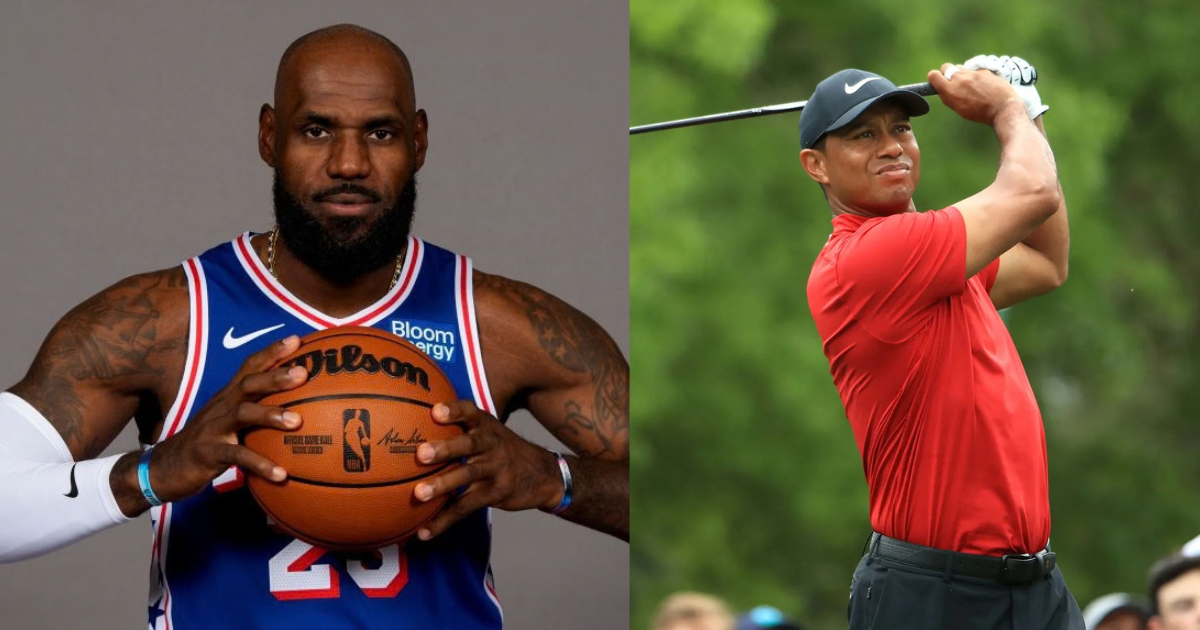
LeBron James is reportedly giving up a salary above $50 million for a two-year, $8 million deal with Philadelphia. At 41, he says he chose the 76ers for another chance at a championship. The decision makes more sense when the playing contract is put beside his estimated $1.4 billion fortune. James’s story, and Magic Johnson’s, belongs to a small but growing record of Black athletes whose wealth now comes largely from business. Tiger Woods offers a related comparison: he is also a billionaire athlete, though he has described his mixed heritage as “Cablinasian.”
Forbes identifies four athlete billionaires: Michael Jordan, LeBron James, Tiger Woods and Magic Johnson. Jordan was named in 2014; James and Woods reached the milestone in 2022; Johnson followed in 2023. The list is small, and the figures are estimates. But the business question is clear: how did sporting success translate into fortunes that outlast a playing career?
The Defining Play: LeBron Chose a Contender Over a Bigger Contract
James had considered retiring after the Lakers’ playoff exit. He chose Philadelphia instead, saying he wanted another chance to win a championship. Reuters reported that he passed up bigger paydays; ESPN reported the two-year, $8 million deal. James said money did not drive the choice.
The pay cut is striking, but it is not the source of James’s wealth. Forbes estimates that he has earned more than $500 million before tax in NBA salary and more than $1 billion off the court through endorsements and ventures. Some of those partnerships included equity, such as his stake in Beats by Dre. Forbes’s $1.4 billion net-worth figure is an estimate, not a public accounting of James’s assets.
Their Strategy: Convert Reach into Ownership
The three careers show different versions of the same shift. A playing salary can provide capital; fame can bring customers, partners and attention. The fortunes grew when those advantages were connected to businesses and ownership stakes.
Magic Johnson Paired Community Insight with Investment Capital
Johnson’s path is the clearest case of playing income becoming a starting point rather than the main source of wealth. Forbes estimates his net worth at $1.6 billion and says most of it comes from his 60% stake in EquiTrust, an insurance company. His Lakers career paid about $40 million in total.
Johnson also looked for business in places he believed other retailers were ignoring. By 2000, Urban Coffee Opportunities, his 50-50 partnership with Starbucks, had 16 stores. The first Washington-area store opened in Hyattsville, Maryland. The Washington Post reported that Starbucks chairman Howard Schultz said the stores were profitable. Johnson said companies were hesitant to enter minority communities despite the demand he saw there.
Companies still have that fear of coming into minority communities for some reason. — Magic Johnson
Starbucks was one venture, not the main source of Johnson’s fortune. In a later partnership with Canyon Capital, he described the arrangement as a match of skills: Canyon brought investment expertise; he brought knowledge of the communities where the fund planned to operate.
Tiger Woods Built Wealth Beyond Golf Winnings
Woods’s fortune dwarfs his tournament prizes. Forbes estimates his net worth at $1.5 billion and his pretax career earnings at nearly $2 billion, including a PGA Tour-record $121 million in prize money. In a 2022 report, Forbes said tournament winnings made up less than 10% of his overall take. Endorsements supplied much of the rest.
He has also put his name and money into golf-course design, event production and PopStroke, a mini-golf chain. Woods co-founded TMRW Sports with Rory McIlroy and executive Mike McCarley. The company’s partnership with the PGA Tour produced TGL, which began play in 2025. It is too early to know the league’s long-term returns or Woods’s personal earnings from it.
move our sport into primetime on a consistent basis — Tiger Woods
LeBron James and Maverick Carter Built a Platform, Then Faced Its Costs
James and business partner Maverick Carter built SpringHill into a media company. Its finances show what reach cannot guarantee. Documents reviewed by Bloomberg showed losses of $17 million in 2022 and $28 million in 2023, when the company recorded $104 million in revenue. SpringHill and Fulwell 73 completed their merger in 2025, with existing investors putting another $40 million into the combined business.
The reported losses do not explain why the merger happened, and they do not establish how the combined company has performed since. They do show that a famous founder and access to talent did not, by themselves, make SpringHill profitable in those years.
The Practice Worth Borrowing
The business lesson is not simply to “build a brand.” Johnson spotted customers he believed retailers were missing and partnered with investors who could supply capital. Woods built companies around a sport he knows. James and Carter used their audience and relationships to launch a media business, then had to confront its losses.
For a founder, the practical questions are about the deal: What does each partner own? Who runs the company? What results would justify putting in more money? Fame can help a business get noticed. Ownership terms and operating results determine what that attention is worth.
Frequently Asked Questions
How did LeBron James build billionaire wealth?
Forbes estimates James’s net worth at $1.4 billion. It attributes more than $1 billion in pretax earnings to off-court ventures and endorsements, alongside more than $500 million in NBA salary. These are estimates, not a public balance sheet.
Is Tiger Woods a billionaire?
Yes. Forbes estimates Woods’s net worth at $1.5 billion. His fortune includes endorsements and business interests as well as golf winnings. Woods has described his mixed heritage as “Cablinasian.”
What is the main source of Magic Johnson’s wealth?
Forbes says most of Johnson’s estimated $1.6 billion fortune comes from his 60% stake in EquiTrust. The Starbucks partnership was one of his ventures, but Forbes does not identify it as the main source.
Did SpringHill make money?
Documents reviewed by Bloomberg showed losses in 2022 and 2023. SpringHill later merged with Fulwell 73, but the available reporting does not establish that the losses alone caused the merger.