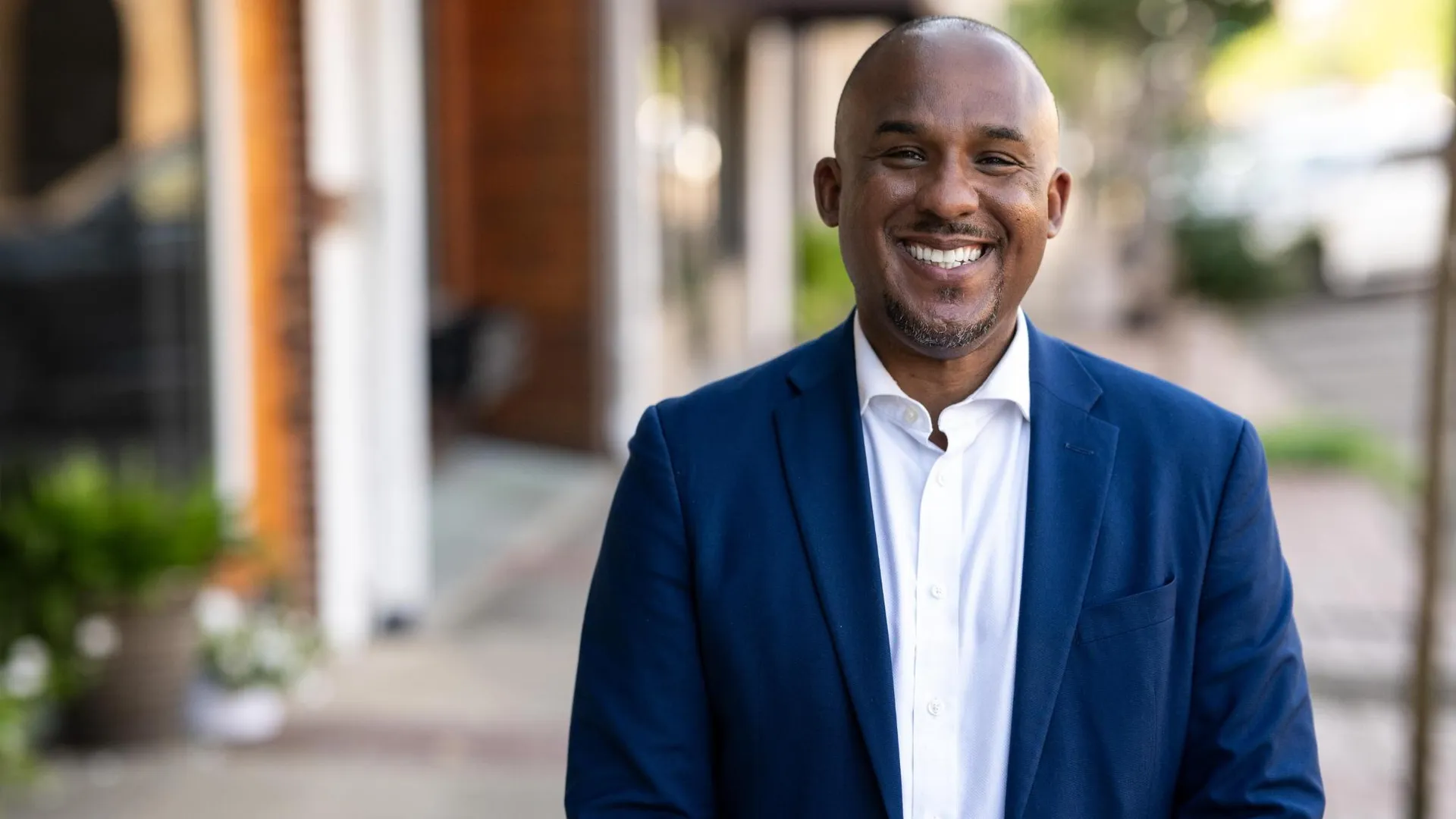
At Tougaloo College, the choir sang “Lift Every Voice and Sing.” A recording of Sam Cooke’s “A Change Is Gonna Come” played before Scott Colom took the stage. The Associated Press had called Mississippi’s U.S. Senate race for him that day. Colom’s win gives the state a new voice in federal decisions on spending, judges and laws that affect employers and families. He is Mississippi’s first Black senator since Reconstruction.
The AP reported Colom ahead by 4,669 votes among 962,237 counted. He received 49.2%; Republican incumbent Cindy Hyde-Smith received 48.7%. Independent candidate Ty Pinkins was also on the ballot. Absentee and provisional ballots kept the result unresolved for days.
The Campaign Had to Reach Beyond Its Strongholds
Colom had a base in the Delta and Jackson. He also drew support outside those areas, including from college students, white moderates and conservatives, The Washington Post reported. That mix mattered in a state Donald Trump carried by 23 points in 2024, where Republicans had long held the advantage in statewide races.
Colom travelled across Mississippi for town halls and campus events. His wife, Nadia, helped organize a taco truck that visited college campuses. The “pick another protein” theme came from a campaign ad responding to Hyde-Smith’s remark that people facing high beef prices had “so many proteins to choose from.” At Tougaloo, students drove classmates to check on their ballots while officials were still counting.
The gatherings varied in size. Colom said some donor calls went unanswered and fewer than 10 people attended some town halls. He kept travelling. At the victory celebration, he recalled meeting people who worked multiple jobs to cover their bills. Those conversations were a quieter part of a campaign that also produced widely shared ads.
The campaign’s principal committee reported $4.4 million in receipts and $3.38 million in disbursements between August 21, 2025, and October 14, 2026. It had about $1.02 million cash on hand at the end of that period.
The reported spending covered staff, travel, communications and compliance. Volunteers and campus contacts worked face to face. One could help a student check a ballot or tell a neighbor where to vote; an ad could reach people who had never met Colom. The campaign used both forms of outreach.
Colom’s campaign said he had held more than 50 town halls. Some meetings were small. The figure gives a measure of how often he appeared before voters; it does not tell us how many people each event reached.
National Democrats stepped in as the race tightened. The Democratic Senatorial Campaign Committee announced a $500,000 coordinated ad buy with Colom in late October. Senator Raphael Warnock also campaigned with him.
What the Senate Seat Puts Within Reach
Colom can vote on federal legislation, serve on committees, take part in appropriations and vote on judicial nominees. These responsibilities give senators ways to raise state priorities in Washington. They do not let one member direct federal spending alone. A proposal needs support in Congress; agencies then carry out program Congress approves.
Colom said he wanted a seat on the Senate Agriculture Committee because Mississippi farmers need a senator who will answer to them. That is his stated goal; assignments will come after the new Congress begins. His platform also called for congressional votes on tariffs and proposed rules for new data-center construction, including requirements that companies pay for power and water and put local-hiring commitments in writing.
The committee assignment could matter to farmers and rural businesses. Federal agriculture policy affects markets, costs and support programs. Energy and infrastructure decisions show up in power bills, construction costs and access to public contracts. A senator on a relevant committee can ask questions and negotiate over legislation. A local project still has to clear the rest of the process.
Colom knows how Senate procedure can affect an appointment. President Joe Biden nominated him in 2022 for a federal district judgeship in northern Mississippi. Hyde-Smith withheld the home-state “blue slip,” a Judiciary Committee custom that can block a district-court nominee from advancing. Colom’s nomination stalled.
At Tougaloo, U.S. Representative Bennie Thompson described what the election meant to him:
“I now have a partner in Washington. I now have a partner who understands that health care is important in Mississippi.”
— Bennie Thompson
Thompson was speaking about healthcare. His remark also points to the value of relationships in Washington. A senator can coordinate with House members, local officials, universities, hospitals and employers. Those connections can bring local concerns to federal decision-makers; legislation and negotiations determine what follows.
Representation Has an Economic Dimension
Federal policy affects the conditions under which businesses operate. Credit, public investment, hiring and infrastructure all face decisions in Washington. Representation can influence those choices. It cannot supply customers or keep a company solvent. Owners still have to find capital and markets that fit their businesses.
Tougaloo’s role that night was more than providing a venue. Students had helped classmates check ballots. Thompson, who has represented Mississippi in Congress for decades, spoke to the crowd. Colom addressed supporters at a historically Black college with deep ties to the state’s civic life. The campaign’s work and the campus community met in the same place.
Constituents will judge Colom by what he does after the campaign ads come down: whether he listens to local officials, advances the policies he promised and brings Mississippi’s needs into federal discussions. Business owners may watch his positions on agriculture, infrastructure, energy and hiring. Those issues will compete with requests from other states and senators.
Colom described the moment simply:
“All I did was have the courage to imagine a night like this.”
— Scott Colom
His campaign took him from small town halls to a crowded celebration at Tougaloo. The Senate seat gives him a place in decisions that will affect the state. Mississippians will see what he does with it in the votes he casts, the committees he joins and the priorities he moves forward.
Frequently Asked Questions
Who Is Scott Colom?
Scott Colom is a Mississippi lawyer and district attorney who won the state’s 2026 U.S. Senate race, according to the Associated Press. He had served as district attorney for a four-county circuit in northeast Mississippi since 2016. He is the state’s first Black senator since Reconstruction.
What Made Colom’s Victory Historic?
Colom became the first Black person elected to represent Mississippi in the U.S. Senate since Reconstruction. Hiram Revels and Blanche K. Bruce served during the 19th century. Colom is also the first Black person popularly elected to statewide office in Mississippi since Reconstruction.
How Close Was the Race?
When the Associated Press called the race, Colom led Hyde-Smith by 4,669 votes among 962,237 counted. He received 49.2% of the vote to Hyde-Smith’s 48.7%. Independent candidate Ty Pinkins also ran.
How Much Did Colom’s Campaign Raise?
The FEC reported $4.4 million in receipts for Colom’s principal campaign committee between August 21, 2025, and October 14, 2026. The committee reported $3.38 million in disbursements and about $1.02 million cash on hand at the period’s end.
What Can a U.S. Senator Do for Mississippi’s Economy?
A senator can vote on legislation, serve on committees, take part in appropriations and advocate for federal projects. Those actions can affect businesses and communities, but one senator cannot guarantee that a specific project receives funding.