
Somewhere in six different states, a bill lands in someone’s mailbox with a name on it: BGE, ComEd, PECO, Pepco, Atlantic City Electric, Delmarva Power. Different logos, same parent company. Behind all of them, running the operation since December 31, 2022, is Calvin Butler, the first Black CEO in Exelon Corporation’s history and one of just nine Black executives currently leading a Fortune 500 company.
That fact alone would carry most profiles. Butler treats it more like a starting point than a headline. Since taking over, he’s spent his time on something less glamorous than firsts and milestones: making sure a grid serving 10.7 million customers stays affordable and dependable while the entire energy industry gets rewired underneath him.
Growth Without the Sticker Shock
The easy version of this job would have been to just ride the growth. Exelon pulled in $23 billion in revenue last year, up 6% from the year before, and the company’s market cap now sits close to $47 billion. A lot of CEOs would take those numbers and call it a win. Butler went looking for $350 million in operational cuts at PECO and BGE instead — not because the company needed the savings, but because he didn’t want customers absorbing a rate hike they hadn’t earned.
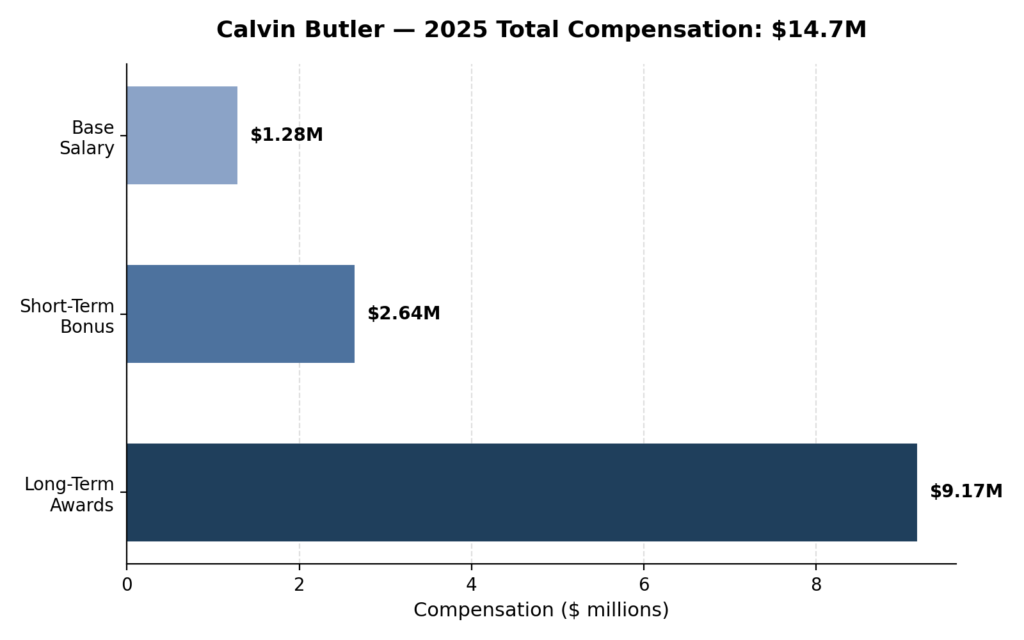
That same logic sits underneath the biggest number of his tenure: a $41.7 billion plan to rebuild the grid’s infrastructure over the coming years. This isn’t spending for the sake of spending. It’s the unglamorous work of making sure power lines, substations, and transmission systems can hold up under demand that didn’t exist a decade ago.
Betting on the Grid Before Silicon Valley Asks
The clearest example of how Butler thinks is the AI problem nobody outside the industry is really talking about. Data centers need enormous amounts of power, and Exelon is currently sitting on a 36-gigawatt pipeline of requests from companies wanting to build them. Eighteen gigawatts of that is considered likely to actually happen. Most utilities in that position would just pass the buck to ratepayers and let everyone else worry about it later.
Butler didn’t. He put together financial agreements requiring developers to post more than a billion dollars in deposits and pay for their own substation upgrades before Exelon lifts a finger. It won’t make anyone’s front page next to a new chip announcement. But it’s the reason ten million households aren’t quietly subsidizing a tech industry’s power bill.

A Leader Who Shows Up in More Than One Room
None of this happens in a vacuum, and Butler doesn’t operate in just one lane. He’s Vice Chair of the Edison Electric Institute, which puts him in the room for national utility policy, and he sits on the boards of Emerson Electric, Battelle, and Argonne National Laboratory.
Outside the energy world entirely, he chairs the board of the Cal Ripken, Sr. Foundation and co-founded TouchPoint Baltimore. Years of putting resources and mentorship into communities that don’t usually get either. It’s easy to separate that from the day job. Butler doesn’t seem to.
Take away the gigawatts and the earnings calls, and the story underneath is pretty ordinary, in the best sense of the word: someone who had every excuse to coast and didn’t. He grew a $47 billion company without forgetting who actually pays the bill. He met a once-in-a-generation demand surge by protecting the grid instead of cashing in on it. And whether it’s a boardroom, a lab, or a community foundation, he keeps showing up in the same way. Not flashy. Just consistent — which, in an industry this big, might be the harder thing to pull off.