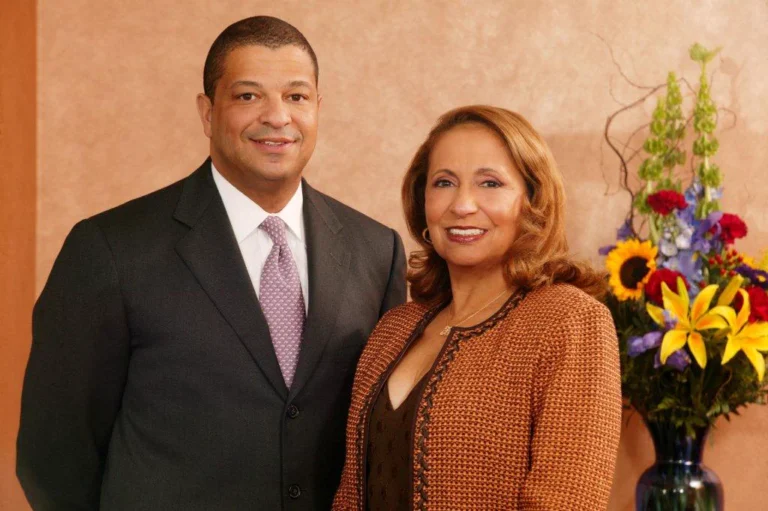
ForbesBLK published its first national assessment of 25 Black-owned businesses to watch on September 28, 2026. The companies employ more than 16,000 people collectively, Forbes reported. Coca-Cola Beverages Florida alone reported $2.2 billion in revenue for 2025. The group spans food production, distribution, construction, manufacturing, technology and health care, offering a view of how some Black-owned firms have built operations at national scale.
The headline’s “first” refers specifically to ForbesBLK’s inaugural 25-company assessment. It is not the first national ranking of Black-owned businesses. Black Enterprise began its BE 100s in 1973 and has ranked the nation’s largest Black-owned companies for more than 45 years. ForbesBLK also did not publish a numbered order by revenue. Its selection considered revenue alongside growth, longevity and industry reputation. This feature examines that first ForbesBLK national ranking as a group of selected companies, not as a sales leaderboard.
What the Ranking Measures
ForbesBLK’s criteria generally required established businesses to have annual revenue between $75 million and $2.5 billion. Venture-backed startups below that revenue threshold could qualify with a valuation of at least $100 million. Forbes says it consulted business organizations, venture-capital firms and its own journalists, then checked financial information against company data, news reports and third-party sources, including PitchBook.
The 25 companies are Baldwin Richardson Foods, Cityblock Health, Coca-Cola Beverages Florida, DGN Enterprise, Esusu, Fair Oaks Foods, Heartland Coca-Cola, H.J. Russell & Company, Incredible Health, James Group International, Kepler Computing, McKissack, Moody Nolan, Novig, Ossium Health, Promise, Saalex Corporation, SparkCharge, Squire Technologies, Sun State International, The Anderson-DuBose Company, The Chemico Group, Thompson Hospitality, Vizcom and Voltava.
The selection is a small slice of a much wider business population. The U.S. Census Bureau’s 2024 Annual Business Survey, which covers reference year 2023, counted 201,000 Black-owned employer firms and recorded $249 billion in receipts. These firms made up 3.4% of U.S. employer businesses. Brookings’ analysis of Census data found that the number of Black-owned employer businesses grew 62% from 2017 to 2023; Black Americans represented 14.4% of the U.S. population in 2023.
The ForbesBLK companies are not typical small businesses. They were selected because they had substantial revenue, growth, longevity, reputation or, for some startups, valuation. Their value as a group is in the range of business models they reveal: firms that supply major brands, contractors that win institutional work, and technology companies seeking to solve specific operational problems.
Suppliers Grow Behind Familiar Brands
Several companies on the list sell to businesses and institutions rather than directly to consumers. They make products, distribute supplies or manage parts of larger companies’ operations. Repeat contracts can support growth, but meeting those contracts requires inventory, facilities, staff and dependable delivery.
Coca-Cola Beverages Florida is the clearest example of billion-dollar revenue with a stated period. Forbes reported that the Tampa-based bottler generated $2.2 billion in revenue in 2025, employed more than 5,000 people and served over 20 million customers. Founder Troy Taylor worked as an investment banker and advised on a Coca-Cola distributor deal in 1995. About a decade later, he purchased distribution rights in Florida. The 2025 figure shows the size of the operation; the territory, bottling capacity and delivery network make that scale possible.
Heartland Coca-Cola reached distribution through a different route. Former NBA player Junior Bridgeman built a restaurant-franchise business that included more than 500 Wendy’s, Chili’s and Pizza Hut locations at its peak in 2015. Forbes reports that in 2016 he sold most of those restaurants for an estimated $250 million and used the proceeds to acquire Coca-Cola distribution territory across Kansas, Missouri and Illinois. His son Justin, who joined the firm in 2017, became CEO in April 2025. Forbes says Heartland opened a $400 million production campus in Olathe, Kansas, in 2025. The campus is an investment in capacity, not a revenue result.
Baldwin Richardson Foods makes sauces, syrups, toppings, drinks and fillings for food and beverage companies, including McDonald’s and Kellanova. Forbes describes its sales as an estimate of $600 million, without specifying a reporting year. The family firm expanded through acquisitions: Eric Johnson bought Baldwin Ice Cream in 1992 and Richardson Foods five years later, then combined the businesses. His daughters, Erin Tolefree and Cara Hughes, are now co-owners. Tolefree became CEO in 2023; Hughes became chief customer and community impact officer in 2024.
The Anderson-DuBose Company distributes food and other products to McDonald’s and Chipotle restaurants across several states. Forbes says it reportedly generated more than $800 million in revenue in 2024. Warren Anderson and Steve DuBose acquired distribution rights from Martin Brower in 1991; Anderson later bought out his partner. Forbes reports that the company opened distribution centres in Tennessee and Florida in 2026. Its business depends on moving food and supplies to restaurant locations on schedule, work that most diners never see.
Anderson described the turn from journalism to business ownership in a 2022 video interview, as quoted in Forbes:
I didn’t dream of being an entrepreneur. I just knew after I got fired, I never wanted to work for anybody. — Warren Anderson
Thompson Hospitality runs cafeterias for corporate clients, serves 18 historically Black colleges and universities, and owns restaurant franchises. Forbes gives its revenue as $925 million without naming a reporting year. Its mix of institutional contracts and consumer-facing restaurants spreads the business across different customer groups. The undated figure should not be compared directly with annual revenue figures that specify a year.
Construction and Manufacturing Need Capacity
Construction, manufacturing and logistics firms form another cluster in the selection. These companies work on large projects, supply manufacturers or handle complex operations. Contracts can bring scale, but growth requires skilled staff, equipment, financing and the ability to meet demanding schedules.
DGN Enterprise operates five companies, including businesses focused on electrical work, glass and fire suppression. Forbes estimates its 2025 revenue at $369 million and says DGN expects to approach $1 billion in 2026. That is a forecast, not a completed result. Its TW Constructors unit has worked on data centres for clients including Google. Forbes reports that founder Todd Weaver borrowed $150,000 from construction executive Bob Clark to start his firm and repaid it in six months. Clark later introduced Weaver to World Wide Technology, now one of TW’s customers. The relationship helped connect a smaller contractor to a large technology client.
H.J. Russell & Company manages construction projects, including data centres in Virginia and Texas. Forbes lists revenue of $500 million but does not specify a reporting period. The company’s past work includes Atlanta’s Mercedes-Benz Stadium and the Smithsonian National Museum of African American History and Culture. McKissack, founded in 1905, has worked on more than 6,000 projects, according to Forbes. It expects 2026 revenue to reach $118 million. That is a forecast. Its long history and project-management experience help it compete for projects that can take years to plan and complete.
James Group International has grown from trucking into a supply-chain company offering transportation, warehousing, assembly and sequencing services to manufacturers including Ford and General Motors. In June 2026, it acquired EnovaPremier, which handles tire and wheel assembly. Forbes reports that combined annual revenue exceeded $1 billion after the acquisition, without specifying the period measured. The deal added a service line and customer relationships; integrating the operations is part of the work that follows a purchase.
Voltava, owned by former NFL player Bruce Smith, combines Detroit Manufacturing Systems with Android Industries and Avancez. Forbes reports that the companies merged in December 2025 and describes the combined automotive supplier as having $2.3 billion in revenue, without naming the period. Voltava serves General Motors, Ford, Stellantis and Toyota. Forbes says Smith owns the company outright. Its scale grew through a merger that combined operations already serving major automakers.
Saalex shows how a smaller contractor can grow into federal markets. Founded by U.S. Navy veteran Travis Mack in 1999 as an IT consulting firm, it expanded into technology contracting for defense and space programmes. Forbes reported revenue of $178 million in 2025, up 18% from 2024, and noted Saalex’s $75 million acquisition of Spalding Consulting in 2024. In a Federal News Network interview about scaling the company and its employee-ownership model, Mack said:
I’ve got to show up every day changing hearts and minds, showing the innovation and showing how at the end of the day, it’s actually better. — Travis Mack
The quote points to a less visible part of growth: keeping employees invested and convincing customers that a smaller contractor can deliver. Saalex’s revenue increase and acquisition show expansion; its employee-ownership model is one way the company has sought to share that growth.
Newer Firms Measure Reach in Different Ways
Technology and health-care companies often track users, contracts, investment or transactions alongside sales. Those measures can show business activity, but each tells a different story.
Esusu provides a credit-building platform that reports renters’ payment histories and has licensing agreements with real-estate investors including Blackstone and Freddie Mac. Forbes says Esusu’s platform has helped 12 million renters, a company-reported measure, and that the business employs 190 people.
Squire Technologies provides booking, scheduling, payment and marketing tools to more than 3,000 barbershops. Forbes reports that Squire generated $70 million in revenue in the 12 months before publication and processed more than $1 billion in payments in 2023. Payment volume is money moving through the platform, not revenue earned by Squire. That distinction matters when comparing a technology firm with a manufacturer or contractor.
Cityblock Health serves Medicaid and dual-eligible patients. In August 2026, it announced plans to acquire rural health-care provider Homeward Health in an all-stock transaction. Forbes reported that Cityblock announced $116 million in Series E funding at the same time and said its revenue had risen 77% year over year, without specifying the comparison period. The funding is capital raised; the acquisition was a plan, not a completed transaction.
Incredible Health connects nurses with health-care employers. Forbes reported that 1.5 million nurses were using its platform as of December 2025 and that more than 1,500 health-care employers used it. Those figures measure platform reach, not annual revenue. A large user base may help a company compete, but revenue, costs and customer retention determine whether that reach can sustain the business.
Revenue Does Not Show Who Keeps the Value
The selection includes businesses that supply institutions or support large consumer brands. Food producers and distributors supply restaurants. Contractors build data centres and public facilities. Technology firms provide systems used by businesses and workers. These relationships can bring repeat work and access to larger markets. They also require capital, employees and reliable operations.
Revenue measures sales before expenses. It does not show profit, debt, cash flow or the value of an owner’s stake. A distributor can have high sales and high costs for inventory and delivery. A contractor may win a major project but need to pay employees and suppliers before receiving payment. A startup valuation estimates company value in an investment context; it is not annual sales.
Those differences matter when judging whether growth builds wealth. A large customer can help a company win further work. Expansion can create jobs and new capabilities. But if growth depends on costly borrowing or requires owners to give up too much equity, higher sales may not translate into lasting wealth for founders or employees.
The Census figures put the ForbesBLK selection in context. Black-owned employer firms generated $249 billion in receipts in 2023, yet represented 3.4% of U.S. employer businesses. Brookings found that those firms grew quickly from 2017 to 2023 while remaining underrepresented relative to Black Americans’ share of the population. The ForbesBLK ranking shows that some Black-owned firms have built national reach. The wider data show why a list of standouts cannot measure the full state of Black business ownership.
Frequently Asked Questions about Black-Owned Businesses
What does “first national ranking” mean in this article?
It refers to ForbesBLK’s first national 25-company assessment, published in 2026. It does not mean the first national ranking ever published; Black Enterprise began its BE 100s in 1973.
Did ForbesBLK rank the companies by revenue?
No. ForbesBLK selected 25 companies using revenue, growth, longevity and industry reputation, but did not publish them in revenue order. The list is a national assessment, not a numbered sales leaderboard.
How much revenue did Black-owned employer firms generate nationally?
The Census Bureau reported $249 billion in receipts for 201,000 Black-owned employer firms in 2023. Employer firms have paid employees. That national figure covers far more companies than the 25 on ForbesBLK’s list.
Which company reported the highest revenue for a stated year?
Coca-Cola Beverages Florida reported $2.2 billion in revenue for 2025, according to Forbes. Voltava is described as having $2.3 billion in revenue, but its profile does not specify the period measured.
Does revenue show how much wealth a company’s owners have?
No. Revenue is sales before expenses. It does not show profit, debt, cash flow or the value of an owner’s stake. Those measures help show whether company growth is building lasting wealth.