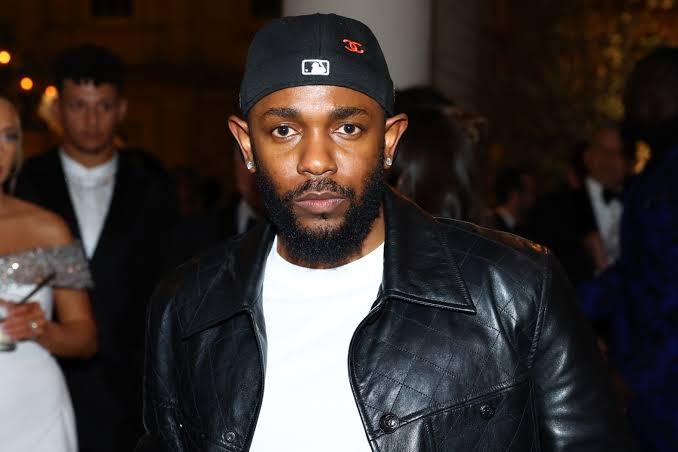
Kendrick Lamar grew up on welfare, food stamps, and Section 8 housing. His mom actually sat him down as a kid to explain how the Housing Authority worked. But here’s what sets Kendrick apart: he turned that reality into something extraordinary without ever flattening it into a cheap stereotype.
He took the local noise, the contradictions, and his rawest memories, and converted them into unshakeable intellectual property.
He didn’t just escape Compton and leave it in his rearview mirror. He bottled those experiences into timeless work. Then, he did the hardest thing for a successful artist to do: he refused to repeat himself. That refusal changed everything. By 2018, his album DAMN. won the Pulitzer Prize for Music. He was the first hip-hop artist in history to pull that off.
Refusing to Choose Between Art and Commercial Scale
By 2015, Lamar had two massive proofs of concept under his belt. good kid, m.A.A.d city debuted at No. 2, selling 241,000 copies in week one. To Pimp a Butterfly went straight to No. 1, moving 324,000 units.
The easy cash-grab was right there. Labels wanted another cinematic narrative like good kid. Critics wanted another complex masterpiece like Butterfly.
Lamar skipped both options.
For DAMN., he deliberately smashed those two worlds together. “The initial goal was to make a hybrid of my first two commercial albums,” he told Rolling Stone. He was open about the risk, too. If the execution failed, the whole thing would blow up.
Execution took time. His longtime producer, Sounwave, described making version after version and endlessly driving around to test the track sequencing just to feel if the emotional landing hit right. If it felt off, they went right back into the studio.
It worked. DAMN. opened with 603,000 units—his biggest first week ever. It bagged five Grammys in 2018 before the Pulitzer board handed him the Music Prize, praising its vernacular authenticity and vivid portrait of modern Black life.
He didn’t just “go commercial.” He forced commercial reach to carry real intellectual weight without snapping under the pressure.
Build From a Thesis, Not Audience Demand
Start with the vision. Figure out the audience later.
Talking to Rick Rubin in 2016, Lamar put it plainly: “If I’m not inspired, I can’t really do the music.”
To Pimp a Butterfly was never designed as a safe, radio-friendly follow-up. Lamar knew jazz, funk, and dense live instrumentation would challenge listeners. It hit No. 1 anyway. The takeaway? Understand your audience, sure. But if you let their expectations drive your creative process, you destroy the exact spark that drew them to you in the first place.
Build for shelf life, not a quick hit.
“I want to continue to have something that’s not microwavable,” he told TIME in 2015.
Butterfly took almost two years to make. Lamar brought in powerhouses like Sounwave, Terrace Martin, Kamasi Washington, and Robert Glasper to just sit with the material and build depth. He invested in a long-cycle approach because he expected the album to pay off over years of repeat listens, not just one week of internet hype.
Never let your last win write your next brief.
Sounwave was blunt about the team’s mindset: after Butterfly, everyone knew they were not making another Butterfly.
So what did DAMN. do? It re-engineered that same ambition into a punchier frame. Tighter structures. Harder hooks. Bigger melodies. Looking across Lamar’s discography, you don’t see cash-in sequels. You see a portfolio of distinct, stand-alone artistic statements.
The Grammy Loss That Could Have Made Him Play It Safe
At the 2014 Grammys, Lamar walked in with seven nominations for good kid, m.A.A.d city. He walked out empty-handed. Macklemore & Ryan Lewis took Best Rap Album for The Heist—a result so upside-down that Macklemore publicly texted Lamar to say he was robbed.
Lamar didn’t respond by chasing institutional approval or tweaking his sound for mass radio appeal. Instead, he spent two years building something weirder, denser, and far harder to put in a box. That album, To Pimp a Butterfly, won Best Rap Album anyway.
Lamar later noted that the 2014 loss would have hurt much worse if he actually believed good kid was the absolute best work he was capable of making. He treated outside recognition for what it really is: a lagging indicator, not a navigation system.
A Network That Compounds Creative Control
Every key relationship in Lamar’s inner circle solves a specific operational problem:
Infrastructure: Anthony “Top Dawg” Tiffith and TDE provided the early runway. In 2012, TDE set up a joint venture with Interscope and Dr. Dre’s Aftermath to handle distribution.
Strategic Vision: Dave Free, a childhood friend, got Lamar’s early tapes to Tiffith, became Lamar’s manager, and evolved into his core creative partner. In 2020, the duo launched pgLang together.
The Talent Pipeline: Baby Keem emerged as a core pgLang artist, winning a Grammy for “Family Ties” alongside Lamar in 2022.
The setup offers total creative freedom: brutally honest feedback, massive distribution power, top-tier collaborators, and a brand built to last past music. Today, pgLang handles everything from music to high-fashion ventures, including writing and directing a Chanel couture project.
Run a “No-Sequel” Audit
Before repeating a launch, campaign, or product that previously killed it, write down the three things people loved most about it. Then ban yourself from using at least one of those exact elements next time around.
Keep the core value. Redesign the delivery.
That is the entire Kendrick Lamar framework. He guards his core perspective, sharp observations, and signature depth while constantly changing the wrapper.
Protect the thesis. Tear up the packaging.
Frequently Asked Questions
Did Kendrick Lamar really grow up in Section 8 housing?
Yes. Interviews with Lamar and his mother confirm his family relied on welfare, food stamps, and Section 8 housing in Compton. Once his career took off, one of his first major moves was helping his mother move out of Section 8 entirely.
What album won Kendrick Lamar the Pulitzer Prize?
DAMN., released in April 2017, took home the 2018 Pulitzer Prize for Music. The board highlighted its vernacular authenticity, rhythmic dynamism, and striking portrait of modern African-American life.
Why was Kendrick Lamar’s Pulitzer Prize historic?
The Pulitzer Music Prize was traditionally reserved for classical compositions, eventually expanding to jazz. Lamar was the first hip-hop artist to ever win it, breaking open one of America’s oldest, most conservative cultural institutions.
What was Kendrick Lamar’s most important strategic career decision?
Refusing to let a hit album dictate his next move. Instead of cloning good kid or Butterfly, he built a hybrid with DAMN., producing his biggest opening week sales and a historic Pulitzer win.
How did Kendrick Lamar respond to losing at the 2014 Grammys?
He leaned further into artistic risk. Rather than playing it safe, he spent two years making To Pimp a Butterfly—an uncompromising, highly complex record that garnered critical acclaim and won Best Rap Album at the following ceremony.
What can entrepreneurs learn from Kendrick Lamar?
Controlled reinvention. Keep a rock-solid core—perspective, quality, and voice—while constantly evolving the format, sound, and delivery. Protect what actually provides value; burn the template whenever necessary.
How successful is Kendrick Lamar today?
As of 2026, the Recording Academy credits Lamar with 27 Grammy wins and 66 nominations, giving him more Grammy wins than any other rapper in history.