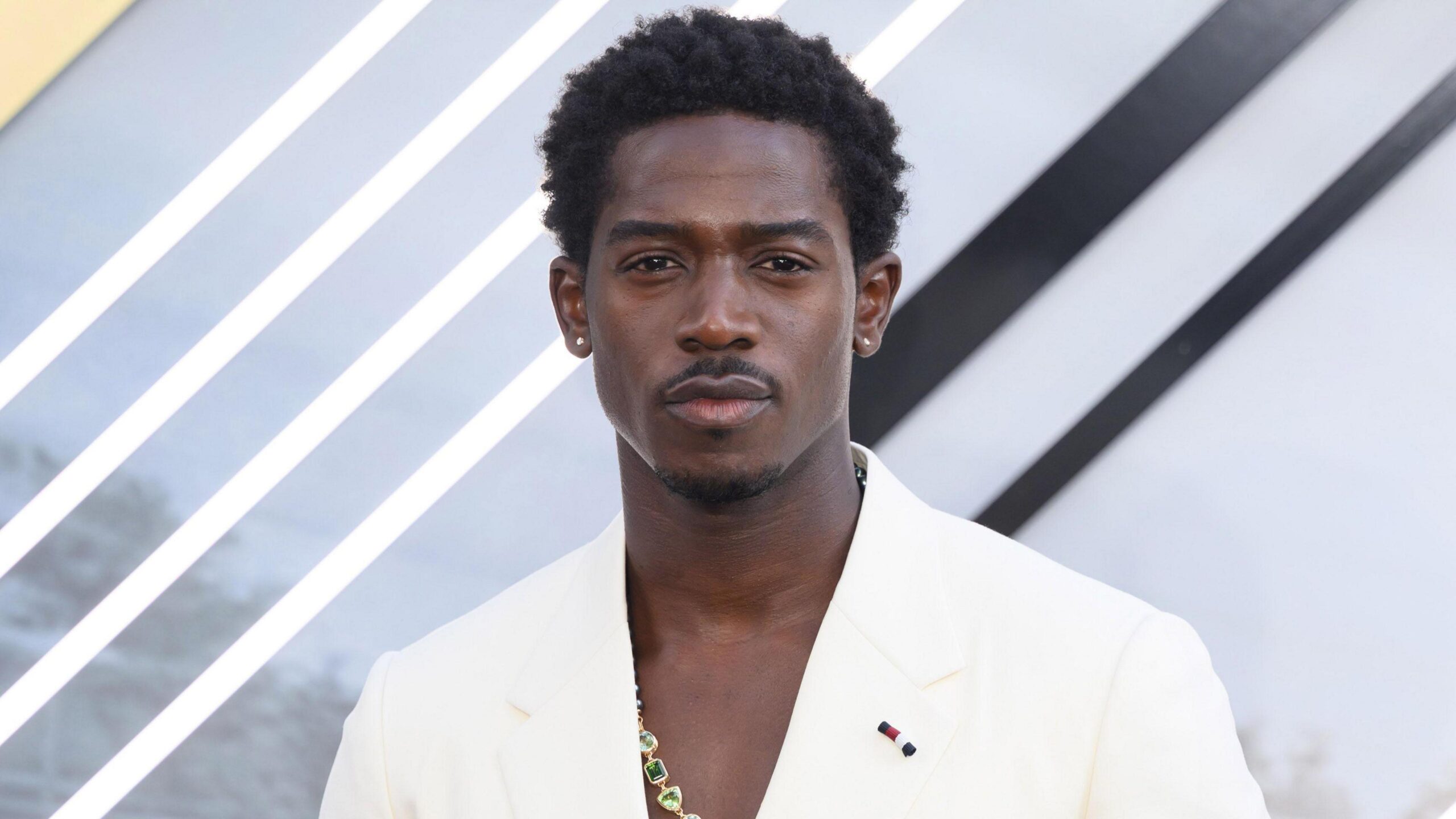
Here’s the thing about Damson Idris that nobody really says out loud: he wasn’t waiting to get good enough. He was already good. Stage work, British TV, the whole résumé. What he didn’t have was proximity, actual physical access to the people in America who could put a price on that talent. And honestly? That’s a totally different problem than “am I skilled enough.” Most people conflate the two. Idris didn’t.
So his career didn’t turn because Hollywood suddenly noticed him one day. That’s the fairy tale version. He paid his own way into rooms he had no guaranteed right to be in, figured out what those rooms actually demanded, nearly watched the whole thing collapse right after he “won,” and then turned visibility into actual ownership. Access, proof, ownership, expansion. In that order.
He Spent Money Before the Market Spent Any on Him
In 2015, Idris’s manager sends him the Snowfall script, probably one of a dozen scripts that week. He records a self-tape in his London flat, sends it off, and then… waits. About a week later, the call comes: fly to LA. No contract. No promise. Just a plane ticket and a maybe.
And here’s the part that gets glossed over: he has limited funds. He said it himself:
Bear in mind, this is all on my own dime. I am broke.
Economy flights, cheap hotels, whatever it took. Because being physically near the decision-makers mattered more than being comfortable. That’s a brutal trade to make when you don’t know if it’ll pay off.
Think about what he was actually up against too. An American role. South Central LA identity. And he’d never even been to the country before this process started. John Singleton — no small figure, tested him in South Central itself. Not in some studio. In the actual place. Forcing him to prove the accent, the mannerisms, all of it, could survive outside a controlled audition room.
So what’d he do? Studied Denzel. Studied Michael B. Jordan. Basically treated “sounding believable” like a technical skill you drill, not some magic trait you either have or don’t.
And it worked. FX picked up Snowfall. Six seasons. Sixty episodes. The season-five premiere pulled 4.3 million viewers across linear, VOD, streaming, a series high. He eventually became a producer on it too.
Here’s the whole essay in one line: skill stopped being his bottleneck. Market access was. No amount of extra rehearsal in a London flat could substitute for getting in front of the people who could actually hire him.
He Closes Gaps by Getting Close, Not by Studying From Afar
This is a pattern with the guy, and it’s worth noticing. He doesn’t sit outside a new world and read about it. He goes and stands inside it.
Take F1. He trained for months. Drove actual race cars. Hung around real drivers and teams until he picked up the language of that world by osmosis, basically. His words:
I was able to be a sponge through being around the drivers.
That’s not a metaphor. It’s a strategy: when entering a new market, get close enough to the people already winning in it to learn how the market actually works.
The role also dropped him into a completely different ecosystem: global film and motorsport. By February 2026, Formula 1 had named him a Global Brand Ambassador.

The Strategies
When People Doubt Him, He Prepares
There’s this instinct people have when they sense doubt: over-explain, get defensive, justify. Idris does something different. He turns the doubt into a checklist.
Being British was a real liability for Franklin Saint. One accent slip and the whole illusion breaks. So what’d he do? Stayed in character off-camera too. The quote: “My name’s Franklin and from now on you’re going to address me as Franklin.” is not “fake it till you make it” energy. It is identifying the exact reason someone might not believe you, and going straight at it.
Getting In the Room Was Step One, Not the Whole Plan
This is maybe the most underrated part of his story. A lot of actors get the big break and just… ride it. Idris used it as leverage.
“As a producer, it’s my job to create the future TV shows that could find a young kid like me.” He actually built a production company with an FX deal, produced on Snowfall itself, and is now attached to lead and executive-produce Netflix’s The Lords’ Day. One relationship became the springboard for the next thing.
Almost Losing It All Right After Winning It
Okay, so here’s the interesting part, because it’s the part that doesn’t fit the “and then he made it” narrative arc people love.
He won the role, Franklin Saint. Shot the pilot. And then FX comes back and says, essentially, rework it, script changes, casting changes, while keeping Idris attached. So he’s back in London, in limbo, not knowing if this thing becomes a real series or evaporates. During that stretch, he was ushering at The Lion King. An usher. After landing the lead in an American TV show.
That in-between period cost him something real: optionality. He couldn’t fully commit to building a life around Snowfall, and he couldn’t act like it didn’t exist either. Just… stuck.
And you can kind of see how that experience shaped everything after. He didn’t want to be dependent on one gig again. So now there’s producing, the production company, film work, a jewelry brand called DIDRIS, other partnerships. Diversification, basically, but earned the hard way.
For founders, this is the concentration risk lesson, and it’s not subtle: one big client, one big investor, one platform, it feels like security while you have it. It’s also exactly the thing that can wreck you if it disappears. The smarter move is using the breakthrough to build things that outlast the thing that gave you the breakthrough.
His quote on this, about staying close to mentors: “I speak to them every day, and I ask for advice.” Simple. Not glamorous. But it’s the connective tissue holding the whole strategy together.
The Network Behind the Network
Singleton opened the door, early creative backing, real sponsorship. FX gave him distribution and a pathway into production. Later, Joseph Kosinski, Jerry Bruckheimer, and the whole F1 machine put him on an even bigger stage.
And he’s already talking about paying it forward, using production to open doors for other people the way Singleton opened one for him.
For scale: F1 grossed roughly $634.1 million worldwide at the box office. Worth saying clearly, that’s ticket sales, not his paycheck, not profit. But it’s a signal of how big the platform got, and it’s part of why Formula 1 formalized things with the ambassador role.
Key Takeaway
Pick one goal you’ve been sitting on because you’ve convinced yourself you need to “get better first.” Write down five buyers, platforms, or people who could actually reprice what you already do, today, as you are.
Next to each name, be honest about the actual gap. Is it that you have no introduction? Weak proof of work? Missing credential? Bad positioning? Just don’t know the market yet?
Then pick one. Run a 30-day sprint: find one path to an introduction, build one proof-of-work piece aimed at that specific market, close one knowledge gap, make one real attempt.
The question isn’t always “am I good enough?” Sometimes it’s: “Am I actually under-skilled, or am I standing outside the market that would know what my skill is worth?”
Frequently Asked Questions about Damson Idris
What was Damson Idris’s big break?
Franklin Saint. Snowfall. FX. Co-created by John Singleton. The role is exceptional; thinking about it, a relatively unknown British actor becomes the center of a very American, very specific show, and it runs six seasons, sixty episodes. He didn’t just act in it either. Eventually he’s producing on it. So it’s less “one good role” and more “the role that let him walk through a door into a whole different career.”
How did he actually land it?
Not glamorously, that’s for sure. Taped an audition in London, then just… kept flying to LA. Repeatedly. Paying for it himself. And then there’s the Singleton test, getting sent into actual South Central LA to see if the accent, the walk, the whole persona held up outside a casting room. Idris apparently just committed. Stayed in the accent. Immersed himself. Because for this particular role, sounding “technically fine” wasn’t going to cut it; he needed to feel real, and that’s a different bar entirely.
Why does everyone treat Snowfall like such a big deal for him specifically?
Because it wasn’t just a good credit, it was leverage. Sixty episodes of sustained visibility. A season-five premiere that hit 4.3 million viewers, series-high. But arguably the bigger thing is what happened behind the scenes: he moved into producing. So instead of just being an actor who books good roles, he became someone who shapes what gets made. That’s the part people undersell.
What’s the actual lesson here for regular people, like entrepreneurs or whoever?
Figure out whether your actual problem is skill or access. Idris kept improving, sure; that never stopped. But the thing that changed his trajectory wasn’t getting marginally better at acting — it was physically putting himself in front of the people who could actually do something with his talent. Same logic applies if you’re building a business. Sometimes you don’t need another course or certification. You need to be in the room with the right buyer or investor or partner.
What was Singleton’s actual role in all this?
More than “the guy who cast him,” honestly. He tested him hard, to see if he could hold up in the real environment the show was portraying. Then, once satisfied, he backed him through the messy development process. That endorsement is really what connected Idris to FX and to an audience at a scale he hadn’t touched before.
How big was F1, actually?
About $634.1 million worldwide at the box office. Formula 1 made it official, naming Idris a Global Brand Ambassador in February 2026, spanning entertainment and the actual racing culture side of things too.