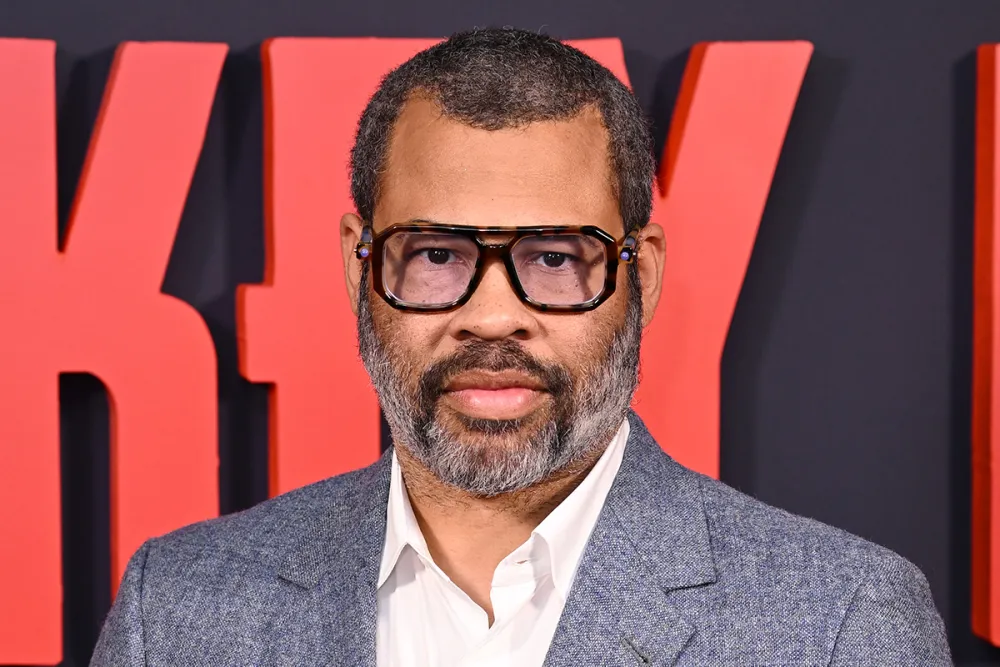
When Jordan Peele started Monkeypaw Productions in 2012, the mid-budget original movie was in bad shape. Studios had spent a decade running from anything that wasn’t already intellectual property — sequels, remakes, reboots, superheroes, anything with a fanbase attached. A new thriller from a first-time director, no brand, no built-in audience? The assumption was that nobody would show up.
Peele’s first film settled that argument in one weekend. What’s more interesting is that he’s done it again since, at bigger budgets, without ever giving up the one thing studios want most: control.
Standard horror has a fixed shape. A safe, normal world gets invaded — masked killer, demon, haunted house — and the movie is about pushing the evil back out. The suburban home, the family, the neighborhood: those are the things being protected.
In a Peele film, the protected thing is the threat. Get Out works because the horror isn’t hiding in the basement. It’s sitting at the dinner table, smiling too wide, explaining that it would have voted for Obama a third time. The beautiful upstate house isn’t where the danger lurks. It is the danger. Us runs on the same engine flipped around — the invading family looks like you, dresses like you, and wants your living room.
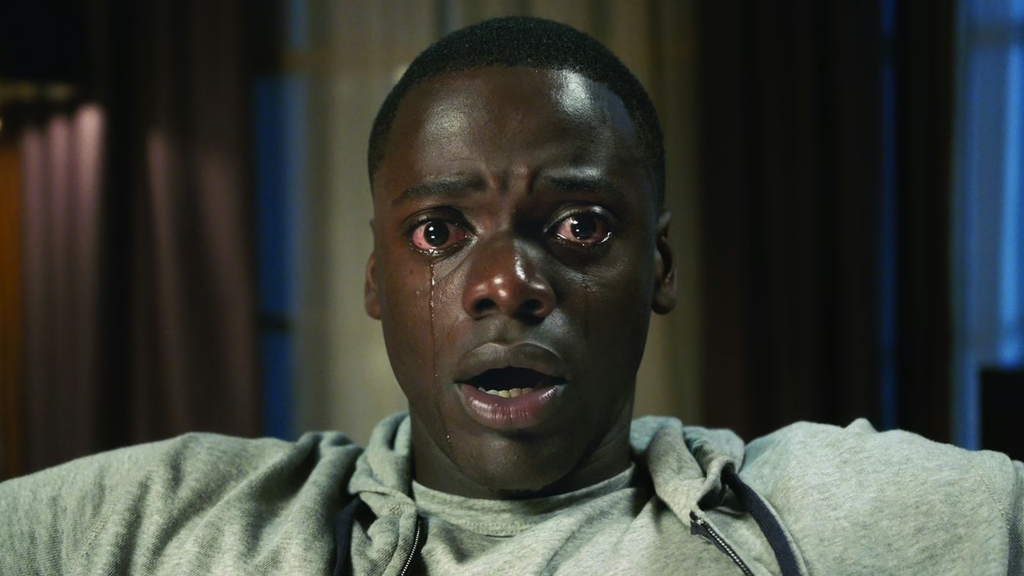
This is also why these films market themselves. When the monster is a tension the audience already carries around, the culture does the advertising for free. Get Out grossed over $255 million worldwide on a $4.5 million budget, and a good chunk of its marketing budget was people arguing about it after the credits rolled.
In a Peele film, the protected thing is the threat.
Budget Movies, Total Control
Studios don’t hand directors final cut because they respect their artistry. They hand it over when the budget is too small to fight about. That’s the whole trick behind Blumhouse, which turned Paranormal Activity into a franchise off a $15,000 production cost. When a movie costs less than the studio’s lunch meetings, no executive flies in to protect the investment.
Monkeypaw runs the same math. Get Out returned roughly fifty times its cost — the kind of return that buys more freedom than any awards campaign. Peele didn’t take the windfall as a paycheck. He converted it into an exclusive multi-year first-look deal with Universal, then used it to scale: Us ($20 million in, $256 million out), Nope ($68 million in, $172 million out).
Bigger numbers, same arrangement. Universal distributes. Monkeypaw decides.
Even the Flying Saucer Gets it
Nope takes the most worn image in science fiction — the saucer over the hills — and refuses to play it straight. The ship isn’t carrying visitors. It’s an animal, territorial and hungry, and the humans keep trying to get the perfect shot of it anyway. That’s the actual subject: the urge to turn catastrophe into content, to monetize the spectacle right up until the spectacle eats you.
The producing slate runs the same inversion on other genres. Him (2025), directed by Justin Tipping, takes the sports-prodigy story — the montage, the mentor, the glory — and asks what the machine costs the young athlete inside it. The American sports movie as horror sounds obvious once someone’s done it. Before Monkeypaw did, nobody had.
Building a Bench
A company built on one director’s taste has the same problem as a restaurant built on one chef: it’s only as good as his attention span. Peele’s answer was to make Monkeypaw a place where other people’s movies happen.
The clearest case is Candyman (2021), directed by Nia DaCosta and reported at the time as the first film directed by a Black woman to open at number one at the domestic box office. Peele’s name was on it as producer; DaCosta’s voice is what’s on screen. Both things are the point.
The other piece is NO DRAMA, the short-film initiative Monkeypaw runs with Universal and the Toronto International Film Festival — funding emerging genre filmmakers to shoot proofs of concept, with the strongest ones feeding back toward feature development. A supercut of the first batch gives you the range: original premises, small crews, filmmakers from all over the world. Some of those directors will get features. Those features will carry the Monkeypaw name, and the company keeps a hand in the next decade of genre film without Peele directing a minute of it.
There’s a lesson here that has nothing to do with horror. The mid-budget original didn’t die because audiences stopped wanting it. It died because the people making those films had no protection when the studio came knocking — no low budget, no leverage, no alternative. Peele built the protection first, and the originality followed. The studios still hunting for “the next Get Out” keep failing for the same reason. They’re copying the product, and the product was never the hard part.